


California’s Camp Fire has become the state’s deadliest fire on record, decimating the town of Paradise, killing 42 people and destroying 7,200 structures. The fires in California are so large they can be clearly seen from space. Smoke and ash have left millions of Californians exposed to air quality rated at “unhealthy” or “very unhealthy” levels, with residents of Los Angeles, Sacramento and the Bay Area warned against spending time outdoors. We speak with May Boeve, executive director of 350 Action, who says, “We are really daunted by the reality of the climate impacts that are facing us.”
AMY GOODMAN: This is Democracy Now! I’m Amy Goodman, with Juan González.
JUAN GONZÁLEZ: Well, we continue to look at the raging wildfires in California, where at least 44 people are dead and more than 200 remain missing as two massive fires across the state continue to rage. The Camp Fire has become the state’s deadliest in history after the blaze swept through the town of Paradise, killing 42 people, destroying 7,200 structures, nearly 6,500 of them homes. California Governor Jerry Brown said Sunday the fires were driven by climate change and that California needs to learn to adapt.
AMY GOODMAN: We go now—well, we’re staying in California. We’re going to Berkeley, where we’re joined by May Boeve, executive director of 350 Action, the political arm of the climate organization 350.org.
Welcome to Democracy Now!, May. Can you talk about what’s happening where you are, in Northern California? And then talk about what 350.org, 350 Action—what you are demanding in response to President Trump saying this is gross forest mismanagement and continuing to deny climate change.
MAY BOEVE: Yeah. Thank you so much for having me, Amy and Juan, and for devoting so much attention to these devastating fires. It was very heartbreaking to hear from Glen about what their community has gone through. And we’re hearing similar stories from throughout our local network of 350 groups throughout the state.
And here in the Bay Area, I can say that the air quality this morning seems to be a little bit better. But for the last few days, people have been staying indoors, wearing masks. And the sky is hazy and doesn’t feel anything like what the Bay Area typically is like in this time of the year. And I remember that we were on your show just a year ago talking about the Napa and Sonoma fires, which is where I grew up. And so, we’re really daunted by the reality of the climate impacts that are facing us. And this is what the scientists warned us.
We know that every disaster is a compound event, and there are many risk factors, and climate change makes all the risk factors worse for something like a forest fire. Drier conditions, stronger winds, the drought that we’re living through have all contributed to a fire season that’s longer and more devastating. And all of these stories that we’re learning about—entire communities wiped off the map—are the tragedies unfolding around us.
And we are so grateful for all the work that’s being done in this state and all over the world for people who are living through climate disasters. But these are short-term remedies. I can’t emphasize that enough on the show this morning, that we actually must turn our attention to the proactive, long-term solutions. And we know what to do about climate change. It is not a mystery. We know that we have to transition our economy off of fossil fuels and to 100 percent renewable energy. We know that this transition is going to be good for so many reasons. It’s going to put millions of people back to work building the green economy that we know we need. And it’s going to impact the people who have been most impacted by climate thus far.
So, to say that this is just one fire season after another, without looking at the long term, does not do us any good. And so, we are turning our attention to calling on elected officials, calling on the new members of Congress, to really advocate for this Green New Deal that we need and to put us in a much safer position from these rising climate disasters. Of course—
JUAN GONZÁLEZ: Well, May—
MAY BOEVE: Yeah.

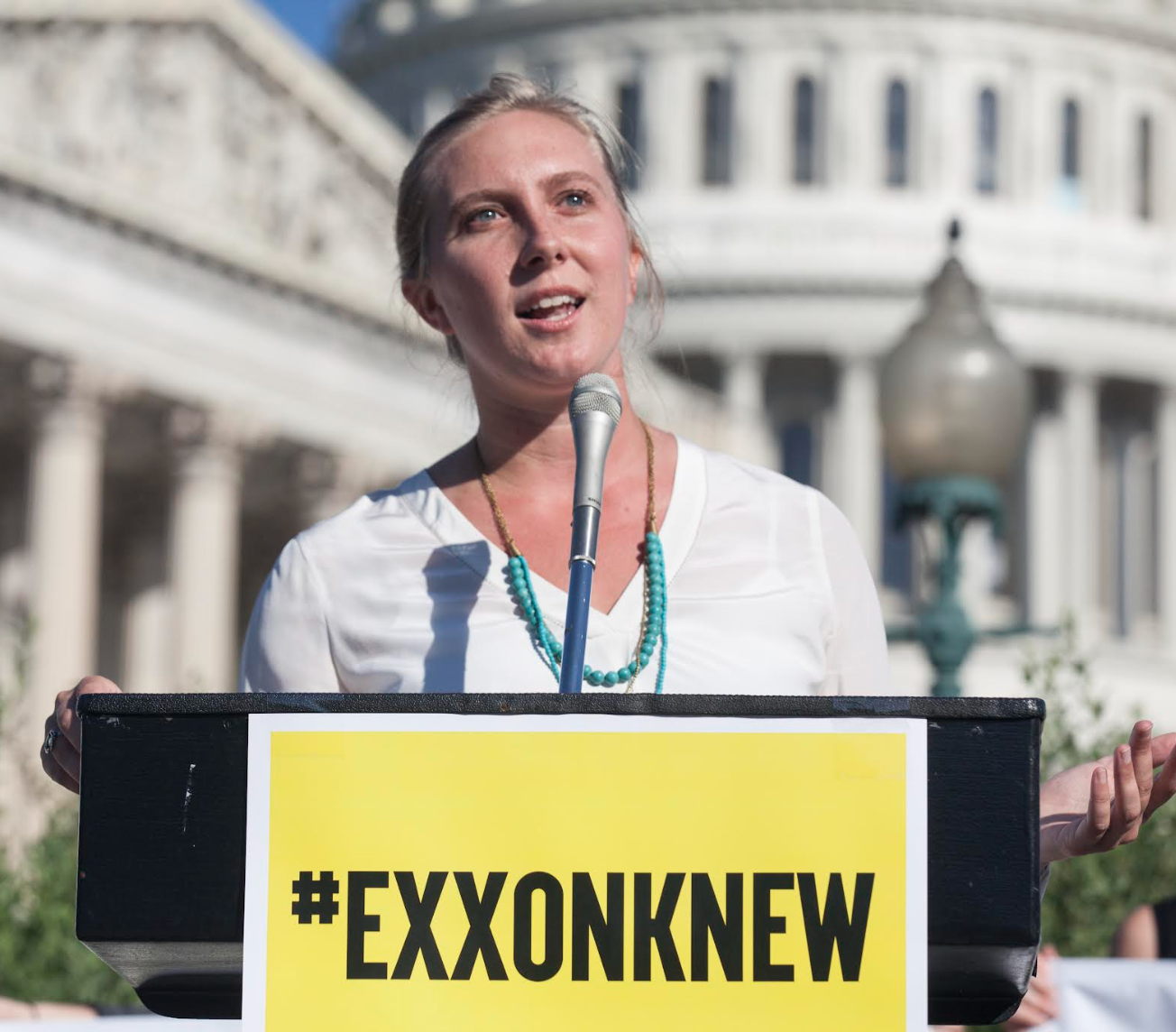
May Boeve is the co-founder and Executive director of 350.org, an international movement of ordinary people working to end the age of fossil fuels and build a world of community-centred renewable energy for all.
ZNetwork is funded solely through the generosity of its readers.
Donate




