

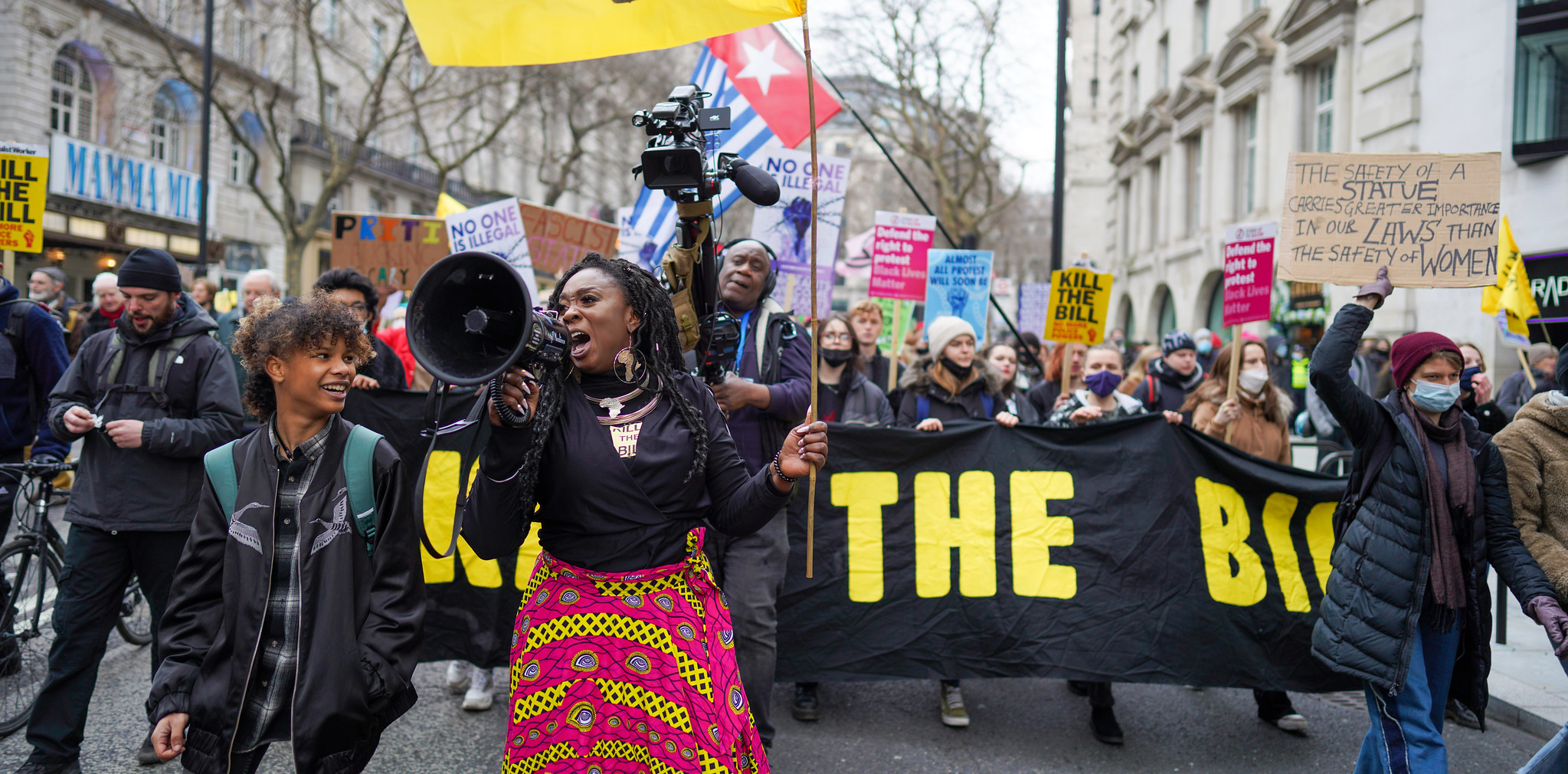
Britain is experiencing the highest levels of industrial action in the lifetimes of many of the workers who have taken part in recent strikes. The Office of National Statistics recently reported that days lost to industrial action in 2022 surpassed all totals recorded in the 1990s, 2000s, and 2010s.
More than 2.4 million working days were recorded as lost to strikes in 2022. This was the highest total since 1989, when the number of British trade unionists was significantly larger and accounted for a much higher proportion of the workforce.
Strikes have not been confined to a small number of industries. Disputes have grown to encompass increasingly large swathes of the public and private sector and have ranged from local to national disputes. Does this mark a decisive turning point in British class relations after decades of retreat for organized labor?
The Price of Labor
The current wave of industrial action began in June 2022 as inflation began to creep up. The National Union of Rail and Maritime Transport Workers (RMT) began its first national rail dispute since the privatization of the railways during the early 1990s.
Mick Lynch, the RMT’s general secretary, emerged as an unlikely celebrity over the course of the summer. His insistence that “we refuse to be poor anymore” has become something of an informal slogan that has spread across disputes and been repeated by speakers at picket lines across the country.
However, Lynch’s most incisive comment was his assertion that “the price of labour” is too low. Wage levels have become the stuff of everyday politics in Britain in a way that hasn’t been the case for decades. Trade union action has carved out a space for discussing the economic rewards (or lack of them) enjoyed by workers, with important democratizing potential.
The context for the newfound popularity of trade union mobilization has been the erosion of the value of real wages by record rates of inflation. Britain is now experiencing price spirals on a level not seen since the early 1980s. Workers are experiencing this every time they go to the supermarket and find that their money buys less than it did the week before.
Basic necessities are rising in price significantly faster than wages, with food and energy bills emerging as key driving factors. Housing is another area of popular concern because of sharp rent rises and looming mortgage increases for many following the Bank of England’s decision to raise interest rates.
Market Trends
Another important factor behind the growing confidence of workers in their own strength is the tightening of the British labor market. Unemployment rates are low, running at around 3.7 percent, while the official employment rate is high, at over 75 percent.
In the immediate aftermath of Brexit, there have been labor shortages in sectors which had been characterized by heavy concentrations of migrant workers, such as lorry drivers, who often returned home in large numbers. Shortages have since spread to other areas of the labor market. Businesses in sectors such as hospitality and social care consistently report major problems finding workers. Pubs and restaurants have often reopened after the COVID-19 lockdown with reduced hours.
The overall impact of these dynamics has fueled a wider trend of private sector wage rises, which have consistently run at significantly higher levels than the public sector, peaking at a month-on-month annual wage rise of 11.5 percent last March, when the public sector rate was just 1.5 percent.
Labor’s power in an aging society has not been a topic of discussion in debates on Britain’s demographic trends. However, as sectors such as health and social care expand and the number of working-age people falls both relatively and absolutely when compared with those of pensionable age, the potential of workers to demand more from their employers could grow commensurately.
Essential Workers
A myriad of disputes have animated workers across occupational, sectoral, and general unions in schools, hospitals, universities, on the railways, and in offices and factories. One thing that unites them is a shared sentiment that workers’ living standards should not fall below their already often meager levels.
Big national disputes have tended to grab the headlines. Following the pattern set by rail, these have grown to include the English and Welsh part of the National Health Service (NHS), including the first strike by members of the Royal College of Nurses. Primary and secondary teachers have walked out in separate disputes in England and Scotland.
The contested language of the “essential worker” that was introduced during the COVID-19 pandemic has animated these disputes. Striking nurses chanted “claps won’t pay the bills” in reference to the public displays of support for NHS staff in the spring of 2020. Trade unions have used the concept of the essential worker to press the case for wage rises and to protect services from cuts. Members of the Communication Workers’ Union are striking at Royal Mail against the threat to a comprehensive national postal service.
The Conservative government and hostile media outlets have portrayed nurses and teachers as selfish for taking action. The Tories have also prepared new legislation, the Strikes (Minimum Service Levels) Bill 2022–23, to lessen the impact of industrial action by establishing legally mandated levels of minimum coverage in essential sectors. Yet this legislation seems unlikely to have a direct impact on current disputes and may prove unwieldly in practice. For example, it could potentially be undermined if employees who are required to provide minimum service call in sick en masse.
The impression of a strike wave with a unified purpose gathered strength with a day of action on February 1, 2023. More than half a million civil servants, university staff, train workers, and bus drivers went on strike on the same day. Rallies were held in cities around Britain opposing minimum service legislation.
Sources of Strength
Nonetheless, it’s important to distinguish between shared sentiment and common cause in the current industrial landscape. Workers are engaged in disputes on a sectoral and in some cases on a workplace basis.
Broadly shared economic circumstances may connect Amazon warehouse workers who walked out in Coventry earlier this year with the Aviva bus drivers who struck last year. Welsh health service workers may be motivated by similar discontents to those of Scottish teachers. However, these occupational groups have separate unions and distinct bargaining arrangements.
Yet government intervention in disputes, particularly on the railways, has strengthened the sense of common purpose. The UK government is strongly committed to ensuring that the RMT is not seen to win its dispute. There is a very real concern that if it does, this will set an example and result in a spillover of expectations to other workforces.
As a result, the rail dispute has run and run, as has the increasingly bitter Royal Mail strike. In the former case, the RMT and its supporters blame government interference for scuppering a possible deal. Public support alone does not seem likely to secure wage rises for nurses or other workers engaged in popular disputes.
While strikes have certainly emerged as a dominant topic in British media coverage, industrial illiteracy has also clouded reporting. There is a strong tendency to assume that the main aim of unions is to win levels of public support, as though this is where they draw their strength from, rather than in their capacity for disruption and their ability to harm profits or the delivery of services and the government’s political aims.
Prospects
The Tory government has suffered a collapse in its own polling scores over the last year. Yet it still assumes that the voting public is hostile to unions and will blame them for stoppages instead of holding the government responsible for failing to manage industrial relations properly.
Although there is no sign of the strike wave abetting, its participants need to be able to tell positive stories of local and national victories. It’s not enough for workers to mobilize and organize: they also need to win and change things in doing so.
There have been important instances such as the gains made by BT Group telecommunications workers, who secured a wage rise following their first strike in thirty-five years, in a dispute which saw call center and maintenance staff involved in industrial action for the first time. As industrial action continues, there will be more BTs, and no doubt other less positive stories in a mixed picture of wins, defeats, and, inevitably, less conclusive outcomes.
In recent months, British workers have begun to reestablish pay and conditions as a matter for negotiation rather than imposition. Through their actions in their hundreds of thousands, they have gained a glimpse of their own power and potential to act collectively and refuse to be poor (or become poorer).
In doing so, they have demonstrated that the price of labor can be made higher. But achieving that goal will more likely be the outcome of thousands of arguments and battles rather than a small number of decisive confrontations.
ZNetwork is funded solely through the generosity of its readers.
Donate




