


India’s former Prime Minister, the late Mr Morarji Desai, strictly followed an unwritten principle. He would not inaugurate any conference, whether national or international, which did not focus on rural development. It so happened that it was during his tenure that the aircraft industry had planned a conference in New Delhi. For the aircraft industry, the inauguration of the international conference by anyone other than the Prime Minister was not palatable and for obvious reasons.
Knowing well that the Prime Minister would not make an exception, the aircraft industry came out with an imaginative title for the conference: “Aerodynamics and rural development”!
The global community – market forces and its supporters – too are following Morarji Desai’s prescription. Agricultural biotechnology advances are being desperately promoted in the name of eradicating hunger and poverty. The misguided belief that the biotechnological silver bullet can “solve” hunger, malnutrition and real poverty has prompted the industry and the development community, political masters and the policy makers, agricultural scientists and the economists to chant the mantra of “harnessing technology to address specific problems facing poor people” And in the bargain, what is being very conveniently overlooked is the fact that what the world’s 840 million hungry need is just food, which is abundantly available.
The United Nations Development Programme (UNDP) annual Human Development Report 2001, entitled “Making New Technologies Work for Human Development” is yet another biotechnology industry-sponsored study that categorically mentions on the one hand that “technology is created in response to market pressures – not the needs of poor people, who have little purchasing power,” and yet, goes on unabashedly to eulogies the virtues of an untested technology in the laboratories of the North, which are being pushed onto the gullible resource-poor communities of the South and that too in the name of eradicating hunger and poverty.
The report states that emerging centres of excellence throughout the developing world are already providing hard evidence of the potential for harnessing cutting-edge science and technology (as biotechnology is fondly called) to tackle centuries-old problems of human poverty. But what the report does not mention is the fact that the biggest challenge facing the global community is increasing hunger and poverty in the developing countries, which need to be tackled by a social and political commitment rather than a market-driven technological agenda.
To say “if the developing community turns its back on the explosion of technological innovation in food, medicine and information, it risks marginalising itself.” is in reality a desperate effort to ensure that the American economic interests are not sacrificed at the altar of development. Such is the growing desperation at the growing isolation of the United States in the global food market because of its “transgenic’ food that all kinds of permutations and combinations, including increased food aid to Africa’s school-going children, are being attempted. The deft manipulation of the prestigious UNDP’s Human Development Report (HDR) to push forth the American farm interests, however, will cast an ominous shadow over the credibility of the future UN programmes for human development.
In agriculture, the HDR cites plant breeding promises to generate higher yields and resistance to drought, pests and diseases. Biotechnology offers the only or the best ‘tool of choice’ for marginal ecological zones – left behind by the green revolution but home to more than half the world’s poorest people, dependent on agriculture and livestock. It is true that green revolution left behind the small and marginal farmers living in some of the world’s most inhospitable areas. But the way the tools of the cutting-edge technology are being applied and are being blindly promoted, biotechnology will certainly bypass the world’s hungry and marginalised.
A third of the world’s hungry and marginalised live in India. And if India alone were to launch a frontal attack on poverty eradication and feeding its 320 million hungry, much of the world’s hunger problem would be resolved.
Never before in contemporary history has the mankind been witness to such a glaring and shameful ‘paradox of plenty’. In India alone, more than 60 million tonnes of foodgrains are stacked, bulk of it in the open, while some 320 million go to bed hungry every night. In neighbouring Bangladesh and Pakistan too, food silos are bursting. And yet, these three countries are home to nearly half the world’s population of hungry and the marginalised. While none of these countries has shown the political courage to use the mountains of foodgrain surplus to address the age-old problem of hunger, the international scientific and development community too is equally guilty by turning a blind eye to the biggest human folly of the 21st century.
After all, science and technology is aimed at removing hunger. The green revolution was aimed at addressing the problem of hunger, and did a remarkable job within its limitation. And now, when we have stockpiles of food surpluses, the global community appears reluctant to make the food available to the marginalised communities who cannot afford to buy the rotting stocks. No aid agency, including the so-called philanthropic ones: Ford, Rockefeller, ActionAid, Christian Aid, Oxfam, British BFID and the likes are willing to take the bull by the horn. The Food and Agriculture Organisation of the United Nations (FAO), which works for reducing hunger, too has shied away from this Herculean task. It has instead convened a meeting of the Heads of State at Rome in November, five years after the World Food Summit, to reiterate its promise of halving world’s hunger by the year 2015.
The reality of hunger and malnutrition is too harsh to be even properly understood. Hunger cannot be removed by producing transgenic crops with genes for Vitamin A. Hunger cannot be addressed by providing mobile phones to the rural communities. Nor can it be eradicated by providing the poor and hungry with an ‘informed choice’ of novel foods. Somehow, the authors of the HDR have missed the ground realities, missed the realities from the commercial interests of the biotechnology industries. In their over-enthusiasm to promote an expensive technology at the cost of the poor, they have forgotten that biotechnology has the potential to further the great divide between the haves and have-nots. No policy directive can help in bridging this monumental gap. The twin engines of economic growth – the technological revolution and globalisation – will only widen the existing gap. Biotechnology will, in reality, push more people in the hunger trap. With public attention and resources being diverted from the ground realities, hunger will only grow in the years to come.
It does not, however, mean that this writer is against technology. The wheels of technological development are essential for every society but have to be used in a way that helps promote human development. Technology cannot be blindly promoted, as the UNDP report does, in an obvious effort to bolster the industry’s interests. Ignoring food security in the name of ensuring ‘profit security’ for the private companies, can further marginalise the gains, if any. And herein lies a grave danger.
While the political leadership and the development community is postponing till the year 2015 the task to halve the number of the world’s hungry, the scientific community too has found an easy escape route. At almost all the genetic engineering laboratories, whether in the North or in the South, the focus of research is on crops which will produce edible vaccines, address the problems of malnutrition or ‘hidden hunger’ by incorporating genes for Vit A, iron, and other micro-nutrients. But what is not being realised is that if the global scientific and development community were to aim at eradicating hunger at the first place, there would be no ‘hidden hunger’.
Take, for instance, the much-touted ‘golden rice’, the rice which contains the genes for Vit A. It is true that there are 12 million people in India alone who suffer from Vit A deficiency. To say that ‘golden rice’ would provide the poor with a choice of such ‘novel foods’ is to ignore the realities. It is also known that almost the entire Vit A deficient population in India lives in marginalised areas and comprise people who cannot or who do not have access to two square meals a day. If only these hungry people were to get their adequate dietary intake or the two square meals a day, they would not suffer from Vit A deficiency or for that matter any other micro-nutrient deficiency. If these poor people cannot afford to buy their normal dietary requirement of rice for a day, how do we propose to make available ‘golden rice’ to them is something that has been deliberately left unanswered.
And this reminds me of what exactly another former Indian Prime Minister, the late Mrs Indira Gandhi, used to do when it came to addressing problems. If the ethnic crisis confronting the northeast Indian State of Assam becomes unmanageable and goes out of her hands, she would create another problem in northwestern Punjab. In simple words, the national attention gets diverted to the fresh crisis confronting Punjab, and the country would forget Assam. And when terrorism in Punjab goes out control, create another problem in down south, in Tamil Nadu. And slowly, people would forget about Punjab. For political leaders, Mrs Gandhi’s proven mantra does provide an easy escape route. And this is exactly what they intend to do when the Heads of State of 170-odd countries would gather at the World Food Summit Plus Five in Rome in November.
Scientists, development agencies and the policy makers (and now of course the United Nations) too seem to have derived their futuristic vision from the political sagacity of Mrs Indira Gandhi. After all, the only way to divert the attention of international community from the more pressing and immediate problems of abject hunger and poverty is to either postpone the priorities for removal of hunger (and that too by only a half) to the year 2015 as the FAO has done or is to talk of the virtues and potentials of biotechnology for eradicating ‘hidden hunger’ and malnutrition in the next two decades.
Who will take on the biggest challenge of all times – the elimination of hunger – which forms the root cause of real poverty and the lopsided human development is an issue no one is willing to stick his neck out for. With even the UNDP buckling under industrial pressure, the monumental task to feed the hungry – and that too at a time when food grains are rotting – may eventually be left to the market forces. The underlying message is very clear: the poor and hungry will have to live on hope. #
(Devinder Sharma is a New Delhi-based food and trade policy analyst. Among his recent works include two books: GATT to WTO: Seeds of Despair and In the Famine Trap. His email contact is: dsharma@ndf.vsnl.net.in)

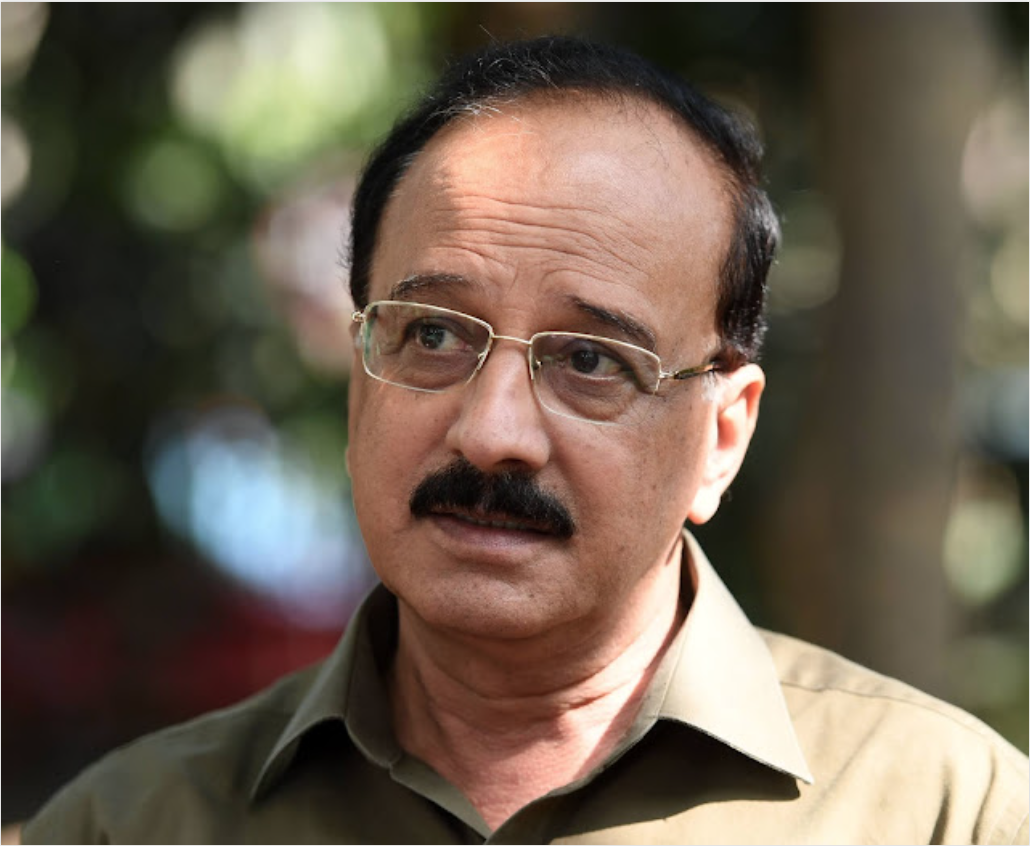
Devinder Sharma is an award-winning journalist, writer, thinker, and researcher known for his views on food and trade policy. Trained as an agricultural scientist (he holds a Master’s in Plant Breeding & Genetics), Sharma wrote for the Indian Express, and then quit active journalism to research on policy issues concerning sustainable agriculture, biodiversity and intellectual property rights, environment and development, food security and poverty, biotechnology and hunger, and the implications of the free trade paradigm for developing countries. He has been awarded with the honorary degree of Professor at Large by the CSK Himachal Pradesh Agricultural University, Palampur (India), and also has been a Visiting Fellow to the International Rice Research Institute, in the Philippines; Visiting Fellow at the School of Development Studies at the University of East Anglia, Norwich (UK); and a Visiting Fellow at the University of Cambridge (UK). Sharma is associated with numerous national and international organizations, civil society groups and farmers organisations. He also on the board of half a dozen national and international organizations, and is also a member of the CGIAR’s Central Advisory Service on Intellectual Property Rights.
ZNetwork is funded solely through the generosity of its readers.
Donate




