


Bill Cosby’s decision to commemorate the 50th anniversary of the Brown v. Board of Education decision by proclaiming that poor black people deserve their fate at the bottom of America’s steep socioeconomic pyramid has delighted many white Americans. Large numbers of United States Caucasians are grateful for Cosby’s widely reported intra-racial top-down smack-down, which gave politically safe – because nominally “black” – confirmation to their own self-satisfied opinion that poor African-Americans have nothing and nobody but themselves to blame for their difficult circumstances in this great “color-blind” “land of opportunity.”
“Ladies and gentlemen, the lower economic people are not holding up their end in this deal,” Cosby’ declared. “These people are not parenting. They are buying things for kids — $500 sneakers for what? And won’t spend $200 for ‘Hooked on Phonics.’ . . . “They’re standing on the corner and they can’t speak English,” he exclaimed. “I can’t even talk the way these people talk: ‘Why you ain’t,’ ‘Where you is.'”
According to the Washington Post, Cosby also turned his wrath to “the [black] incarcerated” and many black victims of police brutality. “These are not political criminals,” Cosby proclaimed. “These are people going around stealing Coca-Cola. People getting shot in the back of the head over a piece of pound cake and then we run out and we are outraged, [saying] ‘The cops shouldn’t have shot him.’ What the hell was he doing with the pound cake in his hand?”
There should be nothing surprising about Cosby’s remarks. Along with a number of other affluent and conservative black “elites,” Cosby has been providing service to white privilege for some time now. What, after all, was the secret to the spectacular success that the “The Cosby Show” with a predominantly white viewing audience in the 1980s? As culture critic Mark Crispin Miller noted in a 1986 essay titled “Cosby Knows Best,” the affluent, ever-cheerful, and hyper-consumerist, apolitical African-American Huxtable family – headed by the affable, impish obstetrician Cliff (played by Dr. Cosby himself)- functioned as “an ad, implicitly proclaiming the fairness of the American System: ‘Look! [Cosby shows us] Even I can have all this!” “On ‘The Cosby show,'” Miller noted, “it appears as if blacks in general can have, and do have, what many whites enjoy and that such material equality need not entail a single break-in. And there are no hard feelings, none at all, now that the old injustices have been so easily rectified.”
Consistent with its mission of selling the American System and the related idea that America’s racial divisions had been overcome, “The Cosby Show” refused to permit any “negativity” on the screen. “This is a conscious policy,” Miller noted, observing that “Dr. Alvin Poussaint, a professor of psychiatry at Harvard, reads through each script as a ‘consultant,’ censoring any line or bit that might somehow tarnish the show’s ‘positive image.’ And the show’s upscale mise-en scene has also been deliberately contrived to glow, like a fixed smile. ‘When you look at the artwork [on the show’s walls], there is a positive feeling, an up-feeling,’ Cosby says. ‘You don’t see downtrodden, negative I Can’t Do, I won’t do.'” (Miller, Boxed In: The Culture of TV [Evanston, IL: Northwestern University Press, 1988], pp.69-75). How revealing to see Cosby go selectively “negative” in 2004, against a rather safe target: the nation’s most downtrodden.
The dirty little secret 18 years after Miller’s essay and 50 years after the Brown decision is that the racial injustices have not in fact been rectified. The “fairness of the American System” is a cruel and bitter hoax inflicted on masses of truly disadvantaged U.S. blacks. Millions of responsible African-Americans, many of whom work long hours (sometimes in multiple jobs) and yet remain stuck among the “lower economic people,” continue to be victimized by mainstream white America’s “Cant Do, Won’t Do” attitude, as in:
* Can’t, Won’t fairly integrate America’s schools, which remain highly segregated by race (increasingly so since the 1980s), directly contrary (by the way)to the spirit of the very Brown decision (which ruled that separate schools were inherently unequal and therefore unconstitutional) that Cosby was (supposedly) commemorating.
* Can’t, Won’t fairly integrate American housing markets, which distribute much more than housing, including access to jobs, employment networks,recreation, shopping, medical services, and good schools.
* Can’t, Won’t fairly provide black children with schools and an educational experience equal to those enjoyed by white children.
* Can’t, Won’t hire fairly, without discriminating against African-Americans, even when black job applicants have equal or superior qualifications to their white competitors.
* Can’t, Won’t police, prosecute, legally represent, sentence, or incarcerate fairly, without racial and related economic bias, so that – to give one among countless savage racial US criminal justice disparities – blacks comprise 15 percent of all users of illegal drugs but make up more than 60 percent of people serving time behind bars for drug crimes.
* Can’t, Won’t invest adequate meaningful and effective resources into devastated and predominantly black communities, whose deep disadvantage is exacerbated by the racially disparate “War on Drugs” and the related rampant mass incarceration and felony-marking of black males.
* Can’t, Won’t value the life of a black inner-city youth as much as material goods and commodities, like, say, pound cake, the theft of which (by a black teenager)leads to a justifiable state execution in Cosby’s chilling view. * Can’t, Won’t acknowledge the depth, degree and ramifications of the criminal abuse and oppression that white America has inflicted on people of African ancestry since the early colonial onset of black chattel slavery, whose unacknowledged crippling legacy remains powerful and significant a mere five generations after its formal abolition.
Beyond the ubiquitous daily terror and misery inflicted by heavily racialized structural and historical inequalities and the white mainstream’s denial of the resulting injustice, people at the bottom-run intersections of capitalism and racism must contend with the victim-blaming shame imposed by certain members of the black “elite.” Those relatively privileged and comfortable African-Americans feel their own position (considerably less exalted than that held by white “elites”) threatened by white racial perceptions that are influenced by widely disseminated media images of irresponsible, parasitic, and predatory blacks. Some of those “elites” are happy to follow in the footsteps of the white ruling-class, which has a long history of blaming working and lower classes for their relative poverty and powerlessness. Some take their own relative success, unimaginable in the pre-Civil-Rights era, as proof that anyone can and should make it America if only they adopt the “right,” “positive” values and behavior.
What “deal” is it, exactly, that “the lower economic people” within the black community “are not holding up?” It’s the one where masses of poor blacks don’t protest or feel angry and ripped off while vast white-dominated structures of concentrated wealth and power reign supreme, tilting “equal” opportunity against those without inherited and interrelated economic, cultural, and white-skin privilege. It’s the one that opens a few doors of advancement to a certain small share of fortunate African-Americans, who are encouraged to join in the general condemnation of those who struggle with poverty and its multiple consequences in the industrialized world’s most unequal and wealth-top-heavy society.
It’s a rotten, stinking, authoritarian, and racist deal, one that requires some people to exhibit heroic amounts of work and “personal responsibility” just to survive from one day to the next but permits others to enjoy remarkable wealth and power while hardly working at all. It is no structural and political accident, of course, that the former group is very disproportionately black and the latter group is very disproportionately white. That many among the second, super-empowered group use the remarkable moral and behavioral leeway they are granted to perpetrate crimes of vast domestic and international significance only intensifies the odium of Cosby’s victim-blaming, power-serving rant.
Paul Street (pstreet99@sbcglobal.net) is an urban social policy researcher in Chicago, Illinois.

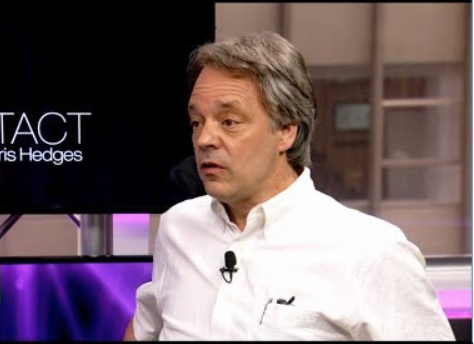
Paul Street is an independent radical-democratic policy researcher, journalist, historian, author and speaker based in Iowa City, Iowa, and Chicago, Illinois. He is the author of more than ten books and numerous essays. Street has taught U.S. history at numerous of Chicago-area colleges and universities. He was the Director of Research and Vice President for Research and Planning at the Chicago Urban League (from 2000 through 2005), where he published a highly influential grant-funded study: The Vicious Circle: Race, Prison, Jobs and Community in Chicago, Illinois, and the Nation (October 2002).
ZNetwork is funded solely through the generosity of its readers.
Donate




