

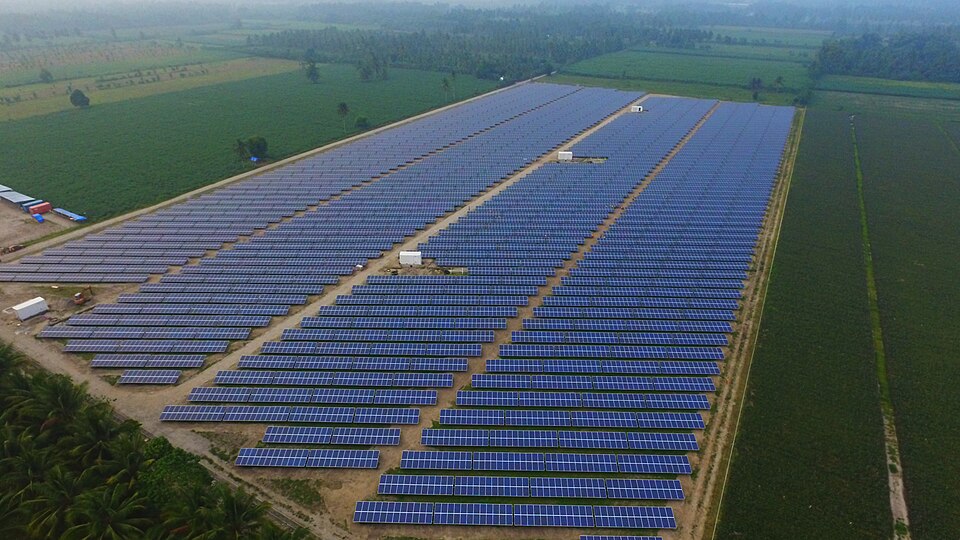
I remember watching This Changes Everything, a film about the climate crisis and its roots in capitalism. I felt outrage at greedy oil execs and grief about fires so intense you can hear the incendiary crinkle. At the solutions part—glimpses of an aspirational future—I felt a different kind of unsettled. The utopia showed solar panels stretched to the horizon, sunlight glinting off metal. Was this our dream scenario: endless fields of hardware? It felt cold. Something was missing: life.
This is not a diatribe against solar energy. (Full disclosure: we’ve had a modest array since 2019.) Rather, I’m concerned that solar has been presented to the climate-worried public as a panacea, that a wholesale switch to solar would stabilize the climate. The veneration of solar has taken up the oxygen in the climate conversation.
My inner alarm rang upon learning about Shaftsbury Solar, the 20-megawatt project that entails clearing 40-plus acres of forest about ten miles north of my house. Vermont’s Climate Action Plan had instituted steep emissions reductions, and the expedient way to meet this mandate is to ramp up solar. Despite honorable intentions, our legislature rolled out the green carpet for out-of-state corporate entities to vie for the incentives, carbon credits, and tax write-offs on offer, as well as opportunities to rebrand as “sustainable”. In so doing, the State is sanctioning the destruction of ecosystems, thereby undermining climate resilience. Plus, such measures reify the exploitative capitalism that climate action was supposed to counteract.
As I see it, the rush to solar-at-all-costs derives from two misunderstandings. One is that climate change is about carbon. Climate action is discussed in terms of reducing greenhouse gas emissions, primarily CO2. Certainly rising CO2 is a climate problem, but it’s not the only factor and it doesn’t occur in isolation. If we inquire how the earth regulates climate, we see it’s largely through the water cycle. Water’s phase changes—from solid to liquid to gas and back—retain, dissipate, transfer and release tremendous amounts of heat. In turn, these water processes are driven by the actions and interactions of flora, fauna and fungi: by life. In other words, destroying unscathed ecosystems (e.g. a mature forest) undercuts their climate-regulation capacity, regardless of what the numbers say about carbon.
Another misunderstanding is the assumption that solar replaces fossil fuels. Many Vermonters see conceding chunks of land to bulldozers as justified because of the oil and gas that won’t be burned—albeit in another state. Unfortunately, this is not the case. Rather than substitute for fossil energy, renewable energy adds to the amount of energy used.
One 2019 study entitled Energy Transitions or Additions? finds technological energy advances prompt an increase in the use of the original source. For example, the advent of fossil fuels offered alternatives to wood burning. However, this meant more forest clearing, because now there were gas-fueled chainsaws, log trucks and lumber mills, setting the stage for a building boom. And so, paradoxically, a new type of energy creates the conditions for further resource exploitation.
This paper was written before the deployment of AI, which now tags along on every search and video call (unless you can figure out how to disable it). AI data centers require vast amounts of electricity for computing, memory and temperature regulation. Globally, this now uses as much energy as Japan. Where will the power come from? We might have trusted Vermont’s solar bounty would heat New England homes, but it will more likely enable ChatGPT queries. The growth of AI seems inexorable, even if no one’s been given a choice. How many hillsides are we willing to lose to fuel AI’s latest iteration?
Two days before the PUC approved the Shaftsbury project, I attended a Merck Forest program on “Vermont’s Wild Future” with Executive Director Rob Terry and The Nature Conservancy VT State Director Eve Frankel. It was sobering. As we strolled the forest trail, Rob noted the trees in trouble. He said ecologists are resigned to losing nearly all ash to the emerald ash borer, and now beech leaf disease is decimating one of our most common trees, vital to bears, deer and pollinators. We might see beech another five or ten years. I glanced at the trees around me and shuddered. I felt I was standing in the shade of ghosts.
The Shaftsbury forest in question has many robust white ash trees with no sign of the disease, which could aid researchers’ quest to study ash resistance. Rob Moir of the Massachusetts-based Ocean River Institute provided testimony to the PUC and reported several old trees six-plus feet in diameter. He called it a fine example of Rich Northern Hardwood Forest and attributes its vigor and diversity to the geological composition and nutrient-rich soil of the Taconic Range.
The Merck event brought home what’s at stake: a redoubt for songbirds; food for bears; a buffer against flooding. The business interests behind the project will certainly make money: yet another story of private profit with costs borne by nature and the public. Alas, we’ve misread the repercussions of surrendering our landscape to solar. We think we’re slaying the dragon, but we’re really just feeding the beast.
ZNetwork is funded solely through the generosity of its readers.
Donate




