


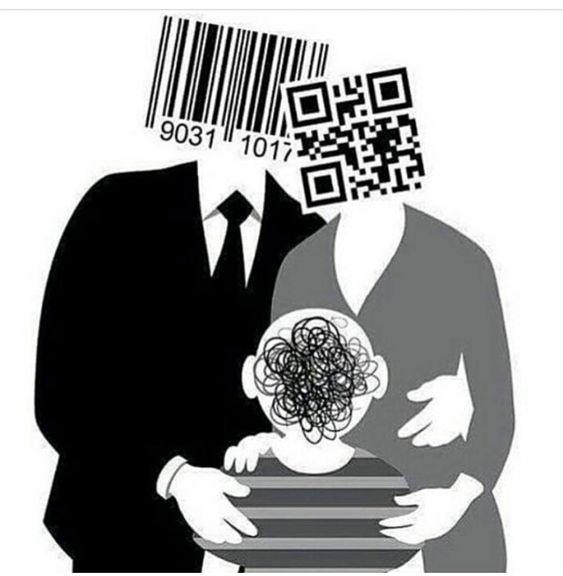
Norms, in a society or culture, are the accepted ways of behavior we grow up observing and learning in our everyday lives. Norms are rarely backed up by laws, though when norms are grossly violated, calls for legislation may ensue.
In our country, voluntarily recognized fundamental norms have been breaking down. The chief impetus for this collapse is the ascending supremacy of commercial power over civic values. The surrender of the latter to the former in sector after sector has spelled the decline of our country as measured by its own promise and pretensions. Compared to 70 years ago, there are almost no commercial-free zones anymore. Almost everything is for sale — or should be in the minds of dogmatic free market fundamentalists and its apologists like Milton Friedman and his disciples.
Let’s be specific. When I was a schoolboy in the 1940s, the top CEOs of the Fortune 300 largest companies kept their pay at about 12 times the salary of the average worker in their business. If any CEO had sought to increase that ratio to 50 or 300 times, he would be roundly condemned from the pulpits to the boards of directors, to civic and charitable groups. In those days, CEOs also did not want to arouse the anger of their industrial labor unions or encourage workers to demand more pay in response.
Now CEOs of major companies pay themselves, via a rubber stamp board of directors, 300 or more times the average worker’s salary. Some are more extreme, such as Apple’s CEO Tim Cook, whose pay package this year comes down to $833 a minute on a 40-hour week. Hardly a squeak of objection is heard from anyone. Hey, you didn’t know? Grab whatever you can get is the mantra of greedy CEOs.
By contrast, it used to be an unchallenged norm to pay women less for doing the same work as men. No more. In 1963 the Federal Equal Pay Act made it illegal to pay women lower wages than men.
It used to be against strict social norms for companies to sell directly to children, bypassing their parents to exploit youngsters’ vulnerabilities. For one, little kids cannot distinguish between ads and programming. Now commercial marketing directly to children — junk food and drink, toxic medicines and cosmetics, harmful toys, violent entertainment videos and more — is a business approaching a half-trillion dollars a year. The iPhone doubles down as a gateway to this electronic child molestation.
Gambling used to evoke strong moral condemnation, thereby driving it underground to the back of newsstand stores, often called the “numbers racket.” Now gambling is at your fingertips via your computer. State governments run lotteries. Business is moving big time into sports gambling. Casinos are everywhere.
The norms against gambling were promoted by organized religion. When the churches started allowing big bingo in their basements, the defenses against above-ground, organized gambling began to crumble. The gambling boosters claimed it would produce tax revenue and help the elderly. This deception was part of the pitch by the builders of the first casinos in Atlantic City, N.J. Now gambling casinos are described as economic development engines, however fraudulent that assertion is seen by economists.
Far from age-old stigmas, a failed gambling czar was selected (by the Electoral College) as U.S. president in 2016. He broke more norms and laws daily than all previous presidents, and until recently has gotten away with these violations.
Historically, there have been cruel norms beyond avarice. Some were ensconced into law — such as legalized slavery before the Civil War.
Child labor in dungeon-like factories was not only legal, it was accepted as a norm. It has been illegal for almost a century since the law memorialized the new norm that youngsters should be going to schools instead of going to sweatshops.
It’s good to think about norms — big and small — as yardsticks of what kind of society we want. Not doing so, over time, can result in deeply recognized norms such as protecting the personal privacies of the young and old, smashed to smithereens by Facebook, Instagram and other Internet barons who make huge profits by getting, for free, their customers’ detailed personal information every day, which is then sold to advertisers.
It is so important for active citizens who strive to get, for example, health, safety and economic protection standards made into law by petitions, lawsuits, marches, writings or lobbying not to despair when they so often lose these battles. For even if they do not prevail, they are keeping alive the public, decent, respectful underlying norms of our society that can be advanced and ultimately provided with legal protections.
You must have some crucial norms you see being fractured or weakened. Speak up about them, otherwise you’ll find them going, going, gone. It is time to reverse the lowering of expectations by people.


Nader is opposed to big insurance companies, "corporate welfare," and the "dangerous convergence of corporate and government power." While consumer advocate/environmentalist Ralph Nader has virtually no chance of winning the White House, he has been taken quite seriously on the campaign trail.Indeed, he poses the greatest threat to Sen. John Kerry. Democrats fear that Nader will be a spoiler, as he was in the 2000 election, when he took more than 97,000 votes in Florida. Bush won Florida by just 537 votes. The win gave Bush the election. Nader, an independent candidate, who also ran in 1992 and 1996, is on the ballot in 33 states, including Florida, Ohio, Wisconsin, and New Mexico—tough battleground states. Kerry stands a chance of losing those vital states if Nader siphons away the votes of Democrats. President Bush and Kerry have been in a statistical dead heat in nationwide polls, and votes for Nader could well tip the balance in favor of Bush.Many Kerry supporters contend that a vote for Nader is in reality a vote for Bush and have made concerted efforts to persuade Nader to throw his support behind the Democratic candidate. Nader, however, has held fast to his convictions that the two candidates are nearly indistinguishable and are pawns of big business.Designing Cars for Everything but SafetyNader was born in Winsted, Connecticut, on Feb. 27, 1934 to Lebanese immigrants Nathra and Rose Nader. Nathra ran a bakery and restaurant. As a child, Ralph played with David Halberstam, who\'s now a highly regarded journalist.Nader with Democratic nominee Jimmy Carter outside of Jimmy Carter\'s home on August 7, 1976, discussing Consumer Protection. (Source/AP) Nader graduated magna cum laude from Princeton in 1955 and from Harvard Law School in 1958. As a student at Harvard, Nader first researched the design of automobiles. In an article titled "The Safe Car You Can\'t Buy," which appeared in the Nation in 1959, he concluded, "It is clear Detroit today is designing automobiles for style, cost, performance, and calculated obsolescence, but not—despite the 5,000,000 reported accidents, nearly 40,000 fatalities, 110,000 permanent disabilities, and 1,500,000 injuries yearly—for safety."Early Years as a Consumer AdvocateAfter a stint working as a lawyer in Hartford, Connecticut, Nader headed for Washington, where he began his career as a consumer advocate. He worked for Daniel Patrick Moynihan in the Department of Labor and volunteered as an adviser to a Senate subcommittee that was studying automobile safety.In 1965, he published Unsafe at Any Speed, a best-selling indictment of the auto industry and its poor safety standards. He specifically targeted General Motors\' Corvair. Largely because of his influence, Congress passed the 1966 National Traffic and Motor Vehicle Safety Act. Nader was also influential in the passage of 1967\'s Wholesome Meat Act, which called for federal inspections of beef and poultry and imposed standards on slaughterhouses, as well as the Clean Air Act and the Freedom of Information Act."Nader\'s Raiders" and Modern Consumer MovementNader\'s crusade caught on, and swarms of activists, called "Nader\'s Raiders," joined his modern consumer movement. They pressed for protections for workers, taxpayers, and the environment and fought to stem the power of large corporations.In 1969 Nader established the Center for the Study of Responsive Law, which exposed corporate irresponsibility and the federal government\'s failure to enforce regulation of business. He founded Public Citizen and U.S. Public Interest Research Group in 1971, an umbrella for many other such groups.A prolific writer, Nader\'s books include Corporate Power in America (1973), Who\'s Poisoning America (1981), and Winning the Insurance Game (1990).
ZNetwork is funded solely through the generosity of its readers.
Donate




