


I was glad to open the New York Times last Monday and see the headline: “In Steinbeck’s Birthplace, a Fight to Keep the Libraries Open.†After visiting Salinas, Calif., over the weekend, I was eager to find out whether the disturbing and uplifting events there would gain any significant national coverage.
It was a close call. Other than the medium-length Times article, accompanied by a photo of an 8-year-old girl standing next to an endangered library, the media coverage was sparse. And the Times piece — while doing a good job of focusing on the danger that all three public libraries in Salinas might close by midyear — bypassed the connections that many participants in a 24-hour “read-in†had made between lavish spending on war overseas and a funding crisis for libraries at home.
Through the night’s darkness, on an outer wall of the Cesar Chavez Library, a projection showed the mounting revenues from Salinas taxpayers that have helped to pay for the war in Iraq — already more than $80 million. The odometer image kept spinning while authors read into the night as part of the protest against the planned closure of the public libraries in a city that John Steinbeck once called home.
Looking at the dozens of tents pitched across the library’s lawn, I thought of an encampment that I saw 37 years ago on the mall of the nation’s capital. Shortly after the death of Martin Luther King Jr., the remnants of the Poor People’s Campaign had come to Washington in order to demand economic justice at a time of war. “A nation that continues year after year to spend more money on military defense than on programs of social uplift is approaching spiritual death,†Dr. King had said.
Today, blocks from the public library named after the visionary farm-worker leader Cesar Chavez, the dire need for social uplift is apparent. Children play on concrete between rows of very shabby trailers. On the streets, grim signs of extreme poverty are everywhere. In largely Latino neighborhoods bereft of resources, the threatened closure of the public libraries looms as a kind of ultimate rebuff to residents’ humanity and aspirations.
While Americans debate the wisdom of the Iraq war, we rarely confront the domestic costs. What could have been done with the more than $150 billion already spent on the war? And what are the implications of the fact that huge expenditures for the war are continuing with no end in sight?
As usual, the low-income communities suffer most. Their young men and women are more likely to come home wounded, or not come home at all. But for most people the heaviest impacts of the far-away war are economic. Public libraries are falling victim to the same budget priorities that opt for military largesse while cutting back on a range of basic social programs for health care and education.
“One of the great problems of mankind is that we suffer from a poverty of the spirit which stands in glaring contrast to our scientific and technological abundance,†King wrote in 1967. Those words appeared in his book “Where Do We Go From Here: Chaos or Community?â€
Retrospective media coverage has whitewashed King while ignoring how his messages are radical challenges to the status quo of today. For instance: “The curse of poverty has no justification in our age. It is socially as cruel and blind as the practice of cannibalism at the dawn of civilization, when men ate each other because they had not yet learned to take food from the soil or to consume the abundant animal life around them. The time has come for us to civilize ourselves by the total, direct and immediate abolition of poverty.â€
What’s happening in Salinas is an extreme version of trends in communities across the country. Americans are finding library doors locked more often, and librarians anticipate that the worst is yet to come. We can only imagine what Dr. King would have said about a country where children can no longer be assured that public libraries will stay open.
The young people who helped to organize the 24-hour read-in at the Cesar Chavez Library were born long after the Poor People’s Campaign collapsed in the wake of the King assassination in early April 1968. Yet they face enduring consequences of that campaign’s failure.
History is a prologue written in stone, but the present offers new possibilities. The next generations deserve a future. And we all need media coverage that provides news with depth and context in human terms.
_________________________________________
Norman Solomon’s latest book, “War Made Easy: How Presidents and Pundits Keep Spinning Us to Death,†will be published in early summer. His columns and other writings can be found at www.normansolomon.com. To find out more about the ongoing campaign to save the public libraries in Salinas, visit:
http://www.codepink4peace.org/National_Actions_Salinas.shtml

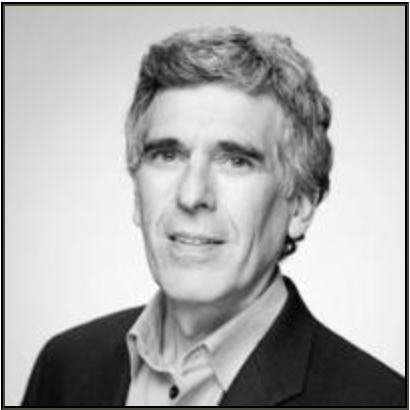
Norman Solomon is the national director of RootsAction.org and executive director of the Institute for Public Accuracy. The paperback edition of his latest book, War Made Invisible: How America Hides the Human Toll of Its Military Machine, includes an afterword about the Gaza war.
ZNetwork is funded solely through the generosity of its readers.
Donate




