


Source: Tedglick.com
People working together can stop bad things and make good things happen. That’s a lesson of history. Organized people don’t always win, but individuals trying to change things by themselves almost always lose.
What are some basic organizing tips to help people facing unjust or oppressive conditions, or planned imposition of destructive projects, to get themselves organized?
A group can be as few as two people, if both are committed to meet regularly, do work in between, and reach out to involve others. You need a core group that consistently meets to figure out what needs to be done, and which communicates that to a larger network of active supporters. The more the better, as long as people are committed, work collaboratively and do work in between meetings.
When the core group meets, discussion should be conducted in such a way that everyone is encouraged to speak up and participate, and everyone is expected to do things after the meeting is over. Although there are always individuals who are more motivated, or have more experience or skills or energy, they will be poor leaders if they don’t work in a collaborative way with others.
Meetings should be as often as people feel is necessary and do-able. Generally, if there’s a big issue that has urgency and immediacy, groups should meet once a week. They may sometimes need to meet on an emergency basis or even more often than a week. If conducting a big campaign, group leaders meeting daily by phone or via internet may be necessary at some point.
It is a good idea at the first meeting, and possibly at the next meeting or two, to come up with a group mission statement, a short, 2-3 sentence (usually) statement about why the group exists and its vision. For example, a group fighting a proposed new gas or oil pipeline in their community might agree on something like this: “People Before Pipelines exists to stop the building of the (name) pipeline in our community. We will work with anyone who agrees with that objective. We want to prevent the pollution and safety risks that always come with fossil fuel pipelines.”
Every meeting should have an agenda agreed upon by everyone in the meeting as the first order of business. The most important issues should be put first to ensure adequate time is given to them. Sometimes the less important issues have to be postponed to a future meeting because there’s not enough time to cover everything on the agenda.
Time should be built in for personal sharing, checking in on how people are doing, building a sense of community and mutual support. And having leadership with a sense of humor is a definite plus.
It should be understood by all in the group that the purpose of discussing an agenda item is to come to a decision about what should be done about it and who will follow through after the meeting. Decisions can be made either by majority wins or by consensus.
Seeking for consensus is the best way for the group to function, but if there’s strong feelings on an issue, it may be necessary to vote.
“Consensus-seeking upholds the value of trying to make decisions which are agreed upon by all, which is without question a worthy goal. But the reality of decision-making within an organization is that, sooner or later, an issue will arise on which there are strong differences. When that is the case, when total consensus is not possible, a group can take a vote. There is usually a super-majority percentage that needs to vote affirmatively, from 60% if the tolerance for prolonged discussion is low to as high as 90% if the opposite.” (p. 70 of 21st Century Revolution)
Groups need someone to facilitate, or chair, the meeting, someone to take notes, and someone to deal with money raised to help carry out the group’s activities. Usually there are also people who take responsibility for leading work in a particular, on-going major area, or areas, of focus. An outreach coordinator, someone to reach out to local press, and someone to do internet/social media work are also usual areas where leadership is needed. Some people can do more than one of these tasks.
Whether one person always does each of these tasks, or there is a rotation of some or all of these tasks, should be decisions made by the group.
With this group structure and an agreement to work in a collaborative, respectful way, your group is ready to go to work!
Ted Glick works with Beyond Extreme Energy and is president of 350NJ-Rockland. Past writings and other information, including about Burglar for Peace and 21st Century Revolution, two books published by him in 2020 and 2021, can be found at https://tedglick.com. He can be followed on Twitter at https://twitter.com/jtglick

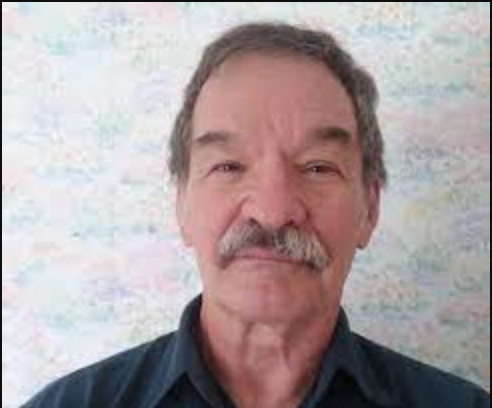
Ted Glick has devoted his life to the progressive social change movement. After a year of student activism as a sophomore at Grinnell College in Iowa, he left college in 1969 to work full time against the Vietnam War. As a Selective Service draft resister, he spent 11 months in prison. In 1973, he co-founded the National Committee to Impeach Nixon and worked as a national coordinator on grassroots street actions around the country, keeping the heat on Nixon until his August 1974 resignation. Since late 2003, Ted has played a national leadership role in the effort to stabilize our climate and for a renewable energy revolution. He was a co-founder in 2004 of the Climate Crisis Coalition and in 2005 coordinated the USA Join the World effort leading up to December actions during the United Nations Climate Change conference in Montreal. In May 2006, he began working with the Chesapeake Climate Action Network and was CCAN National Campaign Coordinator until his retirement in October 2015. He is a co-founder (2014) and one of the leaders of the group Beyond Extreme Energy. He is President of the group 350NJ/Rockland, on the steering committee of the DivestNJ Coalition and on the leadership group of the Climate Reality Check network.
ZNetwork is funded solely through the generosity of its readers.
Donate




