


Every child has that book. The one that breaks your heart wide open. Bridge To Terabithia. The Velveteen Rabbit. Charlotte’s Web. The Hate U Give.
For me, it was Sadako and the Thousand Paper Cranes. Based on the true story of Sadako Sasaki, it tells the story of a 12-year-old girl who survived the nuclear bombing of Hiroshima as a toddler, but later died of leukemia, or as it was called at the time ‘atom bomb disease’. Drawing from a traditional belief in Japan, she starts to fold 1,000 origami cranes in hopes that her wish for survival will be granted. When she does not succeed, her friends and family finish making the paper cranes after her death.
As a young reader, this was the story that broke my heart and taught me that not all stories have a happy ending. The good guys (or girls) don’t always win. It presented a view of WWII that no other movie or book offered. It didn’t glorify the mushroom cloud or show the shocking horror of an obliterated city. No, Sadako’s story simply showed the reality of war from the eyes of a child.
It turned me into a lifelong peace activist. Perhaps that’s why Sadako and the Thousand Paper Cranes is banned in Florida.
More than 100 books have been banned or put under review by school and public libraries in Florida. The titles include classics like The Bluest Eye and Beloved by Toni Morrison, Of Mice and Men by John Steinbeck, Letter from Birmingham Jail by Martin Luther King Jr., and Slaughterhouse-Five by Kurt Vonnegut. The list has a decidedly anti-diversity slant, overwhelmingly trying to eliminate stories about racial justice, the Civil Rights Movement, Black Lives Matter, Indigenous Rights, women’s rights, transgender health, queer love, migrants, horrors of war, and refugees, and so forth.
Each one removes another piece of history, reality, and humanity from the shelf. But children need these stories. And we need the next generation of adults to know them.
These books aren’t just introducing children to tough topics. In many cases, they’re also affirming the realities these children already live. Migrant and refugee children deserve to have their experiences acknowledged just as much as Anne of Green Gables. Queer, trans, gay, and lesbian children deserve to have their sexualities affirmed just as much as Jo and Laurie in Little Women. Black and Brown readers deserve to see heroes of color as powerful and compelling as Harry Potter and Percy Jackson.
Young people are surviving gun violence, school shootings, poverty, migration, war, climate disaster, and other dangerous realities. These children aren’t sheltered by the exclusion of their stories. They are abandoned twice over as we render them unseen and unacknowledged.
When we ban books, we do not protect any of our children, no matter their life experiences. Ignorance won’t keep anyone safe, not in the short or long term. Many of the groups and individuals behind the Florida book bans seem to be suppressing history in order to control the future. But when you remove the narratives of resistance and diversity, what is left is the same violent, militarized, racist, sexist, discriminatory, and exploitative world that got us into this mess in the first place.
What remains in the gutted wreckage of literature left behind by these book bans is the same worldview that killed Sadako Sasaki and thousands more like her; the world that murdered Black children like Trayvon Martin and Tamir Rice; the world that has gunned down hundreds of schoolchildren in mass shootings; the world that separates thousands of children from their parents as they cross borders hoping for safety; the world that beat and bullied transgender teen Nex Benedict until they committed suicide; the world that has threatened the existence of all future generations through ecological collapse.
The banned books list isn’t about protecting children. It’s about protecting this empire of abuse.
And worse, the book bans target stories of resistance that could help young people change the injustices they face. Here are a few other books on the banned list: The Hill We Climb: An Inaugural Poem for the Country, by Amanda Gorman; The Hate U Give, by Angie Thomas; Hiawatha and the Peacemaker, by Robbie Robertson; Anne Frank’s Diary: The Graphic Adaptation, by Ari Folman; Persepolis: The Story of a Childhood, by Marjane Satrapi.
Books like these give young readers courage to rise up for a better world. I know this personally … 30 years after reading Sadako and the Thousand Paper Cranes as a schoolchild, I folded thousands of paper cranes to protest nuclear weapons at the birthplace of the bomb: Los Alamos.
On the 70th anniversary of the bombing of Hiroshima and Nagasaki, I was asked to help organize a protest at Los Alamos. Hundreds of people gathered at this remote spot in the high desert of New Mexico.
The rally took place at Ashley Pond – the eerily bucolic city park where the original laboratory stood – and 70,000 paper cranes fluttered from the rafters of the bandstand. They had been folded by people around the world as a message of peace and disarmament from Japan, Bolivia, Mexico, Greece, France, Iran, and beyond.
Since the publication of Sadako’s story, the paper cranes have become an international symbol of humanity’s desire for a world without nuclear weapons. It was a profound sight to see these cranes hung at the exact location where Sadako’s death was engineered.
If Sadako and the Thousand Paper Cranes is removed from library shelves, there will be more atomic bombings and more children like Sadako. Put the book back on the shelf. Let it break our children’s hearts, our hearts. Then let us work across the generations to make sure Hiroshima and Nagasaki – and all the other injustices of our world – never happen again.

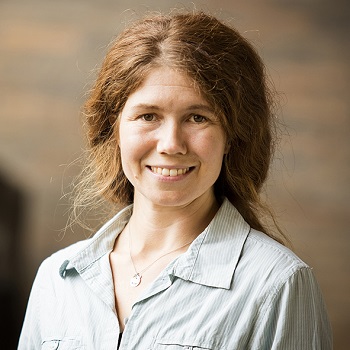
Rivera Sun, syndicated by PeaceVoice, has written numerous books, including The Dandelion Insurrection and the award-winning Ari Ara Series. She is the editor of Nonviolence News, Program Coordinator for Campaign Nonviolence, and a nationwide trainer in strategy for nonviolent campaigns. Rivera has been honored for her literary work and social justice efforts in the Americans Who Tell The Truth Portrait Series.
ZNetwork is funded solely through the generosity of its readers.
Donate




