


Despite the split, members of the Respect party are furthering socialism around the country. What can we learn from them?
The gap to the left of Labour grows ever wider, but once again the left has failed even to lay down even a solid foundation stone towards filling it. Witness the implosion of Respect, with two rival meetings this Saturday.
Can anything be learned for the future or is this simply a moment of despair?
Personally, I didn’t invest energy in Respect, beyond cheering Galloway‘s victory in a BBC studio on election night. I’d learned the hard way in the Socialist Alliance that the SWP leadership was not going to abandon its sectarian determination always to build itself rather than put its considerable capacities into the building of a far more broadly based and plural political voice of the left. And to be honest, although I was impressed by Galloway’s oratorical skills, my feminism, my instinctive dislike of leaderism and my aghast observations of the Scargill and then the Sheridan debacles made me wary of an organisation that depended so much on a hero.
But it’s not all bad. There are positive lessons as well as negative ones, especially if one looks beyond London (always a good idea). In Preston and Birmingham, Respect branches have begun to practice a different kind of politics, different both from the varieties of parliamentary socialism and from the vanguardist pretensions of the SWP leadership.
When Michael Lavalette became a councillor, initially for the Socialist Alliance and then Respect, in an inner city ward of Preston, he found that no Labour councillors held individual surgeries. He made it one of his first priorities to take up personal cases by making connections with national and international issues. His method was to be available where people gather, from the Catholic church and the mosque to trade union and community meetings. As well as having a massive caseload, he and an alliance of left Labour (and sometimes Liberal Democrat) councillors have won numerous victories, through a mixture of campaigning pressure outside the council and shrewd alliance-building inside it. Over 50% of resolutions proposed by Lavalette have been successful, including an environmental audit of all council policies, a commitment to an integrated transport system, and the successful blocking of the South African multinational Netcare’s involvement in the local hospital. He is one of two SWP members on Respect’s local branch committee of six, and very insistent on the SWP’s role as a minority in a much wider coalition. Salma Yaqoob and Mohammed Ishtiaq work in a similar way in Birmingham, working with community and trade union campaigns and challenging the council leadership on issues on which everyone else is silent, for instance the damaging consequences of the private finance initiative for the city.
Here are two experiments in creating a new politics, giving discontent a political voice at a time when critical opinion otherwise gets drowned in an apolitical miasma of consultations, partnerships, targets and overstressed voluntary organisations, bogged down in bidding for funds to meet basic social needs.
The point of drawing attention to these is not to create a warm feeling in a cold climate, nor to polish the tarnished image of Respect(s): similar examples could be drawn from the work of Socialist party councillors in Coventry or the Independent Working Class Organisation councillors in Oxford, Green party councillors in Brighton and so on.
The point for me about such local experiments is that they are effective because they are answer questions that we (“we” being a wide spectrum of independent and open-minded pluralist socialists) must face if we are to effectively develop an organised political force. (And here I am leaving aside for the moment the urgent need for a proportional electoral system.)
First, what is the point of a political party? As we answer this we should bear in mind two important features of the present situation. On the one hand, there is the serious crisis of the institutions of representative democracy. Any political party of the left that is not in control of its own identity and aware of its independence from these institutions can become controlled by them – a factor in the Respect debacle.
On the other hand, in this age of social movements and networks, a political party has no monopoly over the process of social change. A party of the left must have its fulcrum in the movements and networks that have been built up in the past decades outside political institutions, but must at the same time promote the demands and needs of these struggles within and against these institutions, seeking all the time to open them up and redistribute power outwards. This is how Lavalette and Yaqoob are interpreting the role of Respect, building it as a federal coalition without seeking to corral it into one organisation.
So the second question is how do we build a political party that is modest in its role, rooted in society and social conflicts, not imprisoned in the institutions, plural and open in its culture, democratic in its internal structures and participatory in its recognition of the capacity and knowledge of all? The brevity required by the art of blogging requires me to leave this as an open question (see the forthcoming Red Pepper for an extended analysis of the Respect story, by Alex Nunns). But a test of whether either of the remnants of Respect who meet tomorrow are capable of learning from their process of self-destruction will be whether such principles are explicitly agreed.

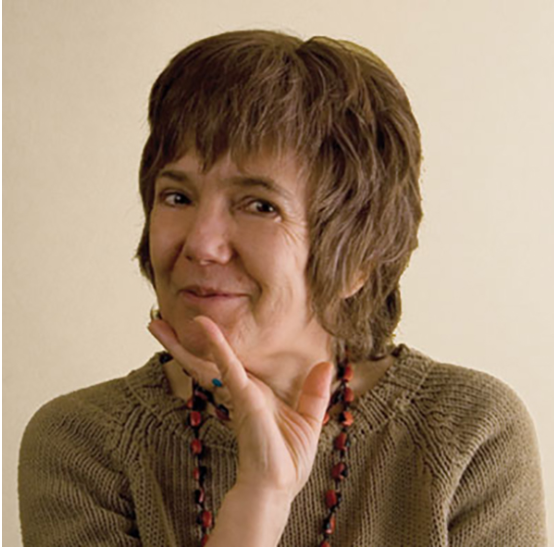
Hilary Wainwright is Research Director of the New Politics Programme at the Transnational Institute and editor of Red Pepper, a popular British new left magazine. She is also an Honorary Fellow in Sociology at Manchester University, UK. Her books include Reclaim the State: Adventures in Popular Democracy (Verso/TNI, 2003) and Arguments for a New Left: Answering the Free Market Right (Blackwell, 1993). She has written for ZNet, The Guardian, The Nation, New Statesman, Open Democracy, Carta, Il Manifesto and El Viejo Topo, as well as appearing as a commentator on BBC1, BBC Radio 4 and the BBC World Service. She has been a Senior Research Fellow at the International Labour Studies Centre, University of Manchester; a Research Fellow at the Centre for the Study of Global Governance at the London School of Economics, at Durham University and at the Open University, UK; Visiting Professor at the University of California, Los Angeles; and a Visiting Scholar at the Havens Center, University of Wisconsin, Madison and at Todai University, Tokyo. Wainwright also founded the Popular Planning Unit of the Greater London Council during the Thatcher years, and was convenor of the new economics working group of the Helsinki Citizens' Assembly from 1989 to 1994.
ZNetwork is funded solely through the generosity of its readers.
Donate




