


It really hit me in the 1980s while living in Boston. At that time the southern Irish economy was a complete mess. People were the greatest export from Ireland, and a lot of them were coming to the USA. At the same time, immigration from Haiti and the Dominican Republic was increasing, and into Boston these three groups came.
Documented or undocumented all three groups found themselves looking for work and housing. As a struggle for the rights of immigrants and against discrimination emerged, Haitians and Dominicans began to coalesce, but the Irish were a bit stand-offish. Immigrant rights activists were at first perplexed until they uncovered that the Irish were being encouraged by Irish American politicians to keep themselves separate from other immigrant groups because it was likely that a ‘special’ deal could be cut for them.
To put it another way, the Irish were being trained to become and accept becoming white.
The public face of immigration in the USA is not a rainbow; it is brown. Don’t get me wrong. People from Asia, Africa, Europe AND Latin America are migrating to the USA, among other places. Yet in the popular media the portrayal of the immigrant is usually that of a Latino. Periodically one sees the face of an Asian or African. Rarely, unless one is discussing the Russian mafia, does the European face of immigration come to be unveiled.
This deserves exploring. If one goes to New York City, for instance, one will find that East European immigrants have made significant in-roads in the construction industry as both documented and undocumented workers. In fact, much of the work that has been carried out to rid buildings of deadly asbestos has been carried out by East European and Latino immigrants. Yet, East European immigrants seem to be almost invisible.
When anti-immigrant forces mobilize, they focus on creating a ‘Berlin Wall’ between the USA and Mexico. I have not heard about any walls keeping East Europeans out. I have not heard about stopping the East Europeans at the borders, when they exit planes or ships, or perhaps cross over from Canada.
In order to make sense of this we have to recognize that this racialization of immigration is not new and has very little to do with the numbers. In the 19th century while Asian immigrants were being persecuted, particularly on the West Coast of the USA, immigrants from Europe were coming to North American shores en masse. While it is certainly the case that there was widespread discrimination and prejudice by non- immigrants against southern and Eastern European immigrants, it never compared with the terror faced by Asians.
The problem for much of the USA with immigration is not so much immigration, but that there is so much immigration from South of the border, and specifically from Brown countries. This immigration upsets the racial balance–that is, the domination of a ‘white bloc’–that the ruling elites have attempted to hold in place since the founding of the USA (when it was declared that whites could become citizens, whoever the whites happened to be). Although there is a section of the Republican Party that would like to turn a segment of Latinos (and Asians) into honorary whites, this does not go down well with the more extreme Right-wing that would rather that the USA be a more ‘pure’ white republic.
What is odd is that many African Americans ignore the reality of this racialization. While it is the case that among lower waged workers there is job competition with Latino workers, it is also the case that there is job competition with many other unskilled immigrants. Yet, anti-immigrant forces EVEN within Black America will tend to focus on the Latino or Brown face.
Recognizing the racialization of immigration should help one understand that much of what we are witnessing is a scapegoating of Latinos for much larger forces and factors that are underway in US society. In previous commentaries I have written about this, most especially the restructuring of capitalism that has been underway and that immigrants are the victims rather than the source. I have also addressed immigration to the USA as a major result of US foreign policy that has destroyed the political and economic infrastructure of so many countries, e.g., El Salvador. The scapegoating that we are seeing, including the rise of violent militias and public demonstrations against immigrant day laborers, tends to focus on the Latino as if it is the Latino who is the source of all of our problems.
Were there to be a serious discussion of immigration in the USA, it would have to address why there is a differential in treatment between East European and Latino immigrants in the public mind and in reality. There would need to be a discussion as to who is and who is not threatening the jobs of non-immigrants–if anyone. There would need to be a discussion as to why nearly 200,000,000 people have been in the process of migrating to places outside of their homelands and what that says about contemporary capitalism.
Yet those who scapegoat the Latino want no such discussion. As long as the face of immigration– documented and undocumented–is an ‘evil’ Latino we are absorbed in a madness out of which there is no escape and for which there are no answers.
BlackCommentator.com Editorial Board member, Bill Fletcher, Jr. is a labor and international writer and activist, and the immediate past president of TransAfrica Forum.

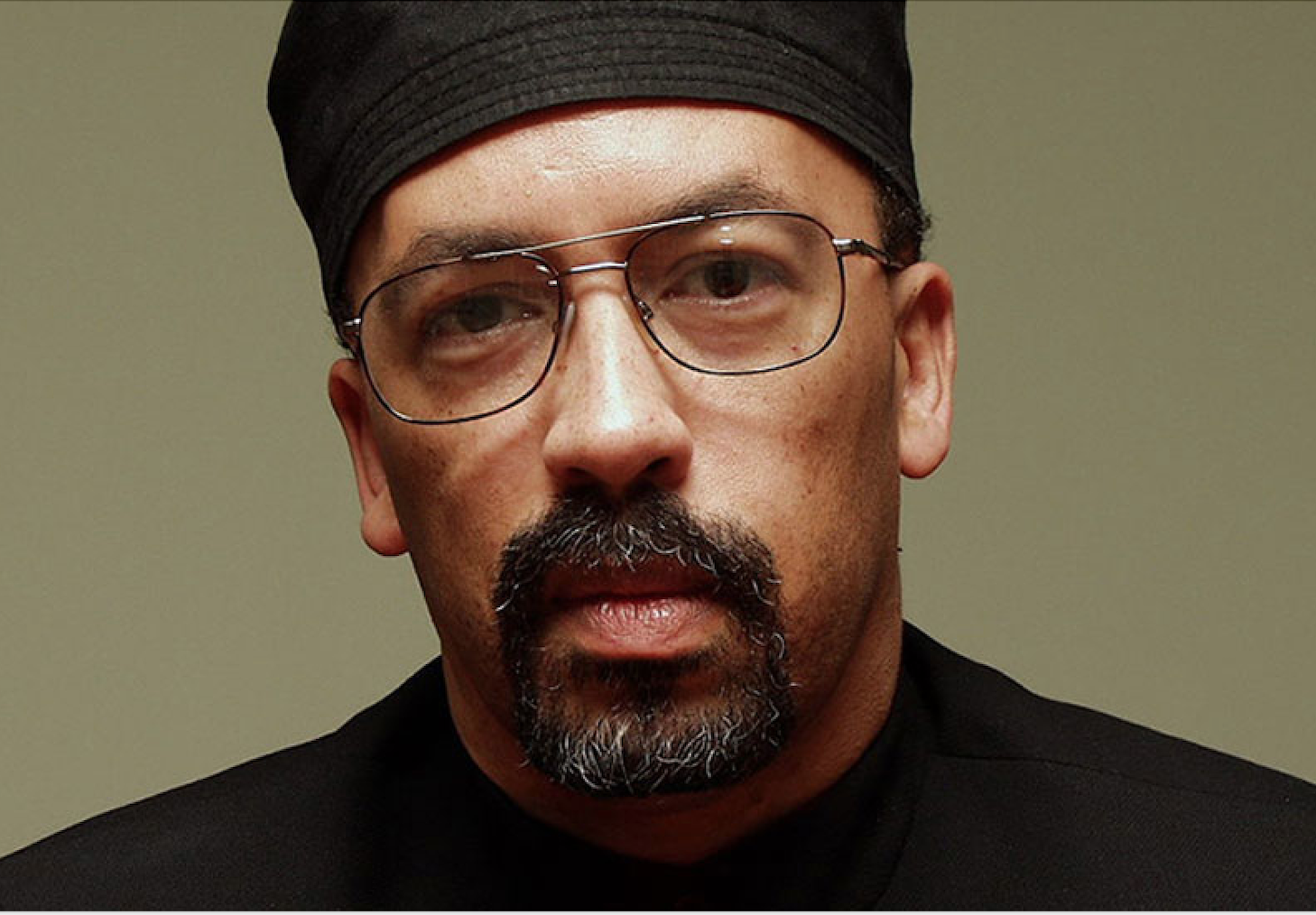
Bill Fletcher Jr (born 1954) has been an activist since his teen years. Upon graduating from college he went to work as a welder in a shipyard, thereby entering the labor movement. Over the years he has been active in workplace and community struggles as well as electoral campaigns. He has worked for several labor unions in addition to serving as a senior staffperson in the national AFL-CIO. Fletcher is the former president of TransAfrica Forum; a Senior Scholar with the Institute for Policy Studies; and in the leadership of several other projects. Fletcher is the co-author (with Peter Agard) of “The Indispensable Ally: Black Workers and the Formation of the Congress of Industrial Organizations, 1934-1941”; the co-author (with Dr. Fernando Gapasin) of “Solidarity Divided: The crisis in organized labor and a new path toward social justice“; and the author of “‘They’re Bankrupting Us’ – And Twenty other myths about unions.” Fletcher is a syndicated columnist and a regular media commentator on television, radio and the Web.
ZNetwork is funded solely through the generosity of its readers.
Donate




