


We are living in the period of late-stage capitalism—a stage where finance capital and large capitalists have violated the social contract of the New Deal era and embraced neoliberalism. They have abandoned their obligation to be the stewards of our productive capacity, cannibalizing it instead. The demands of Wall Street have been to make the highest possible return in the shortest amount of time no matter what the impact is on our communities, the environment, and the working class.
In the 1960s, 700,000 people worked in the manufacturing sector in Chicago. Today, it is 65,000—a 90% decline. In the 1960s, manufacturing represented 25-30% of GDP. Today, manufacturing represents 11% of GDP and it’s still declining. The de-industrialization of America was the principal cause of the deterioration of our society, particularly in Brown and Black communities.
The libertarian right facilitated this decline through offshoring, automation, and attacks on organized labor. And starting under the Clinton administration, if not earlier, the liberal center became a willing assistant to this process. But while the left has long critiqued the right and center for facilitating neoliberalization, the reality is that its devastating impacts are our fault too.
Generally, the progressive and left community has failed to advance a strategy for developing our productive capacity and leading in the creation of wealth. Many on the left could be characterized as left economists—militantly embracing strategies focused only on issues related to the redistribution of wealth, working conditions, and justice. This focus is at the heart of the Alinsky tradition–a framework of community organizing founded by Saul Alinsky in 1930s Chicago.
While continuing to lead the struggle for redistribution of wealth, union rights, and better working conditions, the left needs to lead strategies focused on the creation of wealth—work at the center of rebuilding the means of production as a foundation for a truly sustainable society. We need another organizing model.
Alinsky vs. Arizmendi: Redistribution or Control of Wealth?
The post-World War II era gave rise to two visionaries who sought to extend greater democracy and wealth to their low-income constituencies as part of a broader vision to change the world. Both were critical of capitalism as well as the kind of socialism practiced in the Soviet Union that relied solely on the state. Both mobilized the grass roots to exercise power on their own behalf and did so in the thousands, having a profound impact on the communities they served. Both are studied by young and veteran organizers around the world looking for new solutions to old seemingly intractable problems.
Saul Alinsky, influenced deeply by John L. Lewis of the United Mineworkers of America, advanced a vision for low-income communities that paralleled the successful organizing strategy of the Congress of Industrial Organizations. This was a strategy premised on the notion that the productive economy—the system through which wealth was created in the United States— was doing a decent job. After all, what was good for General Motors was good for the country. At that time, the profits of the big American corporations generally coincided with the long-term development of the sector they had invested in: GM made cars and seemed to be in it for the long term, making investments in new technology and generally keeping pace. IBM did the same with computers. US Steel did the same with steel. And traditional, typically white middle class communities where these big companies were located as well as the upper classes did quite well. But communities, workers, and entrepreneurs of color faced discrimination in every aspect of the economy and society including wages and conditions of work, access to ownership, housing, and the justice system.
Alinsky didn’t focus on the well-being of the means of production but on the improvement of the distribution of wealth that the system generated to include communities that were systematically excluded or shortchanged because they were Black, Latino, or working class. He and his organizations fought against all forms of discrimination and injustice. His pioneering organizations in Chicago—The Woodlawn Organization, the Back of the Yards, and the Organization for a Better Austin—were initiated by professional organizers recruited by the Industrial Areas Foundation, and later by emerging organizations that embraced the Alinsky approach.
In Austin, a community on Chicago’s West Side, the Organization for Better Austin imploded when a top leader turned out to be a spy for the police department. A number of smaller regional organizations such as the South Austin Community Coalition, the Northwest Austin Council, and the Northeast Austin Organization, and others formed. They mobilized and organized local residents based on their “self-interest” and around immediate and important demands for better and fair housing, for social and racial justice, for welfare reform, and other immediate issues just as their trade union parallel did in the big mills and plants around the country. They organized for the redistribution of wealth to their particular constituencies—leaving all the questions associated with the creation of wealth to corporate America.
At the same time, in the Basque region of northern Spain in the village of Mondragon, a priest named Father Jose Maria Arizmendi took a different tack. He was part of the Basque resistance to Franco, the Spanish fascist who had taken power in Spain in the late 1930s. During this time, he was arrested and narrowly escaped execution. He was assigned to the parish in the small town of Mondragon. Rather than just focusing on the broader distribution of wealth, he assumed in his approach that controlling and developing the means of production in light of the values and priorities of the local community should be the principal focus of organizing and organizational development. It was at the point of production, where work was done, that democracy should be extended, where worker-residents had the greatest leverage and power, and developed a cooperative structure to achieve this goal.
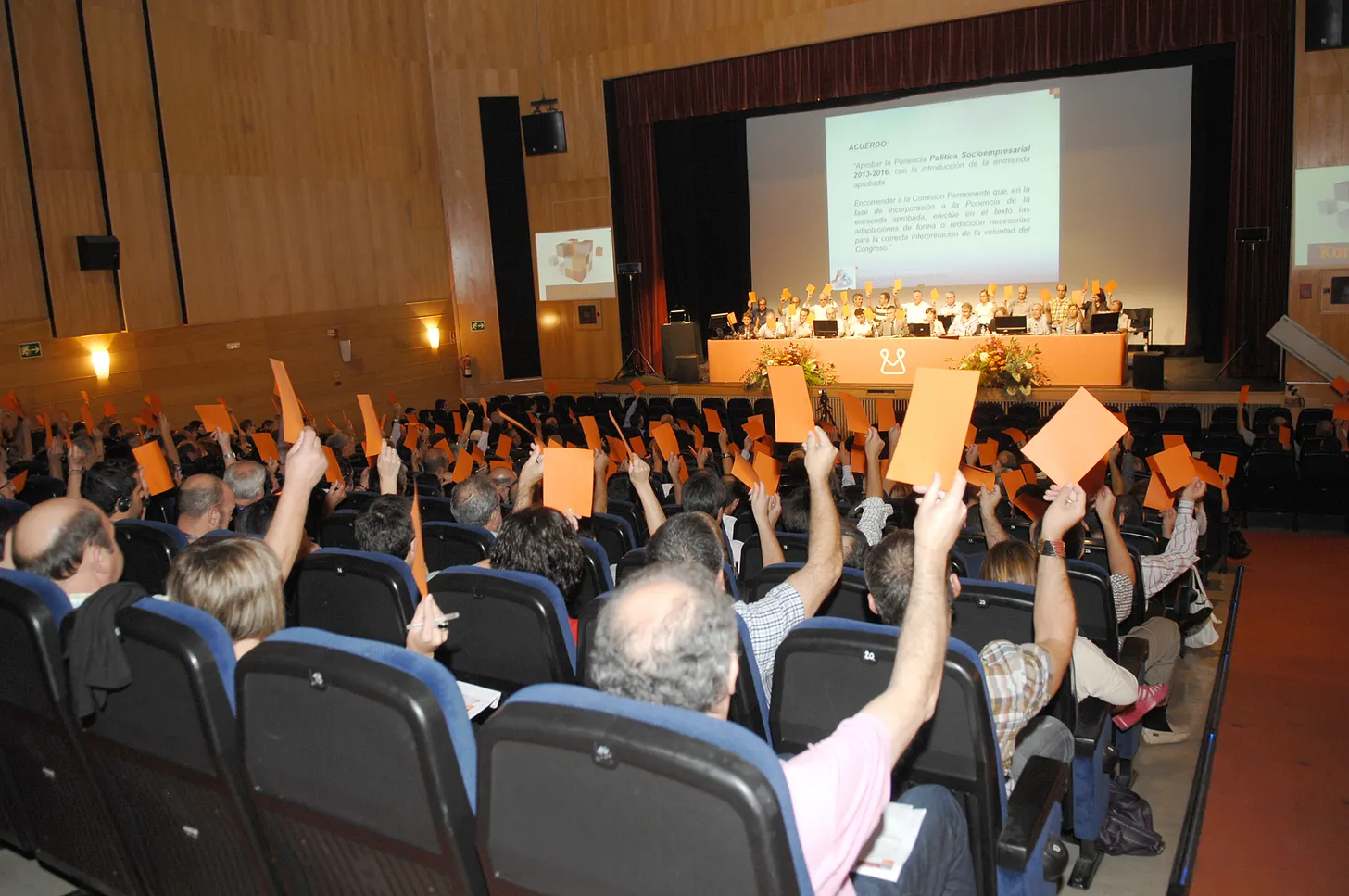
This was more complicated work but in the long run more powerful. In 1943, shortly after arriving in Mondragon, he organized a polytechnical school for young Basque people that taught both the technical skills of manufacturing and production as well as values. In 1956, with five graduates of this school, Arizmendi purchased a gas stove company and organized it on a cooperative basis—one worker/one vote and a compensation ratio of one to three (where the highest-paid manager could only earn three times the lowest-paid worker). The initial company, employing 30 worker owners,was successful. Another company was launched with another team, and then another, and then another. By the mid-1970s, they had some 45 companies employing 17,000 workers in manufacturing and retail as well as a shared cooperative bank, vocational schools, and housing cooperatives. In 2007, the Mondragon network—now the Mondragon Cooperative Corporation—had 85 companies employing 130,000 people globally, with major cooperatives in retail as well as manufacturing. Today, the Basque Country has over 3,000 cooperatives. Eroski is a big box retail store that is owned by its employees and owners and has kept Wal-Mart out of Spain.
Mondragon is the cutting edge of the Spanish industrial economy, and the region is recognized as one of the leading manufacturing regions in the global economy. Unemployment is very low and per capita income is high. Democracy is a reality in politics as well as in the economy. Arizmendi recognized the central role of wealth creation in society and the fact that market sophistication and competition could be combined with social values. Through organizing, leadership development, and organizational sophistication, Arizmendi led a movement that has contended successfully in the market and state and profoundly influenced civil society. While such worker cooperatives remain subject to the law of value and to capitalist competition, they still create seeds of a socialized economy to come.
Today, the Alinsky-inspired movement is less and less effective. The private sector has qualitatively changed. The powerful Low Road segment–seeking short-term gains by minimizing worker pay, benefits, and safety–is dominated by Wall Street and some of the large multinational publicly traded companies, shattering the social contract that made the Alinsky-inspired movement viable throughout the 1950s and 1960s. Among the most powerful companies, short-term gains for shareholders has replaced any desire or long-term commitment to particular companies, products, or sectors, much less the communities where production takes place.
The Economic Program for the Third Reconstruction
Embracing the issues related to the forces and relations of production significantly expands our influence in key areas of our economy and society. These issues must be a key component of the Third Reconstruction. It is where economic democracy takes hold and becomes a central component of the new socialist paradigm. We can lead in the expansion of the social/solidarity economy where millions of people participate in cooperatives in housing, farming, social services, health care and other sectors. We need to expand employee ownership and economic democracy in all sectors. This is where our base can learn to manage production guided by socialist rather than capitalist values—essential for revolutionary change. In production, we must embrace new technologies like robotics and artificial intelligence. Through economic democracy, it will be the working class determining how they are used, where they are used, and when they are used. Guided by a socialist vision and values, these technologies will contribute to building society rather than tearing it down.


A social movement in the US can no longer depend on limiting its role to just redistribution of wealth. Redistribution is required but no longer sufficient. It’s essential that those interested in sustainable communities take up the issues of wealth creation and find alliances with those in the business community who still share a contemporary version of the old idea of stewardship. From my perspective, Arizmendi was and is a more powerful and effective visionary in setting the course for organizing in communities than Alinsky.
Now more than ever we need to use perspectives such as his in not just asking others for development that includes community residents but making it happen in ways that remain under local control and guided by local values. We need to develop the skill and vision that allows those with a commitment to development that is environmentally, economically, and socially sustainable to compete in the market, in the state, and in civil society against the destructive Low Road trend. There is now a broad vacuum of leadership in the economy and society. We should contend with filling that vacuum with a vision that truly builds the community on behalf of its residents.


ZNetwork is funded solely through the generosity of its readers.
Donate




