

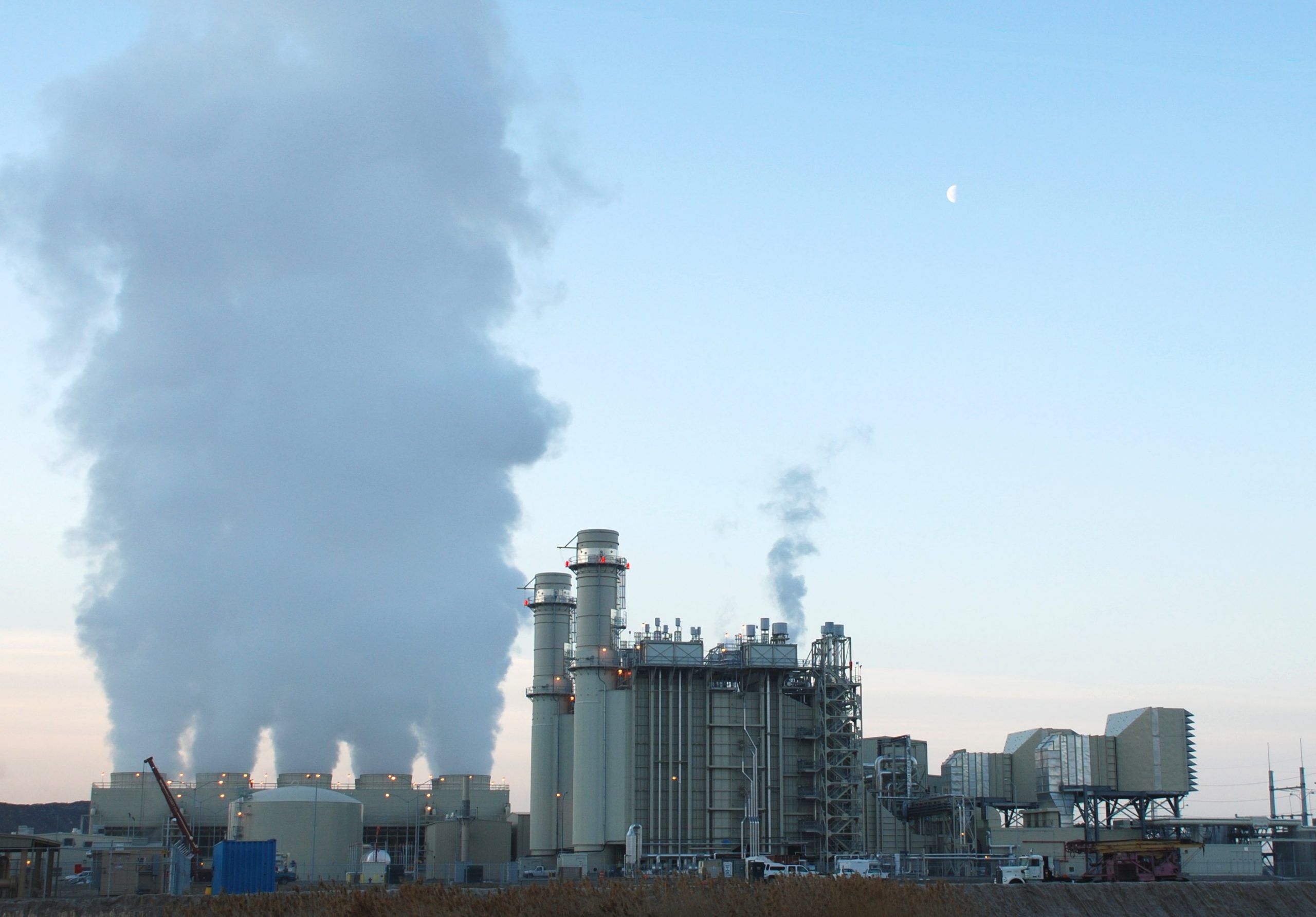
Data centers are notorious energy hogs. With each hyperscale data center using as much energy as an entire city, they’re polluting surrounding areas, straining grids, and raising electric rates nationwide.
This is creating a backlash, with 70 percent of Americans saying they oppose building a data center near them.
Companies have proposed a solution that sounds good on the surface: data centers bringing their own power. If they use their own “behind the meter” energy, tech companies can get data centers running faster without increasing transmission or generation costs for other consumers.
But these dedicated power sources almost always run on natural gas — a polluting fossil fuel. Behind the meter natural gas is projected to account for 40 percent of all data centers’ power by 2030.
Amazon recently announced a data center in Texas that will be powered by its own natural gas plant. The facility could emit up to 33 million tons of carbon dioxide a year, making it the most polluting power plant in the country.
Meta also built a massive data center in New Albany, Ohio powered by 400MW of dedicated natural gas turbines — enough energy to power over 300,000 homes.
And since there’s a shortage of gas turbines for power plants, tech companies are turning to any gas turbines they can get, many of which are far less efficient and more polluting — and often paired with backup diesel generators, which are even worse.
A study commissioned by the Piedmont Environmental Council in Virginia highlights the hazards communities face. It found that a single facility, the VA2 data center in Loudoun County, could inflict $53 million to $99 million per year in health-related damages in the surrounding community from increased deaths and hospitalizations.
Despite these alarming findings, most approved and proposed gas turbine plants to power data centers are even larger.
Just imagine what that means for pollution and health impacts nationwide — particularly in states like Texas and Ohio, which are fast-tracking these plants. (Texas recently issued a moratorium on data centers connected to the grid — but behind the meter facilities are exempt. That’s a massive loophole for superpolluters like Amazon!)
Picture the damage to our air, water, and land from increased natural gas fracking, pipelines, and methane leaks. Or the more extreme storms, wildfires, and droughts from climate change caused by burning fossil fuels.
On top of that, consumers will still pay more for energy. The increased demand for natural gas from these behind the meter facilities will likely drive up the price of natural gas for all households.
But there’s a better way to power AI data centers.
China, the leading U.S. competitor on AI, is increasingly powering its data centers with renewable energy instead of fossil fuels. While there are legitimate concerns around China’s AI policies overall, the country is planning to power these centers with at least 80 percent clean energy, even while doubling their energy use, by 2030.
Big Tech is shelling out hundreds of billions of dollars on data center infrastructure. They should spend some of those billions to drive the use of renewable energy, pairing wind and solar with battery storage to provide 24/7 energy.
They know this can be done because they’re already doing it. Google is building a data center in Minnesota powered by 1.6 GW of solar and wind with 300 MW of battery storage. And Amazon is building a 1.2 GW solar and battery storage facility in Oregon to power a data center.
In states that allow for virtual power plants — distributed networks of home batteries, rooftop solar panels, electric vehicle chargers that are coordinated via software to act like a power plant — companies could also purchase power from residents and cover the cost of people installing their own solar and battery storage, drawing any excess generated power to meet peak demand.
For the sake of our communities, the United States must be a leader in powering AI with renewable energy.
ZNetwork is funded solely through the generosity of its readers.
Donate




