


Jalal Talabani, the leader of the Patriotic Union of Kurdistan (PUK), died yesterday in Germany. He was 83. Talabani spent his entire life – from when he was a student – in the world of politics. His friends called this serious young man ‘Mam’ Jalal or Uncle Jalal. He was always avuncular, a large man devoted to his people despite the many different roads he took in his life. A Marxist in his youth, Talabani ended his life as the wealthy patron of Iraqi Kurdistan’s second largest party. When he met left-wing journalists – including myself – he would regale them with his Marxist ideas, throwing in words from distant readings. Mam Jalal liked to be liked. It was important to him.
A brave man, Talabani fought against the Iraqi army troops in the 1961-62 clashes in northern Iraq. He broke with his mentor in the Kurdistan Democratic Party (KDP) – Mustafa Barzani, the father of the current head of the party and de facto ruler of Iraqi Kurdistan, Masoud Barzani. This break was personal and ideological, for Talabani was in those days a Marxist who was uninterested in the feudal atmosphere of the Barzani’s KDP. These were the days when Kurdish rugs could just as easily have the traditional patterns as images of Marx, Engels, Lenin and Stalin.
Talabani formed the PUK, which had close relations with the Communists amongst the Iraqi Kurds, and opened a new armed struggle against Baghdad. It was Talabani’s fighters who called him in 1988 to tell him about the chemical weapon used in Halabja, where five thousand people – mostly Kurds – were killed by the Iraqi government. ‘They are all dead’, one of his commanders told him by telephone. The United States – at that time – denied the atrocity, since it was the West that had armed Saddam Hussein’s government with these weapons and it was the West that had allowed him to use them against Iran and the Iraqi Kurds. Talabani was furious. It is what would form the basis of Talabani’s ability to form allies with anyone, even those whom he once considered his enemy, if his alliance would defend the Iraqi Kurds.
Talabani did not have clean hands. His own partisans – after he made a deal with Saddam Hussein in 1983 – entered the area of al-Ansar, the guerrilla force of the Iraqi Communist Party. His troops massacred the Communists – killing at least 150 fighters and others – and destroyed the Communist infrastructure (the radio station, the organizational records and the leadership structure – the last by its capture of several key leaders of the party). Al-Ansar became a victim of the war between the Kurdish factions – the PUK and the KDP – but it was also a victim of its weakness. The Communist Party never really recovered from this vicious attack.
Many outside Iraqi Kurdistan wondered about Talabani’s alliance with the Americans after 1990, but this was to be expected. The Americans had their own reasons to carve up Iraq, mainly to weaken Saddam Hussein’s government. It also why the Israelis backed Kurdish secession, not because they have any special fealty to the Kurds but because this would weaken Iraq. Talabani was not concerned about the geo-politics. His vision tunneled from Marxism Leninism and Kurdish nationalism to merely Kurdish nationalism. But even that commitment was weak. After the US occupation of Iraq in 2003, Talabani would accept the post of President of the country – a sinecure that allowed him to make money personally and to urge on the idea that Kurds are an integral part of Iraq.
Talabani’s old adversary – Masoud Barzani – pushed for the referendum to weaken his opponents in Iraqi Kurdistan and to establish himself as the sole leader of the enclave. Talabani was sick in Germany. The PUK and other opposition groups had begun to criticize Barzani for the economic troubles in the region as oil prices plummeted. Barzani’s gambit was smart. The independence referendum went his way. It boxed all other Iraqi Kurdish parties into a hole. They could not maneuver around Barzani. He has now called for presidential and parliamentary elections to be held on November 1. Barzani is technically no longer the president of the Kurdish Regional Government. He has ruled Iraqi Kurdistan for two terms, winning the elections in 2005 and 2009. In 2013, the parliament extended his term by two years. He is now governing unconstitutionally. The rules do not permit him to have a third term, but the independence feint might allow Barzani to extend his power.
The PUK, and Talabani himself, had been unhappy with the referendum, which they saw more as a power game by Barzani and less as a step towards securing the ambitions of the Kurdish people. In the lead-up to the referendum, PUK leader Male Bakhtiyar urged the Kurdish political class to find an alternative ‘within Iraq’ rather than by taking a ‘seat at the United Nations.’ Bakhtiyar wanted to see what kind of security guarantees the United States and the United Nations would give the Iraqi Kurds if they did not move towards secession. But the vote did happen and Barzani got his victory.
Embargos and Energy.
Matters remain at a dangerous level. Iranian tanks sit at the border with Iraqi Kurdistan at the border post of Parviz Khan. The Turkish army and the Iraqi army continue their military exercises on the Turkish side of the border with Iraqi Kurdistan. Iraq, Iran and Turkey continue their ban on flights into Iraqi Kurdistan. Contacts in Iraqi Kurdistan say that Iraqi military aircraft have been flying over their towns with the intention to intimidate the population.
Turkey’s Recip Tayyip Erdogan has called for more sanctions against Iraqi Kurdistan. These are serious, since Iraqi Kurdistan exports its oil via Turkey and its people rely upon imported Turkish consumer goods. Iraq’s central bank has said that it would no longer sell dollars to the Iraqi Kurdish banks and would no longer allow these banks to move their foreign currency through them. That means the banking network in Iraqi Kurdistan will be isolated, particularly if they cannot find a way to access the SWIFT wire service.
Meanwhile, Russian President Vladimir Putin told an energy summit in Moscow today that Kurdish oil should not be embargoed. Russia’s Rosneft signed an agreement with the Kurdish Regional Government a week before the referendum. This agreement pledges Rosneft to invest $1 billion towards a natural gas pipeline that will run towards Turkey. The Russians have a major stake in Iraqi Kurdistan’s energy economy. Russia is not interested in any major escalation.
Nor is the United States. Its ambassador – Douglas Silliman – met with the Prime Minister of the Kurdish Regional Government – Nechirvan Barzani – to express the US view against the destabilization of the region. Barzani, the nephew of the President, suggested that the Iraqi government must come to the table to discuss the outcome of the referendum. The Americans are not keen on this. They would like Iraqi Kurdistan to remain an autonomous part of Iraq for the time being, until at least the defeat of ISIS.
With neither the US nor the Russians eager for Iraqi Kurdish secession, it is unlikely that anyone will put pressure on Iraq, Iran and Turkey to stop the embargo. There was a wistful note in Nechirvan Barzani’s note on the death of Talabani. He remembered Mam Jalal as a man of great ‘stature and personal charisma’ who held the rest of the Iraqi political world to the letter of the 2005 Iraqi Constitution. It was this Constitution that protected the rights of minorities in Iraq. With Talabani’s sickness, Nechirvan Barzani notes, there was no-one to prevent the violation of the Constitution. In other words, even as Talabani and his party silently opposed the referendum, the Barzanis are now making his illness and death a reason why Iraqi Kurdish secession needs to happen. If Mam Jalal had remained healthy, Nechirvan Barzani suggests, the violations would have been checked. His death, he insists, opened the door to secession.
Vijay Prashad is professor of international studies at Trinity College in Hartford, Connecticut. He is the author of 18 books, including Arab Spring, Libyan Winter (AK Press, 2012), The Poorer Nations: A Possible History of the Global South (Verso, 2013) and The Death of a Nation and the Future of the Arab Revolution (University of California Press, 2016). His columns appear at AlterNet every Wednesday.

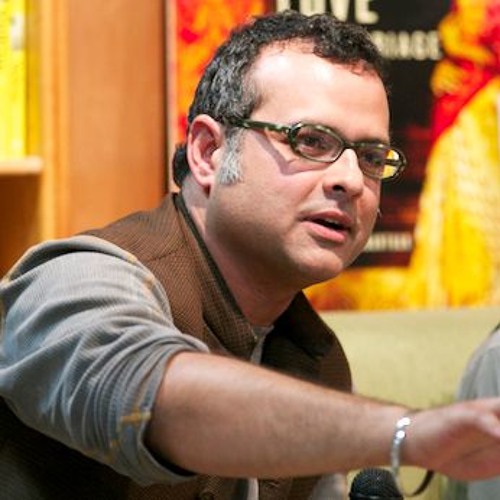
Vijay Prashad is an Indian historian, editor, and journalist. He is a writing fellow and chief correspondent at Globetrotter. He is an editor of LeftWord Books and the director of Tricontinental: Institute for Social Research. He is a senior non-resident fellow at Chongyang Institute for Financial Studies, Renmin University of China. He has written more than 20 books, including The Darker Nations and The Poorer Nations. His latest books are Struggle Makes Us Human: Learning from Movements for Socialism and (with Noam Chomsky) The Withdrawal: Iraq, Libya, Afghanistan, and the Fragility of U.S. Power. Tings Chak is the art director and a researcher at Tricontinental: Institute for Social Research and lead author of the study “Serve the People: The Eradication of Extreme Poverty in China.” She is also a member of Dongsheng, an international collective of researchers interested in Chinese politics and society.
ZNetwork is funded solely through the generosity of its readers.
Donate




