


(Dec. 11) — Of all the arguments making the rounds after the slaughter of 180 people in Mumbai, the worst is this: that India should learn from the United States about how to respond to such terror. "Look at the USA," goes the refrain, "after 9/11 has there been another attack on U.S. soil?" In short, Washington‘s measures after that tragedy were so effective, nobody ever bothered them again. This knocks at the doors of insanity. The U.S. "response" does stand out as worth learning from. There is very little it did not get wrong.
Around 3,000 people lost their lives in the attacks on the World Trade Centre in New York on 9 /11. America‘s response was to go to war. It launched two wars, one of against a country that had not a single link to the events of 9/11. Close to a million human beings have lost their lives in that response. That includes 4,000 U.S. troops in Iraq and nearly 1,000 in Afghanistan. That is apart from several hundred thousand Iraqis losing their lives. Countless Afghans die each month, as one of the world’s poorest states sinks deeper into devastation. (Afghanistan, for U.S. liberals, is "the good war.") Millions have suffered dislocation and deprivation in the region.
Nobel Laureate Joseph Stiglitz estimates that the Iraq war is costing the United States $ 3 trillion in all. (About three times India‘s GDP.) Good news for American corporations that make a killing every time there is large-scale killing, but not of much use to ordinary Americans. With the U.S. economy in awful crisis, those costs are haemorrhaging. The war in Iraq was launched with "intelligence" findings on "weapons of mass destruction (WMDs)" being stockpiled in that country and on the ground that Baghdad was linked to 9/11. This was the excuse for the "response." Both claims proved false. At the time, the US media played a huge role — its response — in planting fabricated WMD stories. That helped launch perhaps the most destructive conflict of our time. American costs also include tens of thousands wounded, injured and ill soldiers. With over 100,000 US soldiers "returning from the war suffering serious mental health disorders, a significant fraction of which will be chronic afflictions." (Stiglitz: "The Three Trillion Dollar War."). Besides, the war meant huge spending cuts at home. At the time of writing, California, the largest of American states, is mulling massive cuts. "Its budget deficit is around $ 11 billion," says journalist and analyst Conn Hallinan. "Just about a month’s worth of war costs in Iraq and Afghanistan."
By late 2006, a little over three years after that "response" began, over 650,000 Iraqis were estimated to have lost their lives. A survey by researchers at the Johns Hopkins Bloomberg School of Public Health in Baltimore, Maryland and the Al Mustansiriya University in Baghdad put it bluntly: "As many as 654,965 more Iraqis may have died since hostilities began in Iraq in March 2003 than would have been expected under pre-war conditions. The deaths from all causes — violent and non-violent — are over and above the estimated 143,000 deaths per year that occurred from all causes prior to the March 2003 invasion." Iraq‘s overall mortality rate more than doubled from 5.5 deaths per 1,000 persons before the war began to 13.3 per 1,000 persons by late 2006.
Many more civilians have died since then, an extension of the USA‘s "response" to 9/11. Pre-war Iraq was the Arab country most ruthless towards Islamic fundamentalists. Today, the latter wield enormous power in a country they had no base in. Fundamentalism harvested new recruiting fields — fertilised by U.S. violence. It’s worth learning this: Al Qaeda was the biggest beneficiary of the "response" of the United States to 9/11 alongside U.S. corporations. America‘s "War on Terror" — produced far more terrorism in the world than there had been prior to that response.
There are other lessons in the U.S. debacle. Almost every week now, the U.S. bombs some part of Pakistan — its firm ally of decades. Civilians are routinely killed by this, and if Mr. Obama’s campaign promises are to be kept, this will go up. So will the appeal of fundamentalism amongst the affected.
This is Islamabad‘s reward for decades of faithful support to American military adventures in Afghanistan. A lot of Pakistan‘s distress arises from the very kind of strategic ties with the United States that India‘s elite would so love to have themselves. Also, the resultant undermining of Pakistan, is bad news for India. More fundamentalisms, more militancy, and worse, both sides of the border.
The media too, have much to learn from the response of their U.S. counterparts. The "embedded journalism" that disgraced some of America‘s leading media institutions. Regardless of a bleating anti-war editorial, The New York Times will never live down its WMD stories. The very media that now mock George Bush propped him up at the time. Now they report how unpopular the war is, how silly he was. But the "war for ratings" had already done damage hard to undo. It’s both pathetic and funny: the very forces in the United States that saw only external and foreign reasons for all that had happened — now advise India exactly the opposite. Not to rush to any such conclusions. "In coming days," says the New York Times for example, "India will have to look inward to see where and how its government failed to protect its citizens."
The damage of whipped up hysteria as part of the "response" occurred within the United States, too. Sikhs in America became the targets of vicious hate crimes across the country after 9/11. Why? The demonising for years of anyone with turbans and beards made them targets of "retaliation." One Sikh body says it has logged over 300 hate crimes against Sikhs after 9/11. These include torching of a home, vandalising of Gurdwaras, vicious assaults and one death by shooting.
This is the model to emulate?
Globally, the barbaric prison camp at Guantanamo, from where several prisoners have been released as innocent after years of brutal torture, has been a widely criticised part of the American "response." Inside the United States, the curbing of civil liberties — a vital 9/11 response — was at its worst since the McCarthy period. The Patriot Act was just one symbol of these. And Mr. Bush now ranks among the most despised U.S. Presidents of all time. (Though he did succeed, in another constituency, in bringing more popularity to Osama bin Laden than Al-Qaeda’s leader could have dreamed of.)
There is a need for a strong and vigorous response to the appalling outrage in Mumbai. Parts of what that should be are obvious: bringing the guilty to book, revamping the intelligence networks, overhauling a range of security agencies, being more prepared. It is no less vital, though, that the immediate response also be to deny the authors of the outrage the success of their goal. To ensure that further polarisation within Mumbai society along religious, sectarian lines does not occur. To make sure that innocent people are not killed or terrorised in the "response." To dump the notion that shredding civil liberties and democratic rights helps anybody in any way. Shred chauvinism and jingoism, not the Constitution of India. To strongly counter those attempting to foment communal strife, regardless of which religion they belong to. To see there is no repeat of 1992-93 when close to a quarter of a million people fled the city in terror. That would a great reply. But to learn from Mumbai’s events that we should emulate America‘s response — at the very time Americans are figuring out how poorly they were served by it — would be to repeat history both as tragedy and as farce.
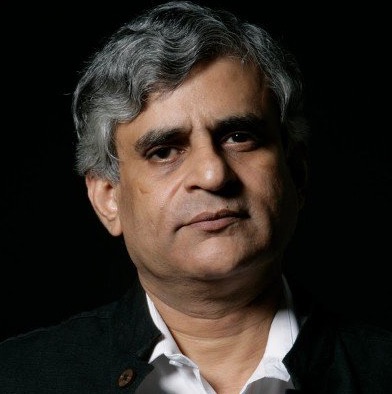
P. Sainath is the rural affairs editor of The Hindu, where this piece appears, and is the author of Everybody Loves a Good Drought. This fall he is giving a course at UC Berkeley. He can be reached at: psainath@vsnl.com.

ZNetwork is funded solely through the generosity of its readers.
Donate




