


Investors are pondering where to put their money this week after the sudden decline in the assessed value of presidential candidate Joe Biden.
On Wall Street and in other corporate quarters where financiers were heavily invested in Biden, hopes have eroded in recent days amid reduced investor confidence. Some prominent donors began to openly question the wisdom of devoting more capital to the national marketing campaign for the former vice president.
After the leading blue chip closed sharply lower at the end of last week, even declaring “my time is up,” many top investors felt overexposed and looked for shelter. Gathering new topline data and considering several prospectuses that had been previously submitted, investors are now reassessing assets and liabilities as well as potential growth in market share during the next quarter and beyond.
Venture capitalists, hedge fund managers, powerful CEOs and other wealthy individuals — sensing a political emergency that may require swift and decisive action — are moving to widen financing spigots for Kamala Harris. With contingency planning, there is elevated interest in Pete Buttigieg. One previously hot startup, Beto O’Rourke, is now considered to be too underperforming to warrant reinvestment.
The overarching goals are to quickly shore up capitalization of aligned political products and to implement sustained brand enhancement. While great appreciation remains for Biden’s nearly five decades of massive financial benefits to investors, some have concluded that he is now unreliable in view of current political turbulence.
Yet Biden is hardly in penny-stock territory. Many rich investors remain bullish on the former vice president. Politico reported Sunday that “sources say Biden walked away with a $1 million haul after two fund-raisers in San Francisco alone this weekend.” One of those gatherings drew about 200 wealthy guests to the backyard of a former Twitter vice president for global media, Katie Jacobs Stanton.
But an erstwhile Biden fundraiser, Tom McInerney, didn’t show up at the Stanton poolside event, even though he was listed on the invitation. McInerney, who was a member of Biden’s national finance committee, said he notified the Biden campaign on June 20 that he would no longer fundraise for it, citing the candidate’s recent fond comments about segregationist senators. (Actually, Biden had been on the record for many years with such warm reminiscences. And in a report first published on April 11, CNN had exposed Biden’s letters to racist senators in 1977 and 1978, seeking support for his legislation against school busing for desegregation.)
Quoting McInerney as saying that “I would imagine I’m not alone,” CNBC reported on the day after Biden’s debate pratfall: “While McInerney is the first financier to publicly withdraw his support after Biden’s controversial round of comments, the loss is significant because it could be a harbinger of further defections.”
Overall, market conditions have abruptly changed, in the midst of fierce competition for big-investor dollars.
The New York Times did some candid reporting in mid-June under the headline “Wall Street Donors Are Swooning for Mayor Pete. (And They Like Biden and Harris, Too.)” The story explained that “the behind-the-scenes competition for Wall Street money in the 2020 presidential race is reaching a fevered peak . . . as no less than nine Democrats are holding New York fund-raisers in a span of nine day.” And, “with millions of dollars on the line, top New York donors are already beginning to pick favorites, and three candidates are generating most of the buzz” — Biden, Harris and Buttigieg.
The Times reported: “Interviews with two dozen top contributors, fund-raisers and political advisers on Wall Street and beyond revealed that while many are still hedging their bets, those who care most about picking a winner are gravitating toward Mr. Biden and Ms. Harris, while donors are swooning over Mr. Buttigieg enough to open their wallets and bundling networks for him.”
At the same time, the newspaper noted, “Not everyone is chasing Wall Street cash: Two candidates in the top tier of polls, [Bernie] Sanders and Senator Elizabeth Warren of Massachusetts, have railed against the financial industry and opted against the kind of fancy fund-raisers with catering and $2,800 admission prices that lubricate the donor industry.”
The antipathy is mutual: Wall Streeters understand that Sanders and Warren would be bad investments anyway.
In sharp contrast, the Times summarized a bit of the investment frenzy: “Hamilton E. James, the executive vice chairman of Blackstone and a top fund-raiser, hosted Mr. Buttigieg at his home on Thursday. The short-selling hedge fund manager James Chanos will hold an event for Mr. Biden on Monday. And on Tuesday, Marc Lasry, the hedge fund manager and co-owner of the Milwaukee Bucks, is gathering checks for Ms. Harris. Co-hosts of that event include Blair W. Effron, an investment bank co-founder and an influential Democratic financier, and Ray McGuire, vice chairman of Citigroup.”
Deep-pocket investors are lined up from coast to coast. The night before she gave a speech at the California Democratic Party convention a month ago, Kamala Harris held a campaign fund-raiser at the San Francisco home of oil billionaires Ann and Gordon Getty, with the price of admission reportedly up to $28,000. While Harris was attending that fund-raiser, the San Francisco Chronicle observed, “Sanders was stopping by the Latino and labor caucuses at the convention.”
For his part, Biden skipped the California state party convention entirely. But the same weekend, he sent top aides to the same city to meet with “more than two dozen bundlers — people who raise money from high-dollar donors — at the San Francisco home of Sandy Robertson, co-founder of private equity firm Francisco Partners,” CNBC reported. “Other financiers at the private huddle included Richard Blum, an investment banker and husband of U.S. Senator Dianne Feinstein; veteran trial lawyer Joseph Cotchett; Steve Westly, founder of tech investment firm the Westly Group; Denise Bauer, former U.S. ambassador to Belgium; and Wade Randlett, the president of Dashboard Technology.”
Eager for lucrative stability in the electoral marketplace, corporate Democratic investors are keen to block threats to their dominance from the Sanders and Warren campaigns. Now that Joe Biden is looking shaky — with a damaged brand and a faltering business plan — prudence requires a new set of calculations. Biden may have outlived his usefulness. If “politics ain’t beanbag,” neither is political investment.
Norman Solomon is cofounder and national coordinator of RootsAction.org. He was a Bernie Sanders delegate from California to the 2016 Democratic National Convention and is currently a coordinator of the relaunched independent Bernie Delegates Network. Solomon is the author of a dozen books including War Made Easy: How Presidents and Pundits Keep Spinning Us to Death.

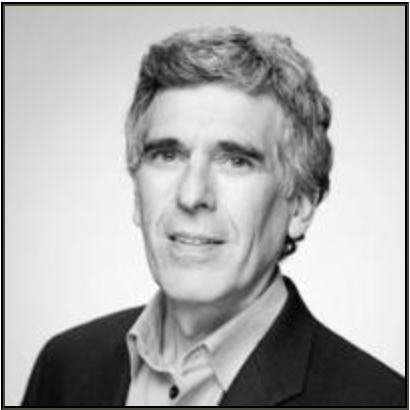
Norman Solomon is the national director of RootsAction.org and executive director of the Institute for Public Accuracy. The paperback edition of his latest book, War Made Invisible: How America Hides the Human Toll of Its Military Machine, includes an afterword about the Gaza war.
ZNetwork is funded solely through the generosity of its readers.
Donate




