

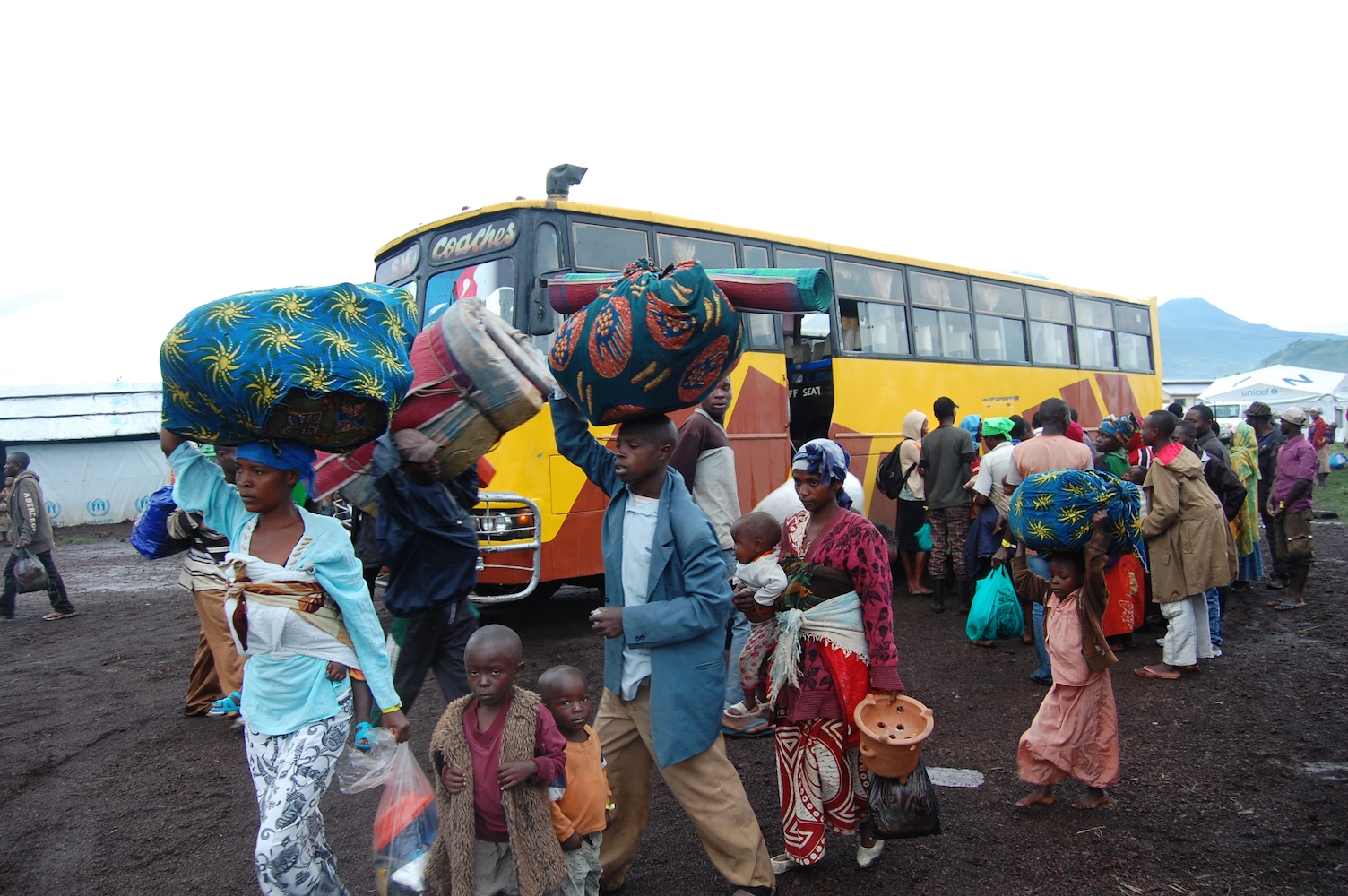
For refugees living in settlements across Africa, life got more difficult in 2023.
Shortfalls in the operating budget of the United Nations refugee agency, UNHCR, and the World Food Program have brought increased precarity into the daily lives of millions of displaced people across the continent.
Having fled violence, famine and insecurity in search of survival, many African refugees now find themselves faced with similar circumstances in the very spaces designed to protect them. Most notably, over the past year, refugees in Central and East Africa have watched as their food rations and living stipends — already meager — have been cut to unsustainably low levels.
In Africa’s largest refugee-hosting country, Uganda, the budget for UNHCR programs is currently funded at only 39% of its needs. Burundi, which has experienced a 35% increase in its refugee population since 2018, as well as a large increase in the number of returned Burundian refugees, has seen its own budget increase by only 12% in that same period.
The reasons for these shortfalls are multifaceted, including the lasting effects of the COVID-19 pandemic and the Russia-Ukraine war, which has affected food production and resulted in an increase of prices. Though refugees themselves say they are offered little explanation — “They just tell us that the order came from Geneva,” one refugee told us in reference to UNHCR’s headquarters in the Swiss capital.
The resulting cuts in food security programs have had devastating effects on refugee families and communities.
We spent three months in Africa this past summer interviewing over 200 refugees across seven refugee camps and urban refugee havens in Burundi, Uganda and Kenya. While we were there to primarily investigate the role of faith and religious community among refugees from the Democratic Republic of Congo, our interviews touched on many aspects of the refugee experience. All names used in this article have been changed to protect the interviewees identity.
“Just Not Enough”
Cuts in food rations were on the minds of nearly all of the refugees whom we interviewed this summer.
In Burundi, for example, a number of refugees explained to us how 2023’s rations for their daily dietary staple — cornflour used to make a hard porridge known locally as “bukari” — had been cut from 10 kilograms (22 pounds) per month to three kilograms (6.6 pounds). One refugee in the Bwagiriza refugee settlement in Burundi, Jean-Claude, explained how if you try to divide that amount of food into 30 piles, one for each day, it’s “just not enough.” Ultimately, he said, “You worry because you have no idea how you will finish the month. Little by little, the quantity of food goes down at home.”
Stories like Jean Claude’s offer a glimpse of the psychological stress that refugees experience daily as they engage in an unending search for enough food to feed their families — a search that too frequently fails.
To make matters worse, rising inflation has meant that the ability of refugees to draw on whatever modest resources they may possess to supplement their diets has been greatly undermined.
For parents, this leads to further trauma of explaining to their hungry children that there will be no food. One young mother in the Rwamwanja refugee settlement in Uganda told us how, in a desperate ploy to delay disappointment, she put an empty pot of water on the stove to boil just so that her children would go to bed with the hope that there would be food to eat in the morning.
Hunger and Exploitation
Others resort to even more desperate ends, consuming inedible food that can sicken and even kill them.
“Whole families become sick. Some neighbors ate some roots because of hunger. All of them were vomiting,” a refugee mother named Mauwa explained to us in Burundi. “Mother, father, children … we are forced to eat food that doesn’t agree with us and makes us sick to our stomachs.”
Still others face the worst outcome imaginable.
Amina, a Congolese refugee living in Bwagiriza, described how, following days of not eating, her young child became violently ill after consuming some corn porridge, her severely malnourished body no longer able to digest it. The child’s condition should have been treatable, but because budget cuts had also recently ended medical transport assistance, they were unable to get to the hospital quickly enough and ultimately the child died.
“There is no food. There is no health care,” she said. “We are being trampled. You reach a point where you have nothing. You will just die.”
Other refugees emphasized how ration cuts contribute directly and indirectly to heightening insecurity in the settlements.
“Famine in the camp is torturing us,” said Amani, a father of seven. “Lack of food is causing our children to become thieves. The moment it is dusk, they break into homes seeking the food they saw you bringing into the house. They don’t look for anything else – just food.”
Refugees in Kyaka II and other settlements in Uganda described being exploited by local communities and how women and youths were exposed to sexual violence.
Vumilia, a mother from a Burundian camp, explained how young girls, including her own, were sexually exploited by adults in return for food: “These camps are harming our children. A child as young as 12 is getting pregnant. And it’s because of hunger that she is forced to consent so that she can get some food … and she is raped and she gets pregnant.”
Refugees also observed that ration cuts and food scarcity threaten to turn cordial relationships with local communities into ones defined by conflict.
“We will now be fighting with the [Ugandan host communities] and each other,” explained Furah, a Congolese woman in one of the Ugandan camps, “because you have brought insecurity in the camp. … This will then lead to conflicts. If they don’t kill me, I will kill them.”
What Chance Self-reliance?
In response to these cuts, the UNHCR is increasingly promoting self-reliance programs, but ration cuts undermine such programs.
Refugees are told that they must learn to depend on themselves and are taught various skills such as gardening, weaving and animal husbandry. But the strain on their resources leaves them unable to invest.
Marceline in the Kavumu settlement explained, “On this question of self-reliance, you ask yourself: With what resources are you supposed to become self-reliant? … If you’re going to tell someone to be self-reliant, you have to give them the materials to start with.”
We’ve seen that refugees work hard to help themselves and each other. But when resources are so minimal, it is impossible for them to bear the burden themselves.
Time and again, we’ve found that refugees are keen observers of the world around them and they can offer critical insight into the conditions that have been created on the ground, particularly in this context of increasing ration cuts. Listening to them reminds us that behind every budget cut is a human story.
ZNetwork is funded solely through the generosity of its readers.
Donate




