


The Bush administration has justifiably criticized the Zimbabwean regime of liberator-turned-dictator Robert Mugabe. It has joined a unanimous UN Security Council resolution condemning the campaign of violence unleashed upon pro-democracy activists and calling for increased diplomatic sanctions in the face of yet another sham election. In addition, both the House and the Senate have passed strongly worded resolutions of solidarity with the people of Zimbabwe in support of their struggle for freedom and democracy.
However, neither the Republican administration nor the Democratic-controlled Congress is sincerely concerned about human rights and democratic elections as a matter of principle. Rather, they are more likely acting out of political expediency. Despite claims of support for the advancement of democracy, the United States continues to support other African dictatorships that are as bad as or even worse than that of Zimbabwe.
Indeed, the United States currently provides economic aid and security assistance to such repressive African regimes as Swaziland, Congo, Cameroun, Togo, Chad, Cote d’Ivoire, Rwanda, Gabon, Egypt, and Tunisia. None of these countries holds free elections, and all have severely suppressed their political opposition.
The Worst Abuser
Among the worst of these African tyrannies has been the regime of Teodoro Obiang Nguema Mbasogo of Equatorial Guinea. Obiang has been in power even longer than the 28-year reign of Mugabe and, according to a recent article in the British newspaper The Independent, makes the Zimbabwean dictator "seem stable and benign" by comparison. Obiang originally seized power in a 1979 coup by murdering his uncle, who had ruled the country since its independence from Spain in 1968. Under his rule, Equatorial Guinea nominally allowed the existence of opposition parties as a condition of receiving foreign aid in the early 1990s. But the four leading candidates withdrew from the last presidential election in December 2002 in protest of irregularities in the voting process and violence against their supporters. In that election, Obiang officially received more than 97% of the vote (down from 99.5% in the previous election.)
Though the U.S. State Department acknowledged that the election was "marred by extensive fraud and intimidation," the Congress and the administration devoted none of the vehement condemnation that was so evident after the recent, similarly marred election process in Zimbabwe.
One major reason for the difference in response is oil. The development of vast oil reserves over the past decade has made Equatorial Guinea one of the wealthiest countries in Africa in terms of per capita gross domestic product. Virtually all of the oil revenues, however, goes to Obiang and his cronies. The dictator himself is worth an estimated $1 billion, making him the wealthiest leader in Africa; his real estate holdings include two mansions in Maryland just outside of Washington, DC. Meanwhile, the vast majority of the country’s population lives on only a few dollars a day, and nearly half of all children under five are malnourished. The country’s major towns and cities lack basic sanitation and potable water while conditions in the countryside are even worse.
During his most recent visit to Washington in 2006, Obiang was warmly received by Secretary of State Condoleezza Rice, who praised the dictator as "a good friend" of the United States. Not once during their joint appearance did she mention the words "human rights" or "democracy." At the same press conference, Obiang praised his regime’s "extremely good relations with the United States" and his expectation that "this relationship will continue to grow in friendship and cooperation." None of the assembled reporters raised any questions about the regime’s notorious human rights record or its lack of democracy, instead using the opportunity to ask Secretary Rice questions about the alleged threat from Iran.
In 2002, the dictator met with President George W. Bush in New York to discuss military and energy security issues. He followed up in 2004 with meetings with then-Secretary of State Colin Powell and then-Secretary of Energy Spencer Abraham.
Cozy Relations
Equatorial Guinea receives U.S. government funding and training through the International Military Education and Training Program (IMET). In addition, the private U.S. firm Military Professional Resources Incorporated — founded by former senior Pentagon officials who cite the regime’s friendliness to U.S. strategic and economic interests — plays a key role in the country’s internal security apparatus. Furthermore, as a result of Obiang’s understandable lack of trust in his own people, soldiers from Morocco — one of America’s closest African allies — have served for decades in a number of important security functions, including the role of presidential guards.
Maintaining close ties with such a notorious ruler has led even conservative Republicans like Frank Ruddy, who served as President Ronald Reagan’s ambassador to Equatorial Guinea in the mid-1980s, to denounce the Bush administration for being "big cheerleaders for the government — and it’s an awful government."
Though the Chinese have also recently begun investing in the country’s oil sector, U.S. companies ExxonMobil, Amerada Hess, Chevron/Texaco, and Marathon Oil have played the most significant role. A report by the International Monetary Fund notes that U.S. oil companies receive "by far the most generous tax and profit-sharing provisions in the region." Congressional hearings recently revealed how U.S. oil companies paid hundreds of millions of dollars destined to state treasuries directly into the dictator’s private bank accounts. A Senate report faulted U.S. oil companies for making "substantial payments to, or entering into business ventures with," government officials and their family members.
The irony of the relative silence of Congress and the Bush administration regarding the human rights abuses and the undemocratic nature of Obiang’s regime is that, due to the critical role of U.S. economic investment and security assistance, the United States has far more leverage on the government of Equatorial Guinea than it does on the government of Zimbabwe. As a result, Americans can feel self-righteous in their condemnation of a regime in Zimbabwe with which the United States has little leverage while continuing to support an even more repressive regime over which the United States could successfully exert pressure if it chose to do so.
This does not mean the United States should have waited until it first ends its support of Obiang and other African dictatorships before joining the rest of the international community in condemning the repression in Zimbabwe. However, as long as the United States maintains such blatant double-standards, U.S. credibility as a defender of human rights and free elections is seriously compromised and thereby plays right into the hands of autocrats and demagogues like Robert Mugabe.
Stephen Zunes is a senior analyst for Foreign Policy In Focus and a professor of politics at the University of San Francisco.

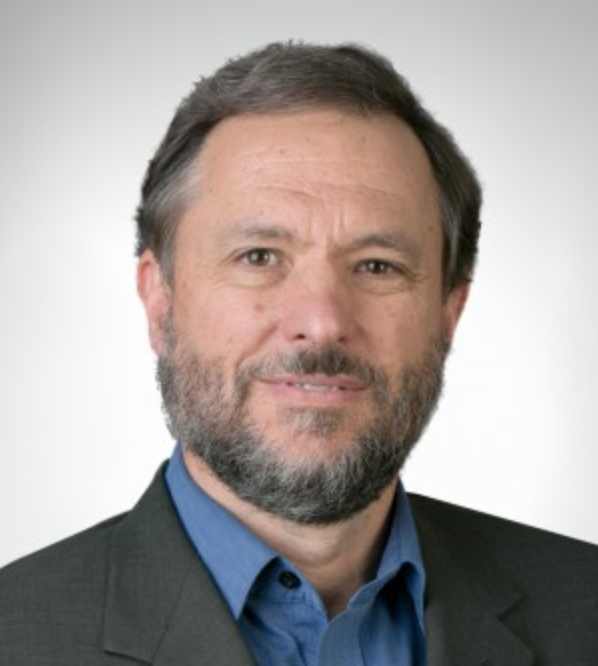
Stephen Zunes (born 1956) is an American international relations scholar specializing in the Middle Eastern politics, U.S. foreign policy, and strategic nonviolent action. He is known internationally as a leading critic of United States policy in the Middle East, particularly under the George W. Bush administration, and an analyst of nonviolent civil insurrections against autocratic regimes. Stephen has been at the University of San Franscico since 1995, teaching courses on the politics of the Middle East and other regions, nonviolence, conflict resolution, U.S. foreign policy, and globalization. He served as the founder and first director of the Middle Eastern Studies Program. A prominent specialist on U.S. Middle East policy, Professor Zunes has presented hundreds of public lectures and conference papers in both the United States and over a dozen foreign countries. He has traveled frequently to the Middle East and other conflict regions, meeting with prominent government officials, scholars, and dissidents. He has served as a political analyst for local, national, and international radio and television and as a columnist for several print and online publications, and has published hundreds of articles in academic journals, anthologies, magazines, and elsewhere on such topics as U.S. foreign policy, Middle Eastern politics, Latin American politics, African politics, human rights, arms control, social movements, and nonviolent action. He has served as a writer and senior analyst for Foreign Policy in Focus, an associate editor for Peace Review, and a contributing editor of Tikkun.
ZNetwork is funded solely through the generosity of its readers.
Donate




