

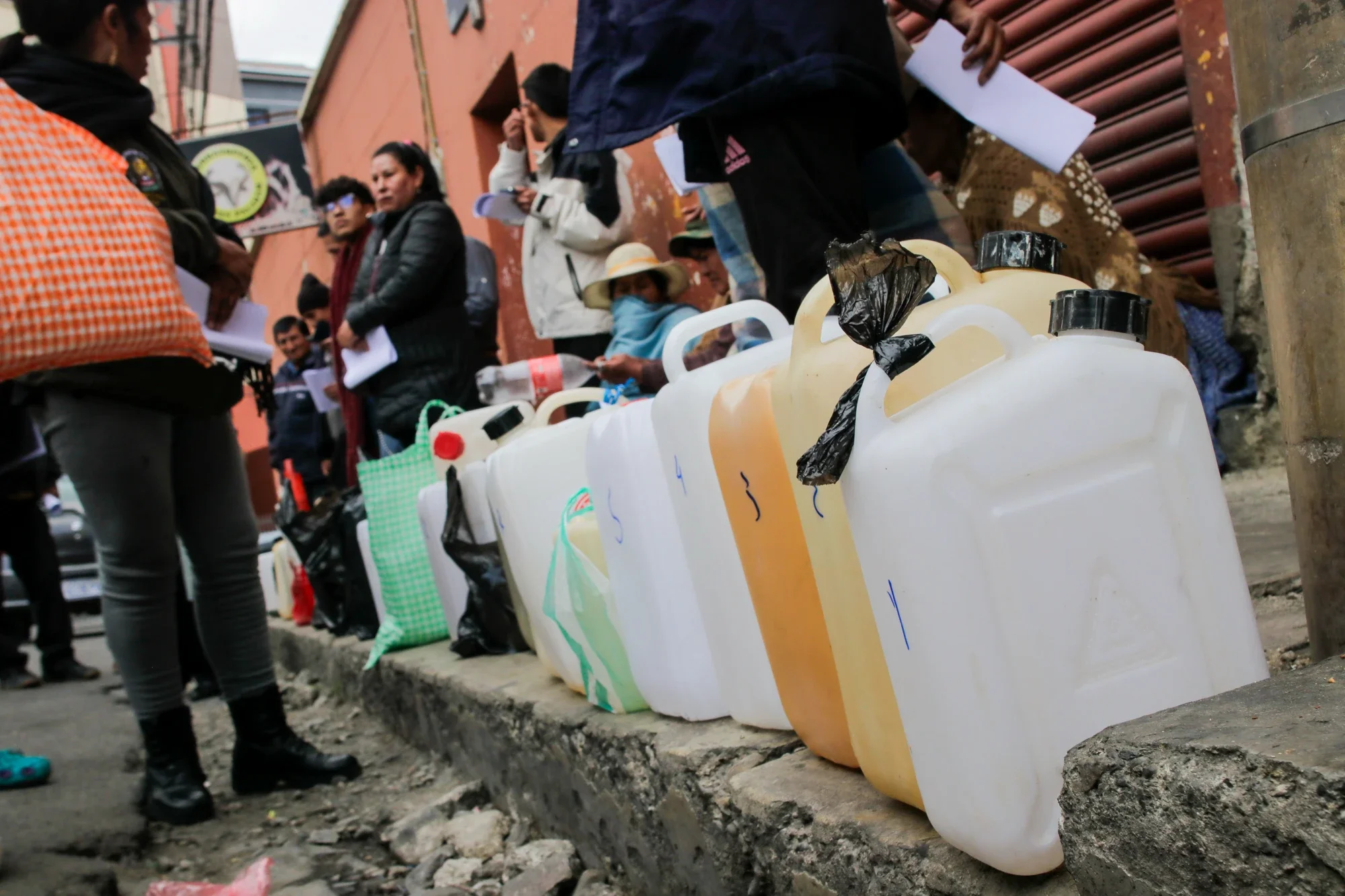
On Saturday June 20, President Rodrigo Paz declared a state of emergency in Bolivia. The decree came shortly after he reached an agreement with the Bolivian Workers’ Confederation (COB), the country’s largest trade union.
Roadblocks had continued during the weeks prior, mainly in La Paz and Cochabamba. Conditions were becoming increasingly difficult due to food shortages, which led to growing public rejection of protesters. The Paz government mobilized this sentiment and used a strategy of attrition, factional negotiations, and repression.
The state of emergency was implemented after more than 50 days of roadblocks sustained by peasant organizations led by the Túpak Katari Federation of La Paz, with support from other regions, and from coca growers from the Chapare. To date, at least 14 people have been killed, dozens injured, and others have violently detained and charged. The state of emergency allowed the government to deploy the police and the military to clear the main highways.
Amid open opposition to the state of emergency among peasant, Indigenous and popular sectors, government authorities touted a “return to normalcy” and a “defeat” for protesters, employing a heavy-handed discourse focused on security and punishment.
In some cases, the roadblocks were lifted when those who set them up left on their own. Elsewhere, like along the Cochabamba–Oruro highway, they were removed through repression.
A week after the state of emergency was declared, the Paz administration established a floating exchange rate, while also announcing measures to mitigate the potential impact of this decision. Fear persists among the population that the new exchange rate could drive up the cost of living, hiking the prices of imported goods.
Conflicting paths
On April 8, a march organized by peasant unions and lowland Indigenous organizations set out from the department of Pando toward the seat of government in protest of Law 1720. The law was sponsored by Senator Branko Marinkovic—a notorious far-right landowner in Santa Cruz—and approved and enacted by the Paz administration.
In terms of coordination among social organizations, there was initially an alliance formed between the marchers, the COB, and the National Council of Ayllus and Markas of Qullasuyu. Some lesser-known peasant leaders from the Single Trade Union Confederation of Bolivian Peasant Workers (CSUTCB) also expressed their support for the marchers.
On May 6, the Túpac Katari Federation launched the first roadblocks, in protest against the executive branch’s failure to meet its demands. The organization also announced its support for the Indigenous peasant march and set Paz’s resignation from the presidency as its sole demand. Ultimately, following a bittersweet outcome with the repeal of Law 1720 on May 14, the marchers withdrew from La Paz.
Even so, roadblocks continued in full force in the administrative capital, spreading to other departments.
The CSUTCB and department-level peasant federations under its umbrella have emerged from a period of collapse. Their decline was marked by widespread and deep-seated processes of patronage and clientelism, which shaped the political participation of various levels of leadership structures during the MAS governments.
This stagnation was evident in the lack of communication between the leadership of the Peasants’ Federation and the grassroots communities in La Paz.
The lack of official guidelines—documents agreed upon between leadership and the rank and file that are essential for organizing protests—is a sign of the decline of community assemblies as spaces for consultation and dialogue. Such assemblies were key to the uprisings that took place between 2000 and 2005.
The imposition of the state of emergency was followed by widespread accusations from peasant organizations against COB leader Mario Argollo for “betraying” the protests, while other fractures began to become evident. There were divisions between departmental peasant union federations and the national leadership of the CSUTCB; as well as between grassroots communities in the provinces and the Túpak Katari Federation of La Paz.
As a result, local community organizations like the Omasuyos Blockade Committee (La Paz)—a region known for its role in the Gas War in 2003—announced a process of internal reorganization. At the same time, they disavowed and rejected the leadership of Vicente Salazar of the Túpak Katari Federation, of which they are a part.
Separately, a delegation from the province of Los Andes attended negotiations with the government in La Paz over past days.
The scope of this criticism and reorganization will continue to be part of internal discussions in the short and medium term, as Bolivia continues to experience the continuation of extractivist policies of dispossession.

Renewed dispossession
Since taking office six months ago, the Paz administration has adopted rhetoric aimed at distinguishing itself from previous MAS governments. Paz promised to overcome “the tragic past” and claimed he had inherited a country with “a bankrupt economy” in the throes of “the worst economic and social crisis.”
But the measures he has taken represent the deepening of MAS policies, especially with regards hydrocarbons and mining. He signed agreements with representatives of mining cooperatives that put various protected areas, as well as peasant and Indigenous territories, at greater risk. We can’t overlook the Bolivian government’s agreement with the Trump administration on critical minerals like lithium, nickel, bismuth, and tantalum, among others.
The Paz administration has also supported the continuation of gas projects that have faced widespread resistance from peasant communities in the Tariquía National Flora and Fauna Reserve. In doing so, it uses the same argument employed by the Morales and Arce administrations—that the extractive project is “outside the Reserve.” The government has given a green light to a lawsuit filed by Brazilian company PETROBRAS and the Bolivian state-owned company YPFB against rural farmers who oppose their entry.
As the Indigenous-peasant marchers protesting against Law 1720 reached La Paz in April, comrades from the Vaca Díez Peasant Federation and Indigenous organizations from Trinidad, in the north-central department of Beni, described the stakes such: “They want to take us back to the way things were before, to the days of patronage.”
And they reject that future. “We produce açaí to support our families; and we have another calling, to preserve our forests, our wildlife. There will be widespread deforestation, and that is why we want Law 1720 repealed.”
These struggles are community-based and have revitalized organic political practices. This organizing, however, has not been translated into broader political coordination with communities in the highlands and valleys, which are also part of the CSUTCB’s union structure. No national peasant leadership, for example, has mentioned the struggle in Tariquía.
Possibilities
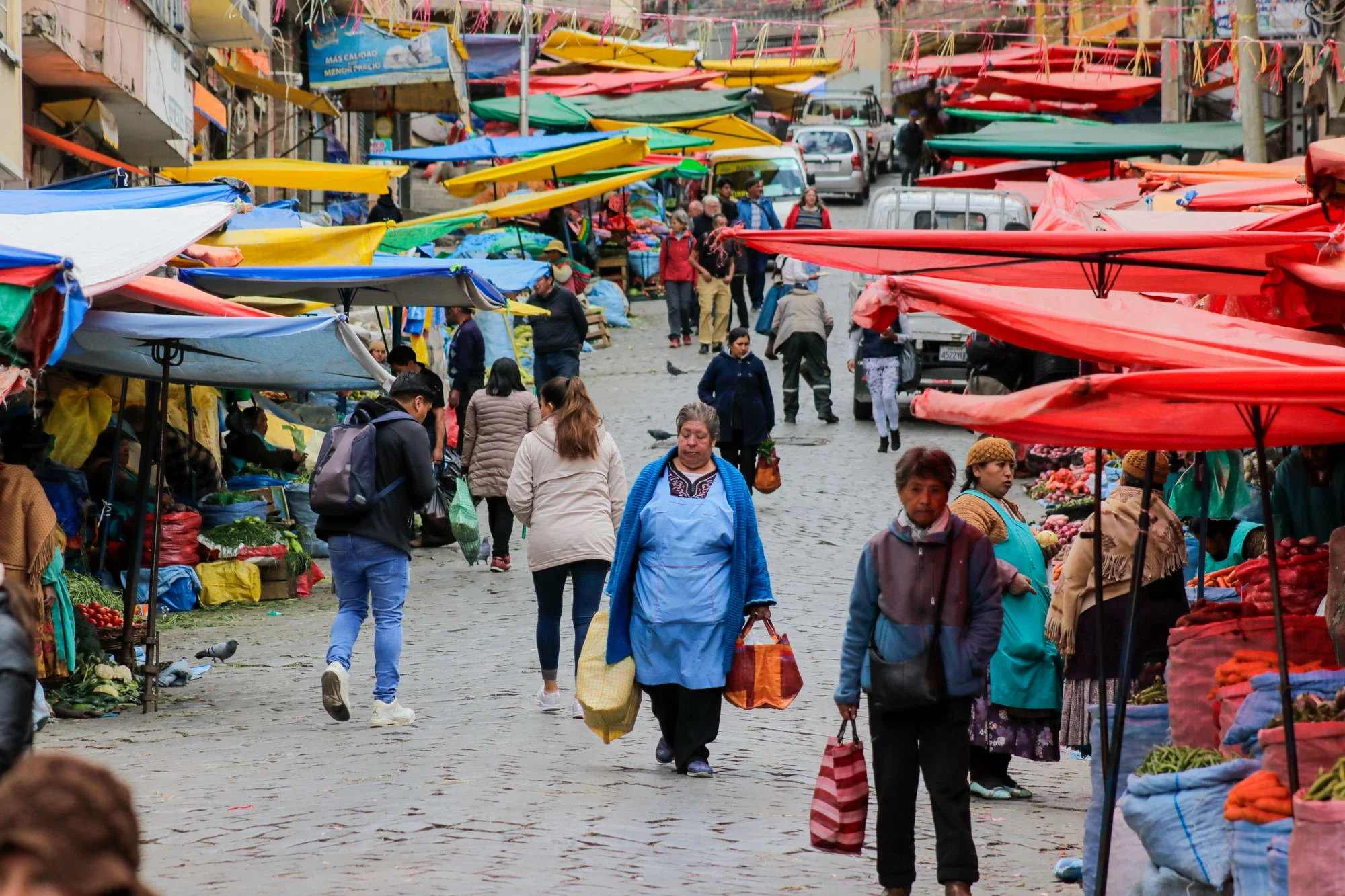
Everyday experiences revealed that La Paz remained almost entirely without public transport as it entered the fourth week of roadblocks.
Hundreds of residents from working-class neighborhoods—some organized, some not—marched for several hours toward the southern part of the city, searching for affordable food, and crossing the blockade that was preventing vegetables and produce from reaching the markets.
Can a structural crisis within Bolivia’s largest social organizations—a crisis as deep as it is widespread—help us understand what is happening, day in and day out, on the ground?
The fact that the MAS is no longer in government, and thus no longer holds power within the state apparatus, is no small matter. It has already led to the implosion of the para-state union structures that were in place throughout the party’s years in office.
We are at a moment when racism and colonialism ooze from every pore of society. We have seen the deployment of shock troops to the sites of confrontation, heard Paz’s triumphalist rhetoric, and felt the violent enforcement of state repression.
The role of urban social and partisan organizations warrants scrutiny and debate at this moment, as does the profound crisis of the COB and all the workers’, peasant, and Indigenous organizations that were dismantled as they ventured into the state apparatus.
We must also examine the myriad ways in which we have fought from multiple spaces to expose and put an end to the everyday extractivist and patriarchal violence that permeates our lives.
A renewed wave of dispossession has not slowed down. And neither has our indignation.
ZNetwork is funded solely through the generosity of its readers.
Donate




