


Last summer, the Pappe family packed its belongings, rented out its spacious house in Israel and moved to Britain. Ever since his support of an academic boycott on Israel’s universities became public, historian Ilan Pappe, 54, has felt like public enemy number one. Pappe says he had received death threats by phone almost on a daily basis.
Did it not occur to you that calling for an academic boycott on Israel might incite the public against you?
"I supported the boycott because I believe that without pressure, Israel will not end the occupation. Even before then I reached the conclusion that the peace process enables Israel to stall for time. When in 2003 several international organizations approached me and asked whether I would support the boycott I replied positively.
"I believe that things would change only if Israel receives a strong message that as long as the occupation continues it would not be a legitimate member of the international community, and that until then its academics, doctors and authors would not be welcome. A similar boycott was imposed on South Africa. It took 21 years, but it eventually led to the end of Apartheid."
Do you also call for an economic boycott of Israel?
"I am currently editing a book that compares the situation in Israel to the situation in South Africa, and I’m becoming convinced that there too, the economic boycott was less effective than the cultural one. As the son of German Jews, I know how important it is for our elites to be a part of Europe."
Did you wholeheartedly support the boycott?
"No, you can’t wholeheartedly recommend a boycott of your society, especially when it includes you place of work, the Haifa University… The last thing I enjoy is being the person that holds up a mirror to his society’s face and says, ‘Look how ugly you are.’ Some people like to challenge and incite their neighbors. I’m not like that, I don’t write in order to annoy and I certainly don’t hate myself, and I also love many people in Israel. I did not commit treason.
"But, I’m a historian, and this is the truth the way I see it: The story of a victim and a victimizer. And the victim is the Palestinians. Without idealizing the Palestinians – victims are not necessarily nice people, but they are still victims."
Pappe claims that his promotion at Haifa University has been blocked due to his political activity. "Provincial Haifa was unwilling to grant me the rank of a professor. I left for England as a doctor and in two days I climbed two ranks and became a faculty professor at the University of Exeter," he states.
However, Haifa University President Aharon Ben-Zeev claims that the university applied only relevant considerations in the question of Pappe’s promotion. "We applied the regular criteria according to the university’s constitution: Not only the list and quality of publications, but other considerations pertaining to the contribution to the university, teaching and so on," he explained.
Claims of ethnic cleansing
In an article published in the Israeli Mita’am Review for Literature and Radical Thought this week, titled "On the destruction of the Palestinian cities, spring 1948," Pappe maintains that the claim that the Arab residents fled or left their homes willingly during the war is false, and that a policy of "cleansing" the area from Arabs was employed as part of a plan to establish a Jewish-only state.
Pappe made similar claims in his book The Ethnic Cleansing of Palestine, which was published in England in 2006, in which he also presented testimonies of alleged massacres of Palestinians by Jewish soldiers.
These claims have been contested by many historians in Israel and abroad. Dr. Mordechai Bar-On, a research fellow at the Yad Ben-Zvi Institute and a former MK, calls Pappe "a propagandist, not a historian." Bar-On said that "the term ethnic cleansing is a vicious one, because it has never been used prior to the wars in former Yugoslavia. Indeed, there were places where Arab were expelled… but to say that there was an evil plan since the inception of Zionism for a forceful transfer – this is simply wrong and vicious."
However, Pappe insists that allowing the Palestinian refugees to return to Israel is the only thing that could secure peace in the region.
Would you be willing to vacate your home when they return to what used to be their villages near your house in Tivon?
"After years of working with refugees around the world and attending conferences on the right of return, I believe that no such notion exists on the Palestinian side. They want to return while understanding that they will live alongside the Jews. They don’t want to expel anyone. What turned me into a great lover of the Palestinians is the will of many among them to share the land with us. Even people in Hamas.
"The reason most of my friends in the territories voted for Hamas wasn’t because they didn’t want to share the land with the Israelis, but because they thought Hamas would be more effective in the struggle against the occupation."
By using terror?
"They don’t consider this to be terror. Fatah and Hamas employ the tools of the weak, because they don’t have planes or tanks. They are as violent as the Israelis, no more or less, with only one difference: The difference between the violence of the occupier and the violence of those fighting occupation."
An article you wrote titled "Genocide in Gaza, ethnic cleansing in the West Bank" was published in the Tehran Times about a month ago. Are you providing the enemy with weapons against us?
"On the contrary, I wish to speak to the people in Iran. A Jordanian newspaper wrote in its editorial a year ago that absurdly, I am Israel’s best ambassador in the Arab world, because they say – if such Israelis exist, maybe there’s hope for peace with the Jewish state."
Would you like your sons to serve in the army?
"It’s their decision, but I preferred it if they didn’t. As long as Israel has an occupying army, a rather cruel army, I wouldn’t want them to be part of it… I don’t think there is one moral person in the world that supports what Israel stands for. And it pains me to say this. I truly love the country, I would very much like to live in it, but I very much dislike my state. Everything related to its policy against the Palestinians makes me very angry."
Pappe denies being more sensitive to the suffering of Palestinians than to that of Israelis. "I’m shocked when I see the child who lost his leg in Sderot, and I’m shocked when I see a child killed in Gaza. But as long as Israel maintains its stance that the Palestinian issue can be resolved by force, the Palestinian side will respond with force.
"Once we realize that the only way is to relinquish some of out holy ideas, and once the Palestinians give up the idea of nationalism, and once they realize that there needs to be one state here that isn’t Jewish nor Palestinian, but a state of all its citizens, like in the US, we will have peace."

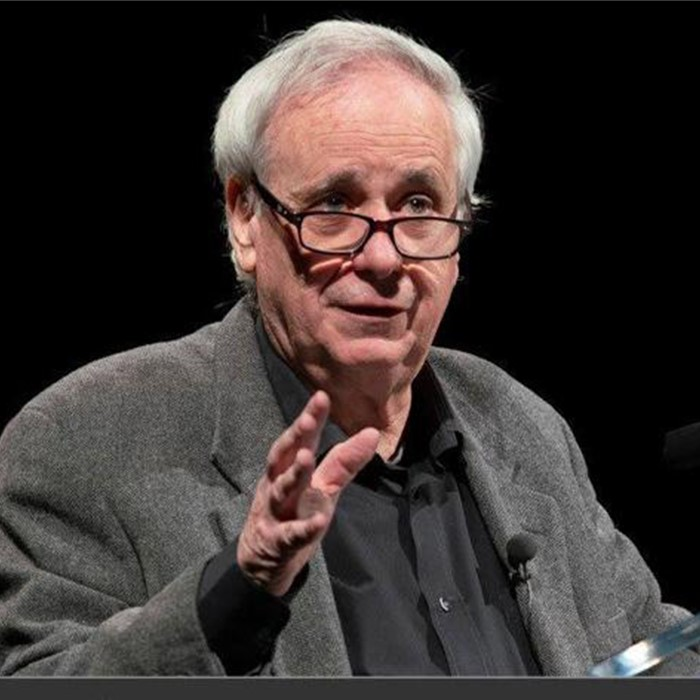
Ilan Pappé is an Israeli historian and socialist activist. He is a professor of history at the College of Social Sciences and International Studies at the University of Exeter in the United Kingdom, director of the university's European Centre for Palestine Studies, and co-director of the Exeter Centre for Ethno-Political Studies. He is also the author of the bestselling The Ethnic Cleansing of Palestine (Oneworld), A History of Modern Palestine (Cambridge), The Modern Middle East (Routledge), The Israel/Palestine Question (Routledge), The Forgotten Palestinians: A History of the Palestinians in Israel (Yale), The Idea of Israel: A History of Power and Knowledge (Verso) and with Noam Chomsky, Gaza in Crisis: Reflections on Israel's War Against the Palestinians (Penguin). He writes for, among others, the Guardian and the London Review of Books.
ZNetwork is funded solely through the generosity of its readers.
Donate




