


Few if any Israelis can understand what it means to be under full curfew for 10 days, incarcerated with the children in a crowded house, usually without an air conditioner or a computer or games to play, maybe a barely functioning television set. But the worst thing is the unnerving density of the close quarters.
Even Israeli parents – who as of today have to figure out how to get through their children’s endless summer vacation and are worried about having to keep them cooped up at home for fear of terrorist attacks – are also incapable of grasping how intolerable it is for the Palestinians to be imprisoned for days and weeks at a time with the children in their meagerly furnished homes, while threatening tanks continually rumble by and every sortie outside is liable to end in disaster.
Very few Israelis have experienced curfew and it is very unlikely that many of them are spending their time thinking about the fact that within an hour’s drive from their homes nearly a million people – some 800,000 in the cities of the West Bank along with the residents of some of the surrounding localities – have been locked into their homes for days under severe conditions. Not far from Tel Aviv, which on Friday hosted its annual Gay Pride parade, with all the color and merriment of past years, increasing numbers of Palestinian detainees, some of them innocent, were made to walk in a procession of humiliation. While the cafes in our cities were packed with people relaxing on the weekend, even if in the back of their minds they were afraid of terrorists, people in the West Bank can only dream of sitting in a coffee shop these days.
The protracted curfew that has been imposed in the West Bank within the framework of Operation Determined Path, which is a more comprehensive curfew than any in the past, is not present in the Israeli consciousness. The media barely reports on it and no one is moved to speak out against the situation. Immersed in our justified concerns, we do no more than take note of the fact that since curfew was imposed there have been no terrorist attacks.
However, this is ultra-short-term thinking that is also morally flawed. The test of the war against terrorism is not 10 days of quiet but the eradication of terrorism. It is difficult to believe that after the failure of Operation Defensive Shield, which failed to bring even a month of quiet, there is anyone who still seriously believes that these invasions of the cities in the West Bank provide a true answer to terrorism. The day after the Israeli forces leave the cities – and Israel maintains that it is not planning a permanent occupation – the terrorist attacks will be renewed in full force.
The collective punishment that we are imposing on a million people is only postponing the next wave of attacks slightly, and may even have the effect of intensifying it. It is not hard to guess the plans that are being hatched in the curfew period by those who have been condemned to such a hard life: One thing we can be sure of is that no one there is planning to absorb a further 35 years of occupation without resistance.
We have to remember that even without the curfew, these are people who in the past year and a half have been deprived of their basic freedom and are living in conditions of soaring unemployment and dire poverty. A.F., a resident of the Deheisheh refugee camp near Bethlehem, related at the end of the week that for the majority of the camp’s residents the hardest time is during the few hours when the curfew is lifted so they can buy food and other basic items, because then they discover that there is nothing to buy.
From the moral point of view, the question arises again whether anything goes in the name of the war against terrorism. If it does, as most Israelis now seem to think, we have to ask why we should not expel all the Arabs from the country. Such a move would undoubtedly be more effective in the battle against terrorism. But if there are moral constraints on what is permissible even in the justified war against terrorism, collective punishment in the form of a curfew imposed on an entire nation and locking up that nation indefinitely by means of siege and closures are immoral methods that must not be resorted to under any circumstances.
This curfew is also exacting a price in blood from the Palestinians, yet it is scarcely creating echoes in Israel. In Jenin, four children were killed in two separate incidents when they ventured outside. Most Palestinian children are by now cued to run when they hear the sound of a tank approaching in the terrible silence of the curfew and feel the earth tremble under the tank treads – but they don’t always succeed in getting away. The mourning in Israel for the five victims of the terrorist attack at the settlement of Itamar, including, horrifically, three children from one family, need not diminish the scale of the tragedy that occurred in Jenin the next day: three small children, two of them brothers, were killed by a tank shell as they rode their bicycles, only because they were under the mistaken impression that the curfew had been lifted for a moment and they could go outside for a little while.

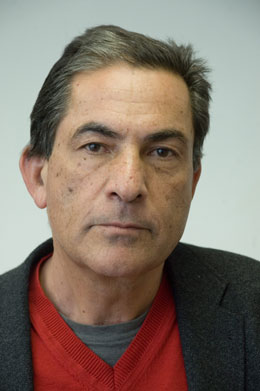
Gideon Levy is a Haaretz columnist and a member of the newspaper's editorial board. Levy joined Haaretz in 1982, and spent four years as the newspaper's deputy editor. He is the author of the weekly Twilight Zone feature, which covers the Israeli occupation in the West Bank and Gaza over the last 25 years, as well as the writer of political editorials for the newspaper. Levy was the recipient of the Euro-Med Journalist Prize for 2008; the Leipzig Freedom Prize in 2001; the Israeli Journalists’ Union Prize in 1997; and The Association of Human Rights in Israel Award for 1996. His new book, The Punishment of Gaza, has just been published by Verso Publishing House in London and New York.
ZNetwork is funded solely through the generosity of its readers.
Donate




