


Two days before he lost the election, John McCain summarized what had become the central message of his campaign: “Redistribute the wealth, spread the wealth around — we can’t do that.”
Oh yes we can.
The 2008 presidential election became something of a referendum on “spreading the wealth.”
“My attitude is that if the economy’s good for folks from the bottom up, it’s gonna be good for everybody,” Barack Obama said on Oct. 12, in a conversation with an Ohio resident named Joe. The candidate quickly added: “I think when you spread the wealth around, it’s good for everybody.”
McCain eagerly attacked the concept, most dramatically three days later during the last debate. While instantly creating the “Joe the Plumber” everyman myth, McCain sharpened the distinctions between the two tickets while the nation watched and listened. He charged: “The whole premise behind Senator Obama’s plans are class warfare — let’s spread the wealth around.”
Obama has routinely reframed the issue in terms of fairness. “Exxon Mobil, which made $12 billion, record profits, over the last several quarters,” he replied during the final debate, “they can afford to pay a little more so that ordinary families who are hurting out there — they’re trying to figure out how they’re going to afford food, how they’re going to save for their kids’ college education, they need a break.”
This fall, the candidates and their surrogates endlessly repeated such arguments. As much as anything else, the presidential campaign turned into a dispute over the wisdom of “spreading the wealth.” Most voters were comfortable enough with the concept to send its leading advocate to the Oval Office.
In the process, the top of the GOP ticket recycled attacks on the principles of the New Deal. Like Franklin Roosevelt when he first ran for president in 1932, Barack Obama put forward economic prescriptions that were hardly radical. Yet, in the next few years, Obama’s administration could accomplish great things — reminiscent of the New Deal, with its safety-net guarantees and its (redistributive) progressive income tax and its support for labor rights and its mammoth commitment to public works programs that created jobs. Today, we need green jobs that cure our economy and heal our environment.
Let’s be clear: Despite their rhetoric, even McCain and Palin know that spreading the wealth from greedy elites to the masses of people is quite popular in our country. That’s why their campaign emphasized how Palin “stood up to the oil industry” in Alaska. She did it by imposing a windfall profits tax on big oil that put money into the hands of every man, woman and child in the state. If it’s good for Alaska, why wouldn’t it be good for America as a whole?
Obama and his activist base won a mandate for strong government action on behalf of economic fairness. But since election night, countless pundits and politicians have somberly warned the president-elect to govern from “the center.” Presumably, such governance would preclude doing much to spread the wealth. Before that sort of conventional wisdom further hardens like political cement, national discussions should highlight options for moving toward a more egalitarian society.
Government policies in that direction would be a sharp reversal of what’s been happening over the last few decades. No matter how you slice it, more of the economic pie has been going to fewer people.
“The top 1 percent of households received 22.9 percent of all pre-tax income in 2006, more than double what that figure was in the 1970s,” the Working Group on Extreme Inequality reports. “This is the greatest concentration of income since 1928.” And: “Between 1979 and 2006, the top 5 percent of American families saw their real incomes increase 87 percent. Over the same period, the lowest-income fifth saw zero increase in real income.”
Current tax structures are steeply tilted to make the rich richer at the expense of others: “In the 2008 tax year, households in the bottom 20 percent will receive $26 due to the Bush tax cuts. Households in the middle 20 percent will receive $784. Households in the top 1 percent will receive $50,495. And households in the top 0.1 percent will receive $266,151.”
We can reverse those trends. The time and opportunity have come to “spread the wealth.”
When President Franklin Roosevelt heard pleas for bold steps to counter extreme economic inequality, he replied: “Go out and make me do it.”
Barack Obama won the presidency after clearly saying that he wants to spread the wealth. Let’s make him do it.
_______________________________
Norman Solomon, a national co-chair of Healthcare NOT Warfare, is the author of many books including “War Made Easy: How Presidents and Pundits Keep Spinning Us to Death.” He is on the advisory board of Progressive Democrats of America.

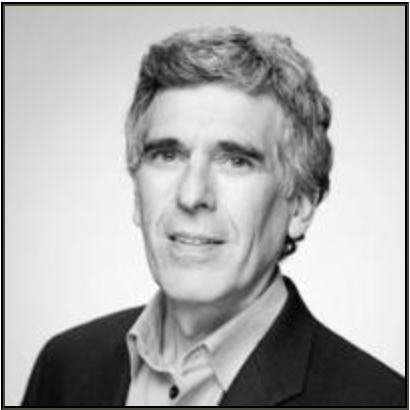
Norman Solomon is the national director of RootsAction.org and executive director of the Institute for Public Accuracy. The paperback edition of his latest book, War Made Invisible: How America Hides the Human Toll of Its Military Machine, includes an afterword about the Gaza war.
ZNetwork is funded solely through the generosity of its readers.
Donate




