


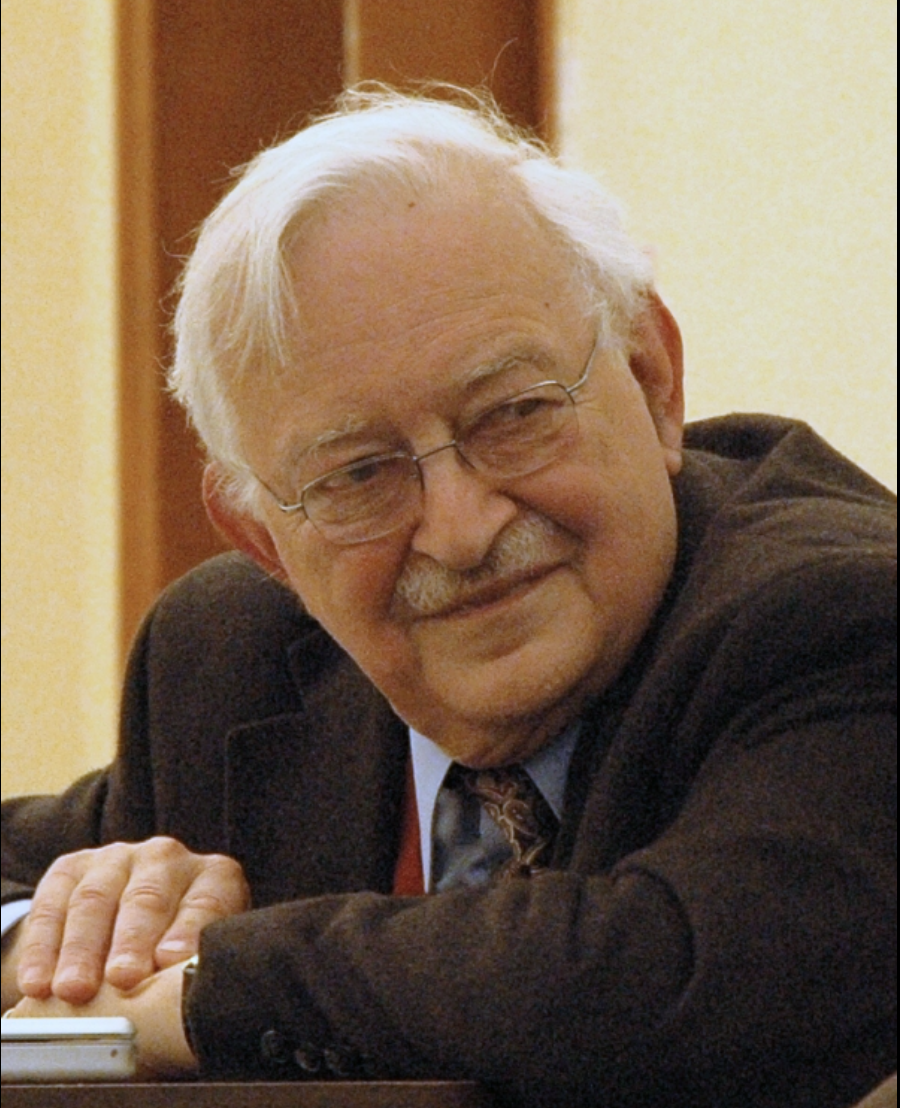
When Bernie Sanders announced that he would seek the presidential nomination of the U.S. Democratic Party, few people took him very seriously. Hillary Clinton seemed to have so much support that her nomination seemed assured without difficulty.
Sanders however persisted in his seemingly utopian quest. To the surprise of most observers, the size of his audiences at meetings throughout the country began to grow steadily. His essential tactic was to attack the large corporations. He said that they used their money to control political decisions and to quash debate about the growing gap between the very top earners and the vast majority of the American people who were losing real income and jobs. To emphasize his position, Sanders refused to take money from large donors at the top and raised his money only from individuals donating small amounts.
In doing this, Sanders touched a deep vein of popular discontent, not only among those at the very bottom of the income ladder but from the so-called middle class who feared they were being thrust down into the bottom stratum. Today, polls show that Sanders has gained sufficient support that he seems to represent a serious opponent to Clinton.
Sanders has his limitations, especially the fact that his appeal to racial and ethnic minorities seems to be limited. But he has succeeded in forcing public discussion of the income gap. He has pushed Clinton’s rhetoric to the left in her attempt to recuperate potential Sanders voters. Whatever the final outcome of the Democratic Party’s convention, Sanders has achieved far more than almost everyone predicted at the outset of his campaign. He has, at the very least, forced a serious debate about program within the Democratic Party.
In January of 2016, there seems to have begun a parallel campaign in France. It is similar in many ways to that of Sanders but yet it is also quite different because of the structures of the electoral institutions of the two countries.
Three left intellectuals decided to launch a public appeal for a left primary (primaire à gauche). They are Yannick Jadot, a long-time political activist in environmentalist groups; Daniel Cohn-Bendit, of 1968 fame but for a long time a political activist seeking to unite environmentalists, left socialists, and pro-European forces; and Michel Wieviorka, a sociologist who had been an advisor to left figures in the Socialist Party.
They wrote a public appeal denouncing passivity before the rightward trend of politics in France, including of course the growing electoral strength of the Front National. They called for a serious public debate about how to unite the left and left-of-center forces to affect the presidential elections expected in 2017. Before making public the appeal, the originators sought endorsements from well-known public intellectuals of multiple political stripes, including Thomas Piketty and Pierre Rosanvallon. And they persuaded Libération, France’s largest left-of-center newspaper, to devote an entire issue on January 11, 2016 to both the appeal and the multiple endorsements.
Two weeks later, on January 26, Libération devoted another issue to this appeal. By this time, 70,000 persons had signed the appeal. This issue contained articles by multiple public figures on what they saw as the primary issues to pursue and how best to pursue them. A lot of the debate centers on what is the function of a primary. The whole concept of a primary is an import from U.S. elections and is itself a response to the very unexpected results of the French presidential elections of 2002.
In the rules currently governing French presidential elections, unless one candidate receives a majority of the votes, there is a second round in which only the top two first-round candidates are on the ballot. The assumption had been that the first round was a sort of primary in which every political tendency would show its strength. It was assumed that in the second round the two main parties (center-right and center-left) would be the choice for the voters.
In 2002, however, the candidate of the far-right Front National edged out the Socialist Party. The choice for voters was now between the Front National and that of the mainstream right-of-center party. Faced with this choice, the Socialist Party then endorsed the center-right candidate for the second round, allowing him to win overwhelmingly. What had happened was simple. The left and center-left candidates were too many in the first round and this kept the Socialist Party from gaining enough votes to make it into the second round.
The impact of the 2002 elections was traumatic for the French left. The old system was designed for a situation in which there are two main parties. It doesn’t work for a tripartite situation. To keep from repeating this defeat, the Socialist Party decided in 2011 to hold a party primary that was “open” to anyone. This primary was successful in that it kept most, albeit not all, candidates on the left from presenting themselves directly in the first round since they now could present themselves in the Socialist Party’s primary. The openness of the primary led to many centrist voters entering this primary. This made it possible for François Hollande to be victorious over a more left candidate in the Socialist primary. Hollande went on in the second round to defeat the right candidate, President Nicolas Sarkozy.
Now however that Hollande is president, the last thing he wants is a primary that he might lose. On the other hand, he has been losing support within the Socialist Party from segment after segment of more left figures who have been resigning or have been ousted from their positions in the cabinet. He risks the entry of more names on the first round, which might lead to a repetition of what happened in 2002. At the same time, Sarkozy is also faced with a strong demand for a primary within his party, a primary that he is by no means assured of winning.
The problem in both main parties is that they are each divided internally on multiple real issues. For the Socialists and left forces, there is the division between neoliberal versus “welfare state” programs. There is the cleavage on how one defines laïcité – in absolute terms or allowing for cultural identity. And there is the cleavage on whether to strengthen or weaken European institutions. Finally, there is the now hot issue of so-called déchéance de nationalité in which it is proposed that persons who are French citizens by birth may be stripped of their French nationality if convicted of anything defined as aiding terrorism. This was a proposition previously of the right and had been strongly opposed by the Socialist Party. There is much unrest in the party about this reversal of position, which was a response to the vicious attack by the Islamic State on November 13 that transformed public sentiment considerably.
Hollande is now running as the candidate with the conservative position on all these issues. He hopes to win by being the candidate who is fighting terrorism, and therefore deserves the support of centrist individuals. It is this Hollande that the appeal to left forces is trying to force into a public debate.
The parallel with Sanders is that the French group may be tapping into the same popular discontent that Sanders has used to make his bid. The difference is that they are fighting an incumbent president who is ready to use every conceivable pressure to force discipline on party members. We shall know perhaps six months from now whether the French group can be as successful as Sanders.
ZNetwork is funded solely through the generosity of its readers.
Donate


1 Comment
It may be worth noting that both countries have a colonial past in which violence, aggression, genocide, flagrant disregard for the rule of law and many other negative traits form baggage.
The notion that such “exceptionalism” in the national character makes peace-keeping anathema is lost on the ruling elites in both countries; whereas peace- keeping on the left is viewed as a strength.