


[The following was originally published in 1995 by Covert Action Quarterly.]
… Independence Day was designed by the first state propaganda agency, Woodrow Wilson’s Committee on Public Information (CPI), created during World War I to whip a pacifist country into anti-German frenzy and, incidentally, to beat down the threat of labor which frightened respectable people after such events as the IWW (Industrial Workers of the World) victory in the Lawrence, Mass., strike of 1912. The CPI’s successes greatly impressed the business world; one of its members, Edward Bernays, became the leading figure in the vastly expanding public relations industry. Also much impressed was Adolf Hitler, who attributed Germany’s failure in World War I to the ideological victories of the British and U.S. propaganda agencies, which overwhelmed Germany’s efforts. Next time, Germany would be in the competition, he vowed. The influence of the great generalissimo on the propaganda front, as Wilson was described by political scientist Harold Lasswell, was not slight. Independence Day was one contribution.
This particular propaganda exercise began with business-government initiatives to Americanize immigrants, to inculcate loyalty and obedience and expel from their minds alien notions about the rights of working people. Such programs would turn immigrants into the natural foe of the IWW and other destructive forces that undermine the country’s ideals and institutions, the CPI founding document read. At a major conference of civic organizations (organized labor excluded), government and private organizations of all kinds and creeds had pledged themselves to cooperate in carrying out Americanization as a national endeavor, the organizers reported, while issuing plans for a successful Americanization program for the coming Fourth of July. The CPI took up the cudgels, now using the wartime fanaticism it had helped engender as another weapon against pacifists, agitators and other anti-American groups, notably the hated Wobblies. The Generalissimo joined in with a May 1918 endorsement. The title of the indoctrination ceremonies was to be Americanization Day; on reflection, Independence Day seemed preferable.
Labor leaders were aware of what was happening. A United Mine Workers (UMW) official objected that the business-government project was
attempting to set up a paternalism that will bring the workers of this country even more absolutely under the control of the employers, … strengthening the chain of industrial tyranny in this country. … [That is what lies behind these efforts] to sanctify and confirm oppression by waving the American flag in the face of its victims and by insidiously stigmatizing as unpatriotic any attempts they may make to throw off the yoke of the exploiting interests [that the organizers] represent.
But labor could not compete with state-corporate power, and lost this battle just as it failed to save May Day. (A jingoist holiday in the U.S., it is celebrated elsewhere as a labor festival which was begun in solidarity with the struggles of brutalized American workers.) …

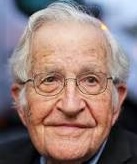
Noam Chomsky (born on December 7, 1928, in Philadelphia, Pennsylvania) is an American linguist, philosopher, cognitive scientist, historical essayist, social critic, and political activist. Sometimes called "the father of modern linguistics", Chomsky is also a major figure in analytic philosophy and one of the founders of the field of cognitive science. He is a Laureate Professor of Linguistics at the University of Arizona and an Institute Professor Emeritus at the Massachusetts Institute of Technology (MIT), and is the author of more than 150 books. He has written and lectured widely on linguistics, philosophy, intellectual history, contemporary issues, and particularly international affairs and U.S. foreign policy. Chomsky has been a writer for Z projects since their earliest inception, and is a tireless supporter of our operations.
ZNetwork is funded solely through the generosity of its readers.
Donate





1 Comment
The American declaration of independence was the worst thing to happen for almost everybody. A few people profited by it, sure. But for almost everybody else, it would have been better if it had stayed British. The native population would not have been massacred in their millions. Black people would have been freed from slavery decades earlier. Americans would not have had a War of Independence, nor a Civil War. Today, the USA might have been more like Canada, with a multi-party parliamentary democracy and free universal healthcare. US independence came at least a century too early and it was a disaster for almost everyone in America and the rest of the world. Indeed, it might prove to be the original cause for the end of human existence.