


Over the weekend, Brazil’s former President Luiz Inácio Lula da Silva turned himself in to the police after having been charged with corruption under the wide-ranging Lava Jato (Car Wash) investigation. Tens of thousands of people blocked roads across the country to protest his impending arrest. Thousands surrounded the metalworkers’ union building where he had waited. When he insisted that he would turn himself in and begin serving his 12-year sentence, Mr. Lula da Silva was carried on the shoulders of the crowd waiting outside. It was a dramatic moment for a man who remains hugely popular in Brazil and is seen by many as a standard-bearer of the aspirations of the poor.
Before he went to prison, Mr. Lula da Silva released a statement of great feeling: “Those who persecute me can do what they want to me, but they will never imprison our dreams.” Brazil is to hold a presidential election in October. Mr. Lula da Silva, who left office in 2011 with high approval ratings, had been chosen by the Workers’ Party (PT) as its candidate. By all indications, he would have swept to victory. He had promised to reinvigorate the pro-poor policies that had been a hallmark of his presidency which began in 2003. Those policies such as Fome Zero (Zero Hunger) had decreased hunger in the country and increased opportunities for children of poor families to go to school and college. One woman carried a sign that read, “Lula condemned for putting the daughter of a domestic worker through university.”
A fragile democracy
Brazil’s democracy is fragile. It was the trade union movement with which Mr. Lula da Silva remains affiliated and other such organised platforms that overthrew a U.S.-backed military dictatorship that had lasted from 1964 to 1985. Over the next 15 years, the civilian government did not uproot the institutions of the dictatorship nor weaken the oligarchy that had benefited from military rule. This power bloc remained firmly in control even during the PT-led governments of Mr. Lula da Silva (2003-2011) and Dilma Rousseff (2011-2016). During this period of high commodity prices, social welfare policies could be enacted but little else was possible. The oligarchy, impatient to retain control of Brazil, did everything possible to undermine any democratic dynamic.
In 2016, Ms. Rousseff was removed from office not by an election but by the shenanigans of political horse-trading in parliament. At that time, it was said that the oligarchy had conducted a ‘soft coup’ against the PT government. Her successor, Michel Temer, has not been elected to his post by the people but was installed there by the National Congress. Most Brazilians view him as a ‘bad’ or ‘terrible’ president. Under Mr. Temer, the government withdrew many of the PT’s social welfare policies. In 2014, Brazil was removed from the UN’s Hunger Map but is likely to return on it.
Over the past year, Mr. Lula da Silva’s Caravan for Brazil has moved from one poor community to another, where he has been defending the PT’s policies and attacking the oligarchy. Mass movements such as Brazil’s Landless Workers’ Movement have backed him totally, even though they had fought his timidity while in office. That he was a symbol for the poor was clear to the mass movements and the oligarchy.
Car Wash and other such investigations were made possible by strong laws against corruption put in place by Mr. Lula da Silva’s government. In fact, few political figures have been immune from charges of corruption. In Brazil, trust in government is very low. It is advantageous to the oligarchy to see the influence of the government diminish. Now, threats to its immense power are not so sharp.
Mr. Lula da Silva has been accused of accepting an apartment from a contractor (OAS) in exchange for government contracts, a charge he has denied. Evidence for the bribe is weak to non-existent, and there is no paperwork to show that he received an apartment or owns it. A convicted executive of OAS whose prison sentence was reduced for his statement against the leader, gave evidence against Mr. Lula da Silva. The presiding judge in the trial, who has demonstrated on wiretaps his partisanship against Mr. Lula da Silva, accepted the statement and convicted him. Appeals were denied and considerations of habeas corpus rejected.
Democratic test
A series of consequential elections are to take place this year in Latin America: Venezuela (May), Mexico (July) and Brazil (October). In Mexico, socialist candidate Andrés Manuel López Obrador is the frontrunner. It is almost certain that he won on his first attempt in 2006 but was denied his victory by the ruling establishment. In Venezuela, the right-wing opposition is in disarray, which is likely to allow the Bolivarian movement to retain its hold on government. Each of these contests from Venezuela onwards will have an impact on the Left in the hemisphere. In each of these countries, if the elections were fair, the Left would win. But ‘democracy’ has been increasingly desiccated by institutional manoeuvres, such as the attack on Mr. Lula da Silva.
There is a widespread sense that Mr. Lula’ da Silva’s prosecution, like the removal of Ms. Rousseff, is politically motivated. It would have been virtually impossible for Jair Bolsonaro, the candidate of the Right to defeat anyone backed by the PT.
If the courts now refuse to allow Mr. Lula da Silva to run in the October election as is expected, it will call into question the legitimacy of that vote. Democracy is in crisis in Brazil.
Vijay Prashad is the Director of Tricontinental: Institute for Social Research, one of whose offices is in Sao Paulo, Brazil

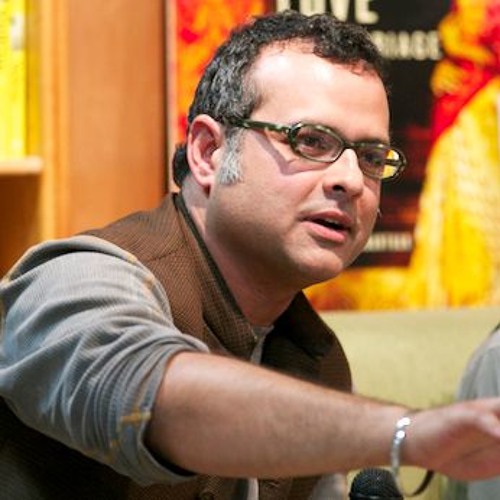
Vijay Prashad is an Indian historian, editor, and journalist. He is a writing fellow and chief correspondent at Globetrotter. He is an editor of LeftWord Books and the director of Tricontinental: Institute for Social Research. He is a senior non-resident fellow at Chongyang Institute for Financial Studies, Renmin University of China. He has written more than 20 books, including The Darker Nations and The Poorer Nations. His latest books are Struggle Makes Us Human: Learning from Movements for Socialism and (with Noam Chomsky) The Withdrawal: Iraq, Libya, Afghanistan, and the Fragility of U.S. Power. Tings Chak is the art director and a researcher at Tricontinental: Institute for Social Research and lead author of the study “Serve the People: The Eradication of Extreme Poverty in China.” She is also a member of Dongsheng, an international collective of researchers interested in Chinese politics and society.
ZNetwork is funded solely through the generosity of its readers.
Donate




