


Source: Haaretz
First we were ashamed, then we were shocked, and we even investigated. Then we denied it and lied. After that we ignored and repressed it, yawned and lost interest. Now is the worst phase of all: We’ve started to extol the killers of children. That’s how far we’ve gone.
The first child I remember wasn’t even a day old. His mother, Faiza Abu Dahuk, gave birth to him at a checkpoint. She was turned away by the soldiers from there and from two more checkpoints, until she had to carry him, all through a cold and rainy night. When she arrived at the hospital, he was already dead.
The matter came up at a cabinet meeting. An officer was dismissed and a mini-storm ensued. This was in April 1996, during the year of hope and illusions. Four years later, when the second intifada broke out, soldiers killed Mohammed al-Dura in front of the cameras and Israel had already transitioned to the phase of denials and lies: Dura didn’t die. Israeli soldiers didn’t kill him; maybe he shot himself, maybe he’s alive to this day.
Remnants of shame and guilt still clung somehow. After that came 20 years of indifference and complacency. Soldiers and pilots have killed 2,171 children and teenagers, and not one of these cases shocked anyone here, or sparked a real investigation or led to a trial. More than 2,000 children in 20 years – 100 children, three classrooms a year. And all of them, down to the last, were found guilty of their own death.
Any Israeli would be happy to explain that they were terrorists and the soldiers or the police had no choice but to execute them. In the alternative between the lives of the children and the sacred lives of the soldiers, of course we prefer the soldiers, although there’s almost always a third possibility: for no one to be killed.
Last week the next phase was declared. Israel praises the killers of children; they are the new heroes. This never happened before. They were Palestinians, terrorists, but still they were children. From now on, take the life of a Palestinian child and be a hero on the front page of the newspaper or the top item on the TV news, including your daring picture, pixilated. “The hero from the Old City” – a Border Police officer “took out a terrorist and prevented a major disaster” (Yedioth Ahronoth, Thursday). No mention in the headline of the age of the dangerous terrorist, of course, but no matter.
“Remember me well,” wrote 16-year-old Omar Abu Sab before he went out with a knife to stab a Border Police officer. A video clip released by the police shows him approaching two officers from behind and attacking them. He was smaller and thinner than them, they could have stopped him, they didn’t have to shoot him, and they certainly didn’t have to kill him, like they needlessly killed children with knives before him and after him. But to turn the shooting of a 16-year-old with a knife into a big story is the crossing of a moral red line. It will encourage the needless killing of more children, if any such encouragement was needed. The light trigger finger will become even lighter. If before this there was fear of a sham investigation, now a medal of valor is already in the works.
How words kill. When the killers of children and teenagers, even when they’re armed with a knife, are extolled by the media and the commanders, this encourages the next criminal killing. There is no child with a knife that the well-armored Border Police can’t arrest without killing. But the police are too cowardly. That’s how they killed Eyad al-Hallaq, an autistic teenager. Real heroes would have arrested him, not shot him to death. But why bother if you can kill and become a hero? Most of the children that the army and the Border Police kill should not have been killed. Now it’s worth it to kill them, the media will crown you “the hero of the Old City.” These are your heroes, O Israel, the killers of children and teenagers.

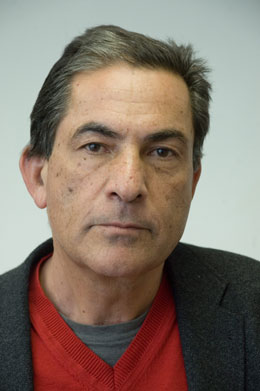
Gideon Levy is a Haaretz columnist and a member of the newspaper's editorial board. Levy joined Haaretz in 1982, and spent four years as the newspaper's deputy editor. He is the author of the weekly Twilight Zone feature, which covers the Israeli occupation in the West Bank and Gaza over the last 25 years, as well as the writer of political editorials for the newspaper. Levy was the recipient of the Euro-Med Journalist Prize for 2008; the Leipzig Freedom Prize in 2001; the Israeli Journalists’ Union Prize in 1997; and The Association of Human Rights in Israel Award for 1996. His new book, The Punishment of Gaza, has just been published by Verso Publishing House in London and New York.
ZNetwork is funded solely through the generosity of its readers.
Donate




