


It is impossible to miss the brutality. Each day, a video surfaces with an atrocity against Dalits or Muslims or someone else who has a fleeting hold of power in today’s India. The most recent video was brought to light by Gujarat’s new member of the Legislative Assembly, Jignesh Mevani. Mevani tweeted a video that is sure to disturb all but the most heartless. It shows two men flogging Mukesh Vaniya in Rajkot, Gujarat. Vaniya and his wife work as rag pickers. They used a magnet to go through garbage in search of valuables. A factory owner accused them of theft. This is why Vaniya was beaten. His wife escaped to get help. By the time she returned, Vaniya was on the ground, dead.
What makes the incident so horrific is that it can be watched on film. You can hear Vaniya begging for his life. Those who beat him care little for his pain. What they see is a Dalit, a person of no consequence. Mevani’s tweet carried the hashtag – #GujaratIsNotSafe4Dalits. He compared this to the Una incident of 2016, when four Dalits were beaten mercilessly by cow vigilantes. Una is four hundred kms south of Rajkot. This is a belt across Gujarat. The Una incident created an uproar in Gujarat. Mevani, then a lawyer and activist of the Jan Sangharsh Manch, led those protests under the umbrella of the Dalit Asmita Yatra.
What is striking about the incidents in Gujarat is that Dalits are few in the state (7 per cent of the population) and they are comparatively better off than in other states. Nonetheless, over the course of the past decade, the rate of crimes against Dalits is higher in Gujarat than in states with much larger Dalit populations. The viciousness of the anti-Dalit feeling in Gujarat defines the politics of the state. What is noteworthy, and Mevani has noted it on many occasions, is that Narendra Modi, India’s Prime Minister and the former Chief Minister of Gujarat, has said so little about this brutality. He has remained silent.
Modi’s silence should not be read as silence. It says a great deal that he will not come out and condemn the brutality. The brutality is not accidental. It is part and parcel of the politics of Modi – a politics marinated in hatred of minority communities that refuse to socially buckle to the demands of Hindutva.
Suffocate Society
The death of Vaniya is not an isolated incident. It is part and parcel of the attempt by the forces of Hindutva to suffocate Indian society.
Modi’s party, with 31 per cent of the vote, is now in government in New Delhi. The BJP should behave like a minority government, since it only has a minority vote share. Yet, Modi behaves as if he has the mandate to do what he likes – to reshape the state institutions so that they conform to the agenda of the RSS and the Sangh Parivar. The intervention into every aspect of the state – including now the UPSC examination structure – has been well-documented. Placement of mediocre, but ideologically sound, people to run Central government cultural and educational institutions comes alongside favours use of Central government repressive agencies to go after critics of the government.
The BJP and the RS –run State has given their acolytes seemingly free reign to behave in barbaric ways against people whom they see as enemies. Theirs is a politics that is pickled in hatred, a politics that generates inequality but maintains their base not by the provision of basic needs but by the provision of targets of animosity. All kinds of sensibilities of lost power as a consequence of reservations and constitutional protections are consolidated around the idea of Hindutva. This idea – fundamental to the BJP and the RSS – does not mean Hinduness as such. It means, rather, that Savarnas should dominate society and can use any means to ensure their domination. The beating to death of Vaniya is one incident. The murder of countless women who refuse to accept the harsh dictates of caste or religious loyalty is another example of this viciousness.
Modi Inc.
Modi ran for office in 2014 with the promise to promote vikas, development. Violence against Muslims, Dalits, Adivasis and Christians – which had marked his tenure as Chief Minister of Gujarat – was not to define his campaign. Nor was it, as the liberals kept saying, going to be central to his government. But it is indeed central to Modi’s party and to its form of rule. The violence is not external to Modi’s political framework. It is essential to it.
For the BJP, vikas – development – does not mean that each person should have shelter and food, dignity and culture. What vikas means to the BJP is that their corporate allies – the Adanis and so on – should be free to make as much money as possible. The BJP base, with its deteriorated livelihood, is not given such benefits. It has to make do with hatred. That is the coin that it receives: it has the right to flog Dalits and Muslims, to behave as barbarically as possible.
The symbol of Modi’s allegiance to corporations has been his surrender of Delhi’s Red Fort to the Dalmia Group. There is something vulgar about this symbol of Indian freedom being leased to a company for private profit.
Kerala, the antidote to the BJP
While Modi’s government remains fixated on leasing out the Red Fort and making sure that its acolytes do not get into trouble for their violence, about 44 Indians die each year as they clean sewers in the country. It is illegal to allow human beings to enter the sewers and manually clean them. But nothing has been done by the Central government to tackle this easily fixed problem.
In Kerala, the government has been seized of this problem. A year ago, Kerala’s Chief Minister Pinarayi Vijayan of the Communist Party of India (Marxist), saw a photograph of a man in a sewer. He immediately contacted the head of the Kerala Water Authority (Shainamol) and the Water Resources Minister (Mathew T. Thomas) to find a solution to manual scavenging. The government, working with a team of young scientists, developed Bandicoot – a robot that can clean sewers. The former manual scavengers are being trained to use this robot. This is not Modi’s India. It is the India of the future. Modi’s India cannot imagine a future. It is rooted in a hideous version of the past, which produces a dangerous present for hundreds of millions of Indians.
Vijay Prashad is the Director of Tricontinental: Institute for Social Research and Chief Editor, LeftWord Books.

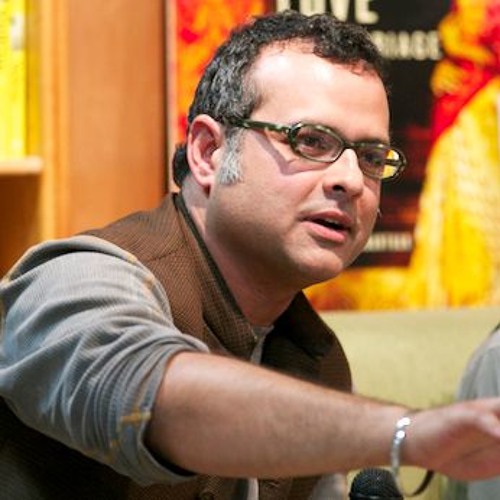
Vijay Prashad is an Indian historian, editor, and journalist. He is a writing fellow and chief correspondent at Globetrotter. He is an editor of LeftWord Books and the director of Tricontinental: Institute for Social Research. He is a senior non-resident fellow at Chongyang Institute for Financial Studies, Renmin University of China. He has written more than 20 books, including The Darker Nations and The Poorer Nations. His latest books are Struggle Makes Us Human: Learning from Movements for Socialism and (with Noam Chomsky) The Withdrawal: Iraq, Libya, Afghanistan, and the Fragility of U.S. Power. Tings Chak is the art director and a researcher at Tricontinental: Institute for Social Research and lead author of the study “Serve the People: The Eradication of Extreme Poverty in China.” She is also a member of Dongsheng, an international collective of researchers interested in Chinese politics and society.
ZNetwork is funded solely through the generosity of its readers.
Donate




