

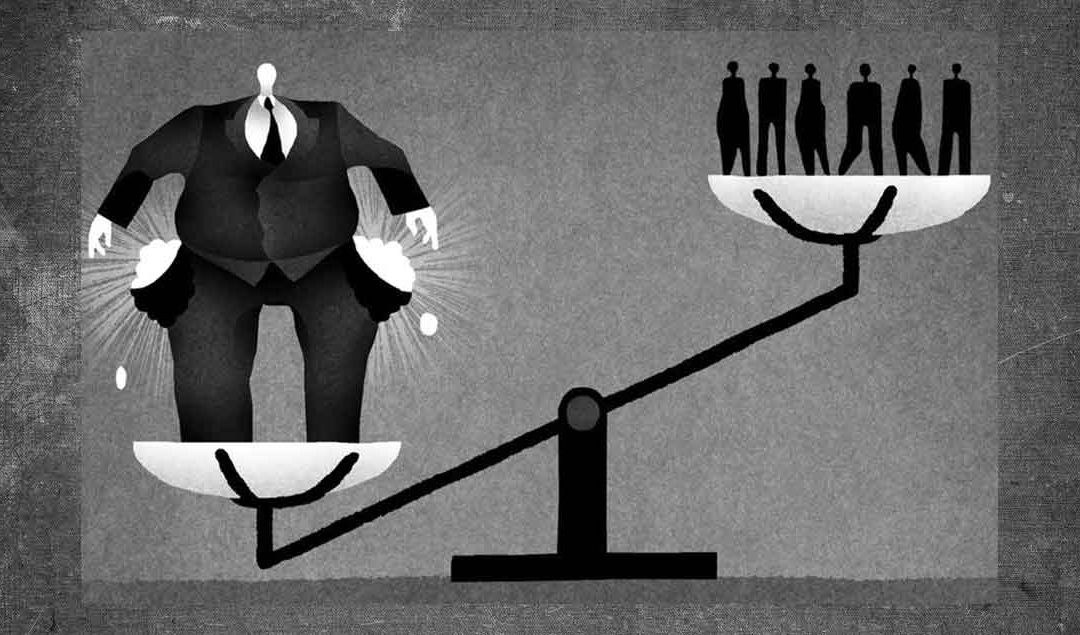
Senate Republicans are rushing to overcome their own differences and challenges from the parliamentarian to pass their version of President Trump’s “One Big Beautiful Bill.” If the final law is anything like the bill the House approved on May 22, it would represent one of the most extreme upward transfers of wealth in modern U.S. history.
The GOP plan slashes Medicaid, SNAP, and other core safety net programs to fund tax cuts for billionaires, mass deportation efforts, and bloated military spending. These cuts would drive widespread economic insecurity and lead to tens of thousands of preventable deaths each year — all to underwrite enormous tax breaks for the wealthiest Americans.
These charts highlight just four of the most dangerous potential impacts of the House-approved bill.


The House budget reconciliation bill includes drastic cuts to health care for the poor to pay for tax cuts for the rich. According to a study by the University of Pennsylvania and the Yale School of Public Health, the bill would result in an estimated 51,311 preventable deaths per year.

The House Republican plan would cut the Supplemental Nutrition Assistance Program (SNAP), the nation’s most important and effective anti-hunger program, by roughly 30 percent — by far the largest cut to SNAP in history. One of the main ways the House bill cuts SNAP is by expanding harsh and ineffective work requirements. According to the Congressional Budget Office, these requirements would lead to 3.2 million people losing SNAP benefits in an average month. The Center on Budget and Policy Priorities has calculated state-based estimates of the number of people who would be at risk of losing some or all their benefits, with California having the largest at-risk population, at 888,000.

Alongside the largest cuts in history to Medicaid and SNAP food assistance, the House budget includes massive tax breaks for the rich. If this bill becomes law, it would lower average household resources for the poorest 10 percent by 3.9 percent per year, or $1,600, during the period 2026-2034. Resources for the richest 10 percent, by contrast, would increase by 2.3 percent, or $12,000, according to CBO.

On top of huge income tax breaks, wealthy Americans would benefit from a weakening of our already weak estate tax. The 2017 Trump-GOP tax law doubled the amount the ultra-rich can inherit without paying any tax on the transfer. This provision is scheduled to expire at the end of 2025, reverting the exemption threshold to $14 million per couple. But both the Senate and House versions of the new bill would more than double the exemption to $30 million, make the change permanent, and continue to raise it each year with inflation. Wealthy heirs would enjoy a one-time tax savings of $6.4 million, while 99.8 percent of American families would not get a single penny from this tax cut.
The House reconciliation bill is a blueprint for deeper inequality. It strips essential services from those who need them most to deliver tax cuts to those who need them least. Congress has a choice: double down on policies that enrich the few while endangering the many – or invest in a moral economy where everyone has the chance to live with dignity and security.
UPDATE: On July 1, the Senate passed their version of the budget reconciliation bill. It includes even deeper cuts to Medicaid while maintaining tax cuts for the wealthy that are nearly identical to those in the House version.
ZNetwork is funded solely through the generosity of its readers.
Donate
