


For those who wonder if the struggle is worth it, if there is reason to believe that we can ever fundamentally transform our society, today is a day to have one’s hope renewed. On this day, 30 years ago, the United States hurriedly completed the withdrawal of all its military troops from Vietnam as the Vietnamese independence movement entered and took control of the city of Saigon, since renamed Ho Chi Minh City.
This was one of the most profound political and military accomplishments of the 20th century. A poor and primarily peasant society defeated the greatest military power in the world in a war that went on for close to two decades. It did so despite more bombs being dropped on this small corner of the world than were dropped in all of World War II in both Europe and the Pacific. It did so despite the presence of half a million heavily armed U.S. troops and many hundreds of thousands of Vietnamese forced into military service to fight on their side. It did so despite the deaths of over a million Vietnamese and the wounding and displacement of many millions more.
The war in Vietnam had far-reaching effects. It opened the eyes of many millions of people in the United States to the true reality of our government as an imperialistic, brutal, very flawed “democracy.” It brought into existence a massive anti-war movement which, together with the Black freedom movement, helped to spawn a women’s rights movement, Native American, Puerto Rican, Chicano and Asian American movements, a lesbian and gay rights movement, a progressive upsurge within labor, an environmental movement and more. It inspired other independence and social justice movements around the world. It indirectly brought down President Richard Nixon. It led to an exposure of the illegal and undemocratic actions of the Central Intelligence Agency and the Federal Bureau of Investigation as they ran roughshod over people’s rights which, in turn, led to the passage of a number of laws to make such acts more difficult.
The election of Ronald Reagan in November, 1980 signaled the beginning of a domestic and international counter-revolution which, 25 years later, has profoundly altered the political playing field. As one example, think John Kerry back then-leader of the peace movement-and John Kerry today-apologist and supporter of war and occupation. Other examples include the continuing loss of trade union membership, an environmental movement trying to get a handle on how to combat the deep crisis of global warming, and a CIA and FBI, since 9-11, allowed to operate with fewer and fewer restrictions.
And yet, a closer look reveals many reasons to be hopeful about the possibilities for reversing this counter-revolution, even with Bush/Cheney in power. A majority of U.S. Americans believe the Iraq war was not worth it. Within the Democratic Party there is organizing taking place that is beginning to win victories, as at a recent California Democratic convention, in a campaign to pressure the party leadership to call for an end to the occupation and the setting of a date for troops to leave. Environmental, labor, student, religious and other groups have begun meeting for serious discussions about how to join forces to organize visible, large-scale mass actions on the climate crisis. A vigorous debate is underway within the AFL-CIO about how to make a course correction that will put the movement back into the “labor movement.” And the Bush/Cheney administration is falling flat on its political face in its efforts to privatize Social Security.
Perhaps, thinking about how the Vietnamese defeated the U.S. government can help us in our struggle here. How did they win?
They won because they understood that there was a difference between the U.S. government and its citizens. We should also remember that on a wide range of issues a majority of our peoples don’t go along with the positions of either Republicans or Democrats.
They won because they built independent organizations deeply rooted among the people, as must we.
They won because they were able to build coalitions and united fronts among a wide range of political forces, both within Vietnam and internationally.
And they won because they understood that theirs was a protracted struggle which would have many twists and turns, ups and downs, but which could eventually emerge victorious if they refused to give up and were able to learn from both their victories and their defeats.
Is Vietnamese society since the gaining of independence all that we wish it could be? No. It is far from a perfect society. But it is a country at peace, with independence, struggling to develop within a world economic system that, to be charitable, does not prioritize social and economic justice.
It is our responsibility, here in the belly of the beast, to use our intelligence, our commitment to justice, and our love for this world and its peoples to function in such a way that, over time, we will bring about the kinds of changes in this society that will benefit our threatened ecosystem and struggling humanity around the globe. We can settle for nothing less.
Ted Glick is active with the Independent Progressive Politics Network (www.ippn.org ) and the Climate Crisis Coalition (www.climatecrisiscoalition.org ). He can be reached at indpol@igc.org or P.O. Box 1132, Bloomfield, N.J. 07003.

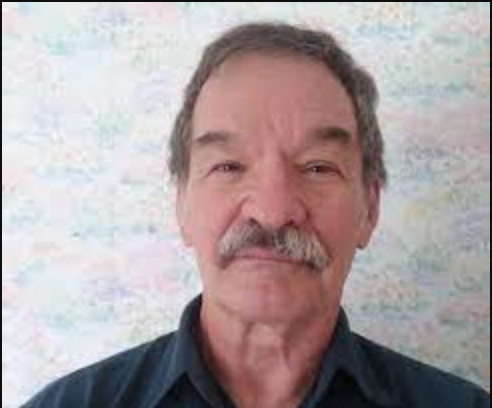
Ted Glick has devoted his life to the progressive social change movement. After a year of student activism as a sophomore at Grinnell College in Iowa, he left college in 1969 to work full time against the Vietnam War. As a Selective Service draft resister, he spent 11 months in prison. In 1973, he co-founded the National Committee to Impeach Nixon and worked as a national coordinator on grassroots street actions around the country, keeping the heat on Nixon until his August 1974 resignation. Since late 2003, Ted has played a national leadership role in the effort to stabilize our climate and for a renewable energy revolution. He was a co-founder in 2004 of the Climate Crisis Coalition and in 2005 coordinated the USA Join the World effort leading up to December actions during the United Nations Climate Change conference in Montreal. In May 2006, he began working with the Chesapeake Climate Action Network and was CCAN National Campaign Coordinator until his retirement in October 2015. He is a co-founder (2014) and one of the leaders of the group Beyond Extreme Energy. He is President of the group 350NJ/Rockland, on the steering committee of the DivestNJ Coalition and on the leadership group of the Climate Reality Check network.
ZNetwork is funded solely through the generosity of its readers.
Donate




