


I’ll get on my knees and pray
We don’t get fooled again–The Who
If you an adult born after, say, 1995, you probably recall a fair bit about the terrible events of September 11, 2001.
For most Americans, the terror attack which turned three commercial airliners full of passengers into guided missiles came as a bolt out of the blue, with no idea of why.
For reasonably informed peace activists, the why was completely clear. Western powers had invaded, made war on, and exploited every place in the MENA–Middle East and North Africa–for centuries. From the Crusades to Napoleon to other European colonizers and then to the dominance of the US in oil extraction, it added up. The resentment, bitterness, hatred, and even the willingness to commit atrocity-suicide was a product of that foreign domination.
Understanding the motivation for terrorism is the first step toward preventing it, just as in any criminal mischief. Just as we want researchers seeking a cure for cancer to deeply understand how and why cancer operates, peace researchers and activists stay well informed on why terrorists do what they do.
Those who studied peace and conflict knew what bin Laden was demanding, but the vast majority of Americans did not have any idea, so they were vulnerable to manipulation yet again.
What was bin Laden, founder and lead of al Qaida, demanding? Again and again, western journalists like Peter Bergen and Robert Fiske met with him and interviewed him before 9.11.2001 and he always had the same four demands:
- Infidel troops (US military) out of the most holy country to Islam (in his view), Saudi Arabia.
- Palestine needed their own sovereign nation-state.
- US stop aid to corrupt MENA rulers, such as the royal family in Saudi Arabia.
- US stop military aid to Israel.
For years after 9.11.2001 I would write these four demands on the blackboard but without attribution. I would ask students, so, who made these demands?
The guesses were all over the ballpark, from “Gandhi” to “Malcolm X” to “the Pope” to “Archbishop Tutu” and more. Literally one student one time got it right, an amazingly effective, smart, and savvy Marine corpsman.
So when George Bush, Dick Cheney, and others were telling Americans that al Qaida had attacked us because they were affronted by women in bikinis, or our inclusion of gay people, or just our “way of life,” that was yet another pack of lies added ultimately to the other whoppers that got us to invade Afghanistan and then Iraq.
So here we are, 22 years after the largest terror attack ever committed by a nonstate actor (until September 11, 2001, the academic literature on terrorism had accurately noted that the vast majority of terrorism in the world was ruthless dictators slaughtering their own people). We don’t get a do-over, but what might a different path have produced, one that showed the world that such evil would not stand, but the US would show that we were in fact the most compassionate, deeply caring country?
What if, instead of killing more than four million humans in the subsequent war on terror, including approximately 7,000 from the US military, we had addressed both the criminal conduct of al Qaida and the grievances that led to it?
What if, instead of spending eight trillion dollars on the war on terror we had invested only a fraction of that in a combination of actual defense of the US (eliminating overseas bases on other people’s sovereign soil), a decarbonized rail system from coast to coast, an end to any support for dictators, and major humanitarian aid that uplifted millions of the poorest people in places where they instead associate US aid with oppressing them?
What if we the people would pay attention to what is going on in the world? What if we elected candidates who would vote in policies, funding, and laws that brought us peace and prosperity because other peoples and countries would regard us as friends and helpers? Some say this is simplistic naiveté.
Yeah? How did that war on the Taliban go for us? How did it work out when Dick Cheney got Saudi Arabia to host US troops in Gulf War I, setting off the Wahabi/bin Laden rage that culminated a decade later on 9.11.2001?
Sorry, war defenders. Your ideas of peace through invasion and occupation are the real naïve ones.
Peace is the new realpolitik.

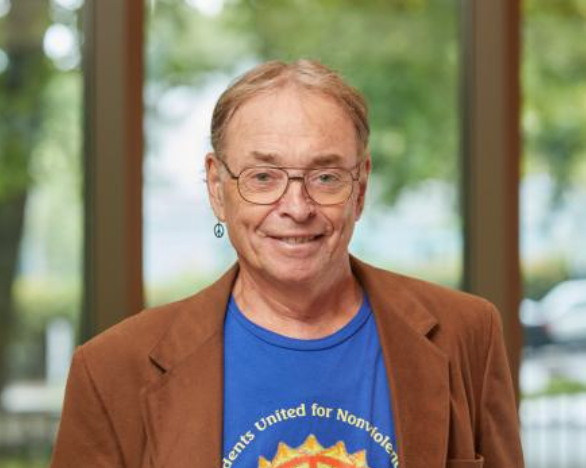
Dr. Tom H. Hastings is Coördinator of Conflict Resolution BA/BS degree programs and certificates at Portland State University, PeaceVoice Senior Editor, and on occasion an expert witness for the defense of civil resisters in court.
ZNetwork is funded solely through the generosity of its readers.
Donate




