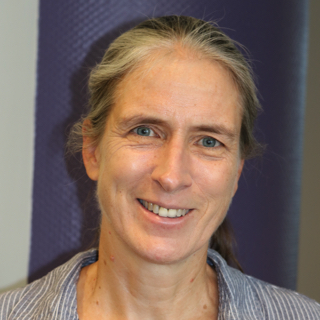
This foreclosure crisis isn’t just about people losing their homes," said Cheryl Lawrence, tenant organizer for City Life/Vida Urbana in Boston, Massachusetts. "It’s about people losing their communities, their neighbors, the relationships they have with others that give them history and make them feel connected." 

I spoke to Lawrence at an 8:30 AM rally in front of the Meyers’s family home in Dorchester, Massachusetts on April 16, 2008. The police were scheduled to show up that morning to evict ten people from the three-family home they were renting. 

"This is an amazing case," explained Steve Meacham, another tenant organizer from City Life. "US Bank/Wells Fargo/Premier Servicers foreclosed on the owner and are now trying to evict everyone in the building. That includes four brothers and sisters and a licensed day care center. Each household was paying rent of $1,000-$1,300 before foreclosure. They are willing to pay rent again. The bank will not accept it."

The statistics on foreclosure are alarming. The Center for Responsible Lending estimates that two million homeowners who have been sold unfair and deceptive loans will face foreclosure in the next two to three years. Over the last 4 years, there has been an almost 300 percent increase in the dollar amount of subprime loans outstanding. One in five subprime mortgages originating during the past two years is likely to end in foreclosure. In Boston alone, 2,000 families will face eviction in 2008. 

But the statistics don’t tell the full story. "At a tenant meeting last night," Lawrence told me, "I spoke with someone whose grandmother’s house had recently been foreclosed. This was the house where family members had been born, where they had celebrated weddings and birthdays. One of the family members is a midwife. When they have to leave their home, the community loses part of its fabric…. We’re not just losing buildings. We’re losing our midwives, our activists, our day cares. There is a social cost to the community, not just an economic cost." 

Moments later a school bus pulled up and one of the children ran down the steps, through the crowd that had gathered to stop his family from being evicted, and up on to the bus. You could easily imagine that bus pulling up and no one being there to board. You could imagine how hard it must be to concentrate in school when you’re not sure if police are moving your furniture onto the sidewalk. 

"But when people gather like they are here this morning, they’re saying, ‘We won’t let our communities die.’ We won’t stand by while people suffer the trauma that comes from being uprooted from their homes." 

In Boston, as well as in cities around the country, activists recognize foreclosure crisis for what it is— part of an ongoing, sustained war on people and communities—and are mobilizing to defend themselves. "The profit-making structure and a sense of community don’t go together," says Lawrence. 

Thanks to the organizing efforts of City Life/Vida Urbana and the courage of community members willing to physically block the eviction and risk arrest, the Meyers family won a temporary reprieve from losing their home. In the process, the community won a degree of stability, a child left for school knowing he could come back afterwards, and a group of activists had another chance to learn the power of standing together against forces that value profit over people. 

Z 

Cynthia Peters is a community and anti-war activist in Boston. She is also a freelance editor and is currently the editor of The Change Agent. Photos by Jonathan McIntosh, www.rebelliouspixels.com.


Cynthia Peters is the editor of The Change Agent magazine, an adult education teacher, and a nationally known professional development provider. She creates social-justice-oriented materials that feature student voices, along with standards-aligned, classroom-ready activities that teach basic skills and civic engagement. As a professional development provider, Cynthia supports teachers to apply evidence-based strategies to improve student persistence and develop curriculum and program norms that promote racial equity. Cynthia has a BA in social thought and political economy from UMass/Amherst. She is a long-time editor, writer, and community organizer in Boston.

Donate
Leave A Reply

Subscribe

All the latest from Z, directly to your inbox.

Institute for Social and Cultural Communications, Inc. is a 501(c)3 non-profit.

Our EIN# is #22-2959506. Your donation is tax-deductible to the extent allowable by law.

We do not accept funding from advertising or corporate sponsors.  We rely on donors like you to do our work.

ZNetwork: Left News, Analysis, Vision & Strategy

THE WIND CRIES FREEDOM

The Wind Cries Freedom, the new book from Z co-founder Michael Albert, is a sweeping oral history of a future American revolution.

Through thirty interconnected chapters, it draws out the strategies, failures, turning points, and hard-won wisdom of a movement that called itself the Revolutionary Participatory Society. These are not the polished memoirs of politicians: they are the unfiltered accounts of people who organized in neighborhoods, hospitals, universities, stadiums, courthouses, and places of worship, and kept a shared vision alive through cynicism and exhaustion.

The result is speculative political fiction that reads like history: messy, human, and quietly hopeful in the way that only real experience and long thought can produce.

Get your copy and peruse more features on the book’s website below.

“Read it, argue with it, but don’t look away. The future it recalls is one we must still fight to deserve.”

Yanis Varoufakis

“The most unusual and intriguing combination of prophecy, manifesto, and movement building manual that I have ever encountered.”

Bill Fletcher Junior

“This work fills a huge gap in our social movement literature.”

Cynthia Peters

Subscribe

All the latest from Z, directly to your inbox.

This is your article this month.

We’re glad you keep coming back. If Z’s work has informed, challenged, or inspired you, that’s no accident: there are no paywalls, no ads, and no billionaire owners here, and there never will be. Independent media survives because readers choose to support it.

Billionaires fund their own media. We fund ours. Help us reach 1,000 sustaining donors:

Number of donors694
Our goal1,000

Sustainers at $9/month or more receive the digital Z Magazine.

Already a sustainer? Click here and we won’t ask again. Thank you!

Your reading count is stored only in your browser and is never sent to us.

Sound is muted by default.  Tap 🔊 for the full experience

CRITICAL ACTION

Critical Action is a longtime friend of Z and a music and storytelling project grounded in liberation, solidarity, and resistance to authoritarian power. Through music, narrative, and multimedia, the project engages the same political realities and movement traditions that guide and motivate Z’s work.

If this project resonates with you, you can learn more about it and find ways to support the work using the link below.

Independent media is not disappearing because the ideas are weak.

It is disappearing because platforms reward speed, outrage, and algorithmic visibility over thoughtful analysis.

More than 100,000 people read Z every month, free of paywalls, ads, and billionaire owners. It takes fewer than 1 in 100 of them to fund all of it: 1,000 donors who keep Z independent, for everyone, and build what comes next.

Number of donors694
Our goal1,000

Sustainers at $9/month or more receive the digital Z Magazine.

Subscribe

Join the Z Community – receive event invites, announcements, a Weekly Digest, and opportunities to engage.

OUT NOW: "The Wind Cries Freedom" by Michael Albert

Exit mobile version