


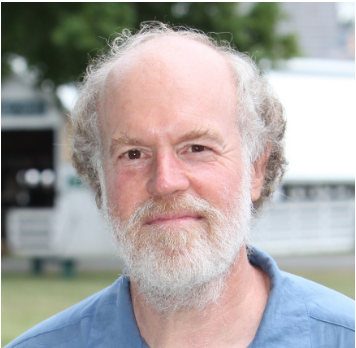
Brian Tokar
Vermont’s annual town meetings, held every year on the first Tuesday in March, are among the oldest surviving institutions of direct democracy in the United States. Dating to well before the American Revolution, these annual face-to-face gatherings are the setting where residents of over 200 Vermont towns debate their annual budgets, planning and zoning issues, grants to social service agencies, and all major purchases.
Since the Nuclear Freeze campaigns of the 1980s, they have also become a forum for raising issues that have been largely excluded from mainstream political debate, from living wages to nuclear power. While state laws have significantly eroded the power of town meeting in recent decades, town votes still carry substantial moral weight, are widely covered in local media, and often have significant impacts on statewide—and sometimes national—debates.
This year’s town meetings debated a wide range of issues, from genetically engineered foods to shutting down Vermont’s only nuclear power plant, instant runoff voting, and a comprehensive statement of environmental values known as the Earth Charter.
In 31 towns this year, residents obtained the necessary signatures to add the issues of genetically engineered food and crops to their town meeting agendas. The resolutions generally included language stating that genetically engineered (GE) foods have been shown to cause long-term damage to the environment, the integrity of rural, family farm economies, and can have serious impacts on human health. Most resolutions called on state legislators and the Vermont congressional delegation to support labeling of GE foods and seeds, as well as a moratorium on the growing of GE crops. Twenty-eight towns passed some version of this resolution, including the state capital, Montpelier, where a city election is held on Town Meeting Day. There, the measure passed by a 2-1 margin. Two towns tabled the resolution, and only Rochester, in the southern Green Mountains, defeated it.
“Ordinary people were pretty angry about the fact that engineered foods are not labeled,” said Joey Klein, an organic farmer who presented the resolution in the town of Plainfield, Vermont. “The idea of a moratorium on planting genetically engineered crops also made sense to people because they felt they were being treated like guinea pigs.” Klein explained that a moratorium was needed to protect the vast majority of farmers who choose not to plant GE crops, but are subject to genetic contamination from engineered varieties.
In addition, eight towns took further steps toward ending the use of engineered crops within their towns, whether by declaring a town moratorium or urging that the planting of GE seeds be actively discouraged. The ability of towns to take such measures was a matter of considerable statewide controversy, with a liberal Democratic Secretary of State arguing that such discussions were beyond the legal purview of town meeting and should not be allowed. Commentators across the political spectrum criticized this further erosion of the scope of town meetings. Ironically, a main rationale for this ruling appeared to be a desire to block a proposed resolution that would have prohibited “sanctioning homosexual conduct” in schools. While the GE moratorium was petitioned by 5 percent of registered voters in all the towns, the anti-gay resolution was maneuvered through the town councils or in a number of towns.
Opponents of genetic engineering have been largely stifled in their efforts to pass legislation at the national and state levels. Four states—Kansas, Maine, Maryland and North Dakota—have so far passed laws slightly limiting the use of engineered crops, among more than 15 that have tried. In every instance, corporate lobbyists have devoted substantial resources to blocking the mildest bills, even those barring engineered crops that have not yet come on the market, such as GE wheat, which is vehemently opposed by farmers across the Western plains.
The Vermont town resolutions were met with organized opposition. The Vermont Farm Bureau and the Vermont Grocers’ Association—state chapter of the aggressively pro-GE Grocery Marketing Association—sent mailings to every town select board discouraging debate on the issue. This may be the first time that pro-corporate lobbyists have intervened in a Vermont town meeting vote. Several town discussions raged on for an hour or more, but nearly all of the anti-GE resolutions eventually passed by overwhelming margins.
Following Town Meeting Day, there are now 43 municipalities in the U.S. that have passed resolutions against the genetic engineering of food and crops. They include major cities such as Boston, San Francisco and Austin, Texas, as well as 33 cities and towns in Vermont.
On other issues, all but two of the towns surrounding Vermont’s only nuclear power plant, Vermont Yankee, supported a resolution to shut the plant down, rather than accept its pending sale to the Entergy Corporation. Nearly 50 towns voted in support of implementing “instant runoff voting” in Vermont—a system whereby people can enter second and third choices in elections for statewide candidates, and have these votes count in instances where no one wins a majority. With independent and progressive candidates expected to play an important role in this year’s state elections, this issue has gained increasing support. The Earth Charter, proposed by an international alliance of environmental groups and presented at the United Nations earlier this winter, was approved in about 20 Vermont towns. A similar number supported the infamous anti-gay resolution.
Vermont activists are very much aware of the increasing threat to community-based decision making in light of the increasing power of trade bodies like the WTO and the pending Free Trade Area of the Americas. “It’s about the freedom to govern ourselves,” explained Ben Gross- cup, a student at the Institute for Social Ecology (ISE), who spoke in favor of the resolution on genetic engineering in the town of Marshfield. “The biotechnology industry, the federal government and international bodies like the World Trade Organization are trying to make us forget that we can have that kind of freedom.”
Meanwhile, activists with the ISE’s Biotechnology Project, the Vermont Genetic Engineering Action Network, and the farmer advocacy group Rural Vermont, have pledged to bring resolutions against engineered food and crops to more Vermont towns next year, as well as to other states where issues can be debated in municipal settings. This year’s town meeting debates confirm what GE opponents have been saying for a long time, that the more people know about genetically engineered food, the more they oppose it. Activists are hopeful that Vermont’s town meetings are still one place where people’s real concerns can take clear precedence over outside corporate interests. Z
Brian Tokar is a long-time activist and author, most recently, of Redesigning Life: The Worldwide Challenge to Genetic Engineering (Zed Books).


