


The song “Strange Fruit” lives on as legendary poetry and music that makes perhaps the strongest argument against race hatred of any artwork. Though it will forever be associated with Billie Holiday, the piece’s relevance calls for it to be renewed and relived, over the course of generations and, likewise, struggles. It was reconstructed for a new jazz audience again in recent times through the hushed voice of Cassandra Wilson, backed by an all-star trio. This powerful, fascinating adaptation breathes new life into Abel Meero- pol’s revolutionary classic in a period of reinvigorated fight-back against senseless killings of young Black men. Wilson captures the defiantly flat emotional affect heard in Billie Holiday’s recording while offering lament, anger and rebellion beneath the surface. The blues are turned inside out, amplified, and threaded through the wandering, minor mode of the songwriter’s heritage as well as the restlessness of the jazz tradition. The piece’s history is compelling. Its author recognized “Strange Fruit” as a necessary statement then and it remains so now. Composed in 1937 by New York City school teacher, poet, songwriter, and social activist Meeropol during a time when people of conscience fought for anti-lynching legislation, he brought the piece to progressive friends at Cafe Society, intent on hearing it performed at least once by renowned singer Holiday. Another frequent performer at Cafe Society, Josh White, sang it, too, but when Holiday examined the stirring poetry of the lyric, she readily claimed it. It is a serious challenge for a vocalist to take on, but it also remains a challenge to confront simply in light of Holiday’s immortal 1939 recording. Nina Simone revisited the piece in the 1960s and singers as diverse as Lou Rawls, Carmen McRae, Diana Ross, Robert Wyatt, and Sting have been drawn to it.
Cassandra Wilson has a unique talent to re-make established songs. She’s gone from the music of Son House to the Monkees in the confines of a single album, so the challenge is one she is up for. In this recording, her interplay with the master musicians of the ensemble named for Harriet Tubman (a serious revolutionary if ever there was one) cannot be overlooked. As she emotes, Brandon Ross (amplified 6-string banjo), Melvin Gibbs (electric bass), JT Lewis (drums) drop in and out of her sphere, crafting a backdrop. The band’s quietly jarring arrangement speaks of equal parts reflection and conflict. The pulse, just out of grasp, brings the listener to a subtle anxiety reflective of the haunting discomfort Holiday painted for audiences so long ago. In its time, “Strange Fruit” left an indelible mark on a splintered society. The divide was racial, to be sure, and far too many felt this anguish. Jim Crow was a devastating “justification” for institutional racism, for crimes against humanity. But the societal division was also harshly drawn along class lines as the Great Depression ravaged entire cities, whole peoples. And as radicals, indeed revolutionaries, fought against these grave injustices, the political right-wing created a Red Scare to counter the uprisings. The Red Scare of the 1930s was re-cast in the post-war years, culminating in the Cold War.
Nearly two decades following the publication of “Strange Fruit,” that renewed sense of struggle was not lost on the song’s author. In yet another decade of fear and suspicion—as he watched friends’ lives being ruined by McCarthyism, global capital, and the grip of HUAC— Meeropol adopted the two young sons of Julius and Ethel Rosenberg who were facing the death penalty, charged by a reactionary government hell-bent on silencing dissent. By the time of their parents’ executions, the boys’ had Meeropol’s name and commitment to secure them, but the pains of such a violation grasps one’s soul.
The network of hate spans the eras with an ease that is shameful. Its hold on us is seen in the police killings of African American youth in Ferguson, on Staten Island, in Los Angeles and through a vexing list of other places, other crimes. The fear, the suspicion, the stinging desire to seek blame in other pervades like nothing should. This remains our own strange and bitter fruit.
Z
John Pietaro is a writer, musician, and cultural organizer from New York City ( www.DissidentArts.com).

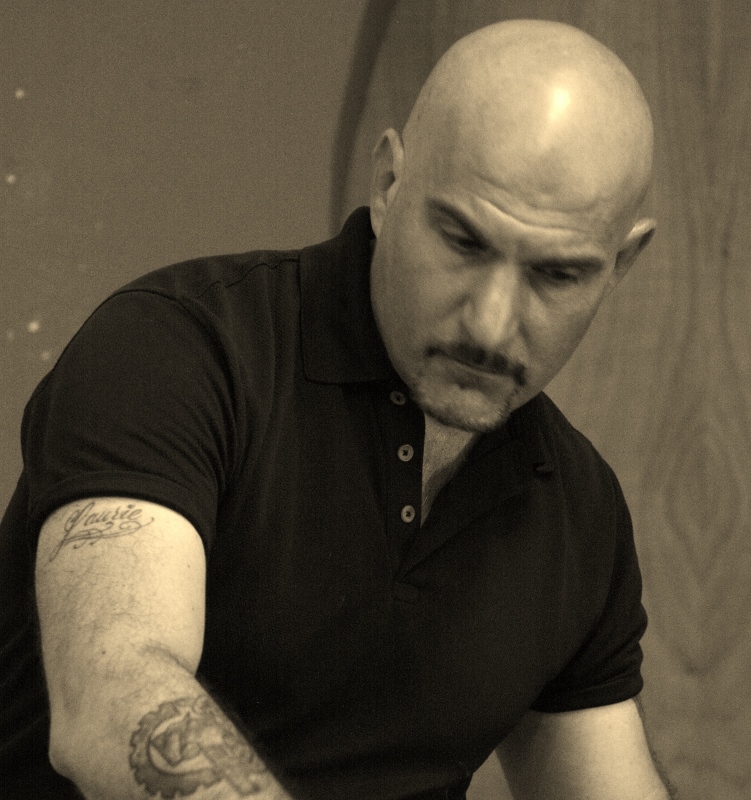
John Pietaro is a writer, musician, cultural organizer and publicist from Brooklyn NY. His essays, reviews and fiction have appeared in Z, the Nation, CounterPunch, the NYC Jazz Record, Political Affairs, the People's World, AllABoutJazz, Struggle, and many other publications as well as his own blog The Cultural Worker ( http://TheCulturalWorker.blogspot.com ). He wrote a chapter in the Harvey Pekar/Paul Buhle book SDS: A GRAPHIC HISTORY (Hill & Wang 2008) and self-published a book of proletarian short stories, NIGHT PEOPLE & OTHER TALES OF WORKING NEW YORK (2013). He is currently working on both a definitive history of revolutionary culture and a novel. As a musician performing on the free jazz and new music scene in NYC, Pietaro--a vibraphonist/percussionist--regularly works with Ras Moshe, Karl Berger, Harmolodic Monk, the Red Microphone, the 12 Houses and others. Over the years he has performed with Alan Ginsberg, Fred Ho, Amina Baraka, Roy Campbell, Will Connell, Steve Dalachinsky and many more. Pietaro is the founder and organizer of the annual Dissident Arts Festival and has established many other concerts connected to progressive and radical topics in both NYC and the Hudson Valley area of New York. In 2014 he created New Masses Media Relations, a publicity service for creative artists on the Left and in the underground.




