


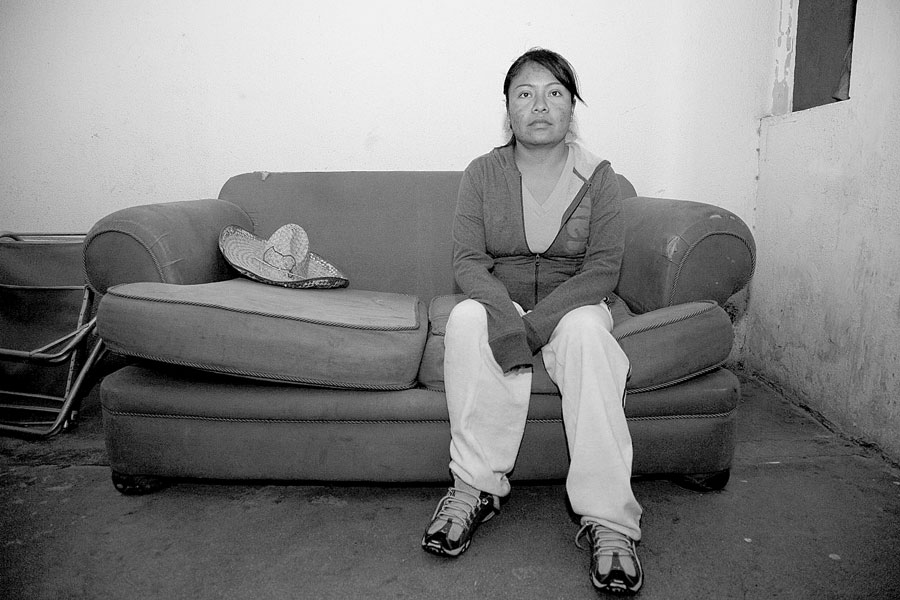
 Adriana, a woman from a Zapotec family in Oaxaca, was deported just hours earlier
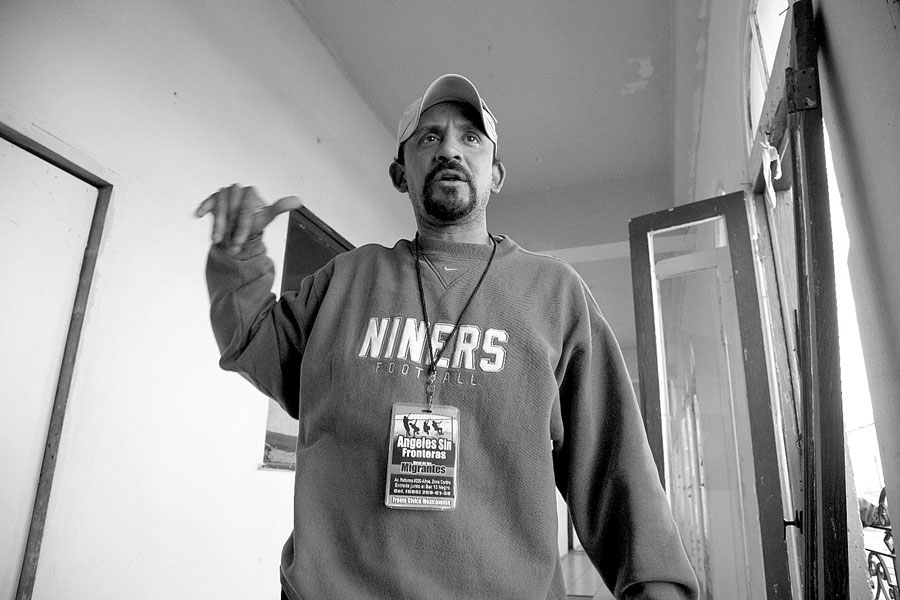
Benjamin Campista, a leader of the cooperative, recalls the stories of those who’ve died trying to cross, and the survivors who’ve arrived at the hotel after losing members of their families
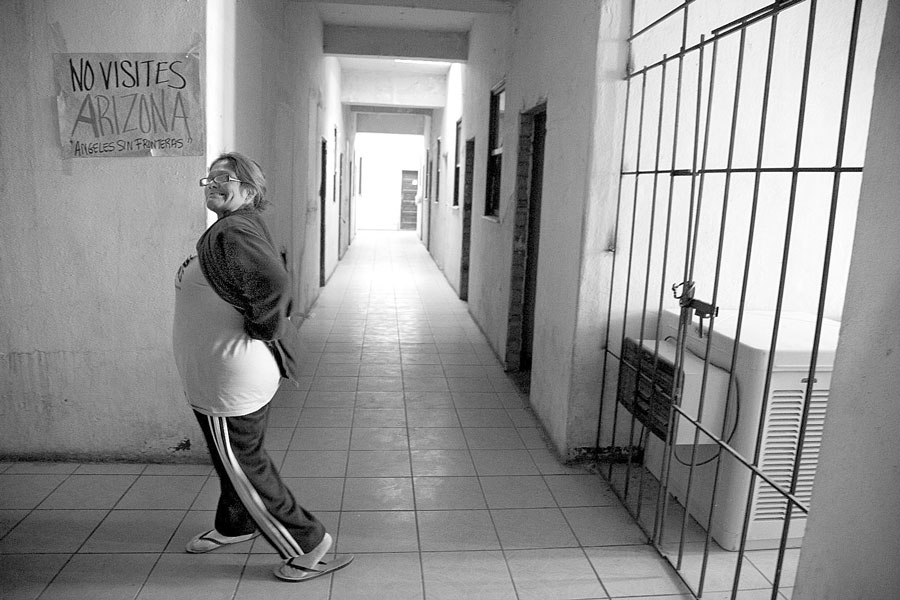
Viviana “Chiques” Cervantes has been living at the hotel for several months. The sign on the wall warns deportees, “Don’t Visit Arizona.”
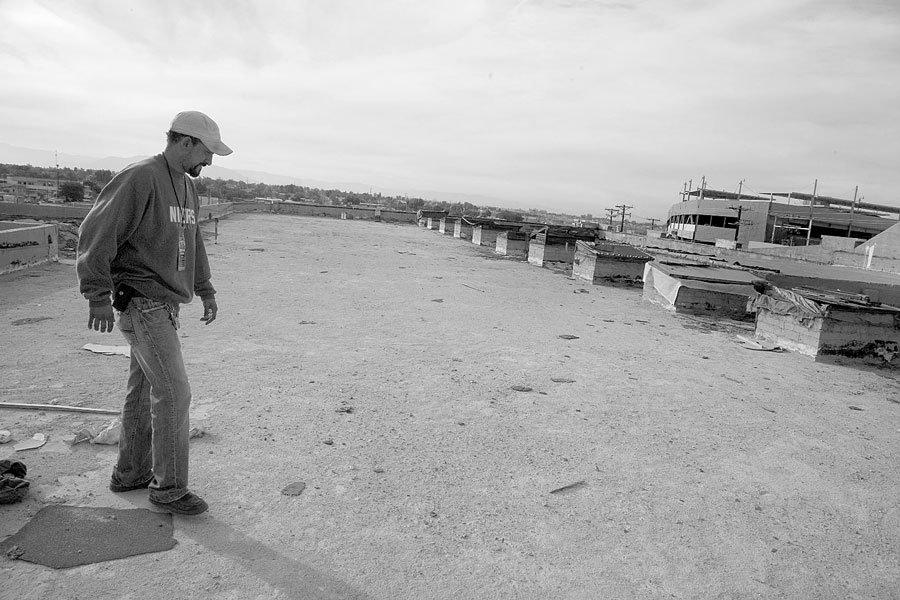
On the roof of the hotel dozens of deportees sleep during the summer, when the number of people trying to cross the border is at its peak
Another deportee tries to sleep after being deported the previous night. The Border Patrol often deports people after midnight when no stores are open and no taxis are available.
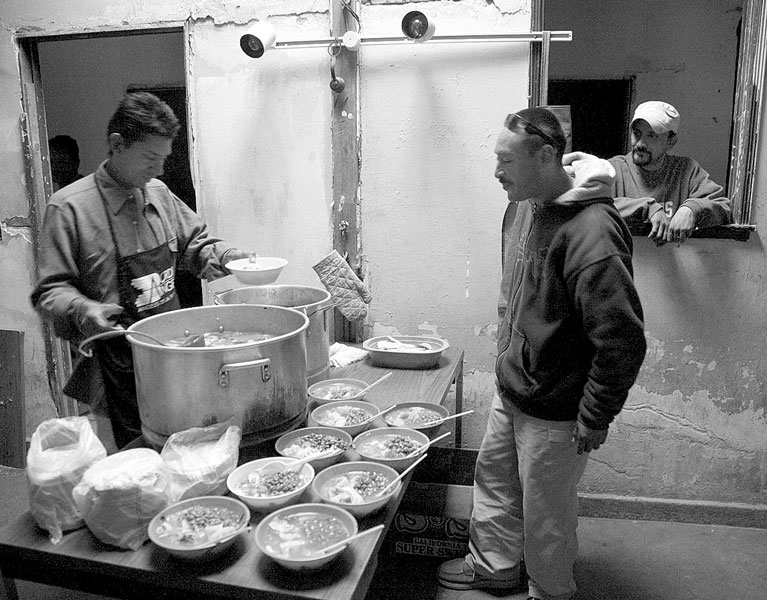
Gabino Gonzalez, the cook, ladles soup in kitchen
Deportees on the steps to an abandoned staircase and locked doors that lead into the tunnels beneath Mexicali, some of which go across the border |


Last year, almost 400,000 people were deported from the United States. That's the largest wave of deportations in U.S. history, even larger than the notorious "Operation Wetback" of the 1950s or the "Mexican Repatriation" during the Great Depression.
Often the Border Patrol empties buses of deportees at the border gates of cities like Mexicali in the middle of the night, pushing people through at a time when nothing is open and no services are available to provide them with food or shelter.
Most deportees are young people who have no money when they come to the United States and have nothing more when they get deported back to Mexico. In the wave of anti-immigrant hysteria gripping the United States, no one asks what happens to the deportees once they're sent back to Mexico.
In Mexicali, a group of deportees and migrant rights activists have taken over an abandoned hotel, formerly the Hotel Centenario (the Hundred Year Hotel), renaming it the Hotel Migrante (Migrant Hotel). Just a block from the border crossing, the hotel gives people deported from the United States a place to sleep and food to eat for a few days before they go home or try to cross the border again. Border Angels, a U.S.-based immigrant rights group, provides what little support the hotel gets. A cooperative of deportees cooks the food and works on fixing the building.
During the winter, about 50-60 people live there at any given time, while 5 or 6 more knock on its doors every night. Last summer, at the peak of the border crossing season, the number of deportees seeking shelter at the hotel rose to over 300.
"A lot of people get hurt trying to walk through the mountains around Mexicali," says Benjamin Campista, a cooperative member. "It's very cold there now and when they get caught and deported, many are just wearing a T-shirt and tennis shoes. Some get sick. Those we take to the hospital. The rest stay here a few days until their family can send them money."
Border Angels and the hotel collective agreed to pay the landlord 11,000 pesos a month in rent (about $900), but they're already six months behind. Every day hotel residents go out to the long lines of people waiting to cross through the garita (the legal border crossing) asking for money to support the hotel. Each person gets to keep half of what they're given, the other half goes mostly for food for the evening meal.
Every day Campista hears deportees tell their stories: "Three brothers stayed here last summer before they tried to cross. A month later one came back. I saw him on the roof crying as he looked at the mountains where the other two had died from the heat. A woman came here with her two-month-old baby. Her husband had died in the desert, too.
"We're just going north to try to work. Why should we die for this? Our governments should end these violations of human rights. Then our hotel wouldn't even be necessary."
Z
David Bacon is an activist and freelance writer and photographer.


David Bacon is a photojournalist, author, political activist, and union organizer who has focused on labor issues, particularly those related to immigrant labor. He has written several books and numerous articles on the subject and has held photographic exhibitions. He became interested in labor issues from an early age and he was involved in organizing efforts for the United Farm Workers, the United Electrical Workers, the International Ladies' Garment Workers' Union, the Molders' Union and others.




