For as long as there has been dissent, there has been the protest song. In the people’s history, the fight for social justice has always been accompanied and inspired by the voices of outspoken songwriters, the daring harmonies of dissident composers, the passionate cry of radical poets, and the compelling news reports of the topical balladeer. This is the drumbeat of radicalism.


One can easily trace work songs back to the earliest toilers and songs of revolt directly to the movements to organize in each era. Reviewing poetry or ballads composed on slave ships, within workers’ hovels or concentration camps, or in cold urban landscapes, we can not only gain valuable information about earlier uprisings against injustice, but develop a visceral understanding of them. Where progressive history books offer core stories and important dates, topical art-forms deliver the fervor, the agitation, and the struggle of the embattled to survive and then to live.


In my own experience as a musician and a cultural organizer, I’d long sought out something—anything—like OWS. After my first visit to Zuccotti Park, I was drawn to return many times, usually carrying a drum. The first time I sat in with the pulsating mass of a drum circle, I realized the distance our message could carry.


Though drum circles are empowering and an excellent means to build still larger masses, there is a need for musicians of conscience to forge a more cohesive unit, a cultural arm of OWS. Rather than the occasional folksinger or rapper writing an anthem for the movement, why couldn’t there be a committed organization, which would feed the protest, inspire creativity, and then take it out to the wider populace?


The Occupy Musicians group (www.occupymusicians.com) is an exciting means toward this goal. Hundreds of signatories and a series of events has fortified the organization’s dawning. Now what’s needed is to draw on the considerable strengths of musicians of conscience to agitate, educate, and organize through song.


The generation of folksingers in the 1960s became the very soul of the struggles of civil rights and peace. Folk revival musicians such as Bob Dylan, Odetta, Phil Ochs and Joan Baez wrote the anthems that acted as shields against the assaults of the police and the national guard, as did the songs which had originated in southern Black churches. Performers like the Freedom Singers made the difference when staring down Bull Connor.


The Black Arts Movement offered creative guidance along with fiery radical sounds to urban centers. Avant garde jazz figured in this scene. Legendary names like Amiri Baraka, the late Sam Rivers, the AACM, and the Black Arts Group were instrumental in countless seminars, rallies, gatherings, and confrontations.


The Punk movement often carried with it an anarchist message and an intolerance for compliance. While some aspects of Punk could seem right wing due to the presence of fascist imagery (to shock), most Punks were drawn to the left messages found in the music of the Clash and the fight against Reaganism launched by the Dead Kennedys. Punk also turned “DIY” into a freedom cry for all artists.


Hip Hop has also stood out as a people’s movement, which has called on multiple generations to speak out. For every gangsta rapper, there are scores of Hip Hop artists who use their poetry and music as a means of unity and expression: life and survival in the ghettos, exposing social ills and the need for social change are mainstays. 


Occupy Musicians should call on composers, improvisers, rappers, singers, songwriters and instrumentalists. We must speak in every language, to every taste, to allow for the unrestrained flow of outreach. We need to establish a series of awareness-raising concerts, to circulate recordings of OWS musicians and offer teach-ins and workshops to not only insure continuity of current artists but to inspire the generations to come. Occupy Musicians can organize Shock Brigade bands to descend upon rallies and marches. We need to do so in concert with radical poets, performance artists, and other cultural workers.


Occupy Musicians can become an integral part of Occupy movements all over the nation and the world. Through both concert presentations and social media, we can grow a network that will keep live music relevant even as it carries activists to the necessary next level, true social and political change.


Z


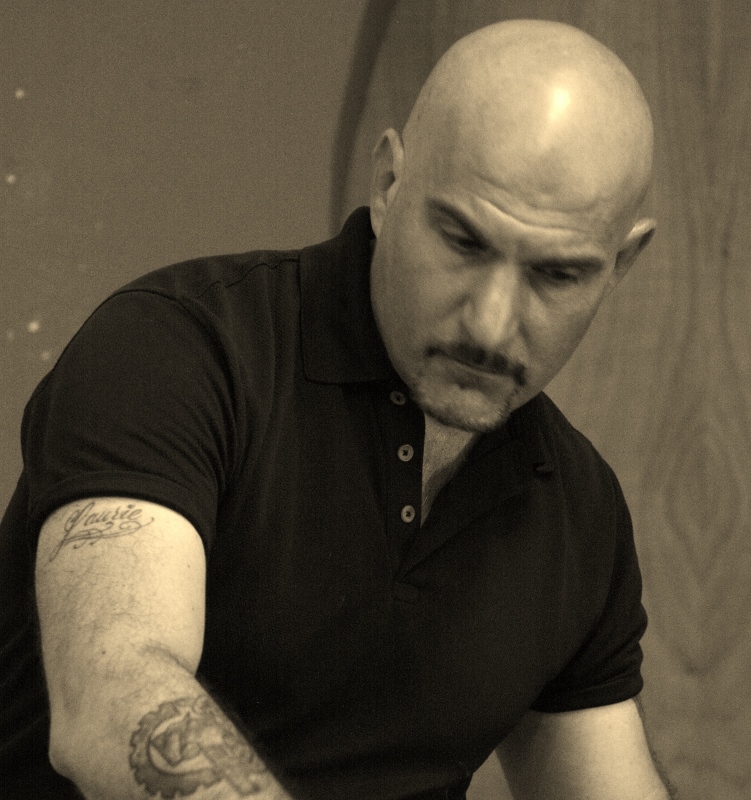
John Pietaro is a musician, writer, and activist from Brooklyn, New York. He is director of the annual Dissident Arts Festival.

Donate

John Pietaro is a writer, musician, cultural organizer and publicist from Brooklyn NY. His essays, reviews and fiction have appeared in Z, the Nation, CounterPunch, the NYC Jazz Record, Political Affairs, the People's World, AllABoutJazz, Struggle, and many other publications as well as his own blog The Cultural Worker ( http://TheCulturalWorker.blogspot.com ). He wrote a chapter in the Harvey Pekar/Paul Buhle book SDS: A GRAPHIC HISTORY (Hill & Wang 2008) and self-published a book of proletarian short stories, NIGHT PEOPLE & OTHER TALES OF WORKING NEW YORK (2013). He is currently working on both a definitive history of revolutionary culture and a novel. As a musician performing on the free jazz and new music scene in NYC, Pietaro--a vibraphonist/percussionist--regularly works with Ras Moshe, Karl Berger, Harmolodic Monk, the Red Microphone, the 12 Houses and others. Over the years he has performed with Alan Ginsberg, Fred Ho, Amina Baraka, Roy Campbell, Will Connell, Steve Dalachinsky and many more. Pietaro is the founder and organizer of the annual Dissident Arts Festival and has established many other concerts connected to progressive and radical topics in both NYC and the Hudson Valley area of New York. In 2014 he created New Masses Media Relations, a publicity service for creative artists on the Left and in the underground.

Leave A Reply

Subscribe

All the latest from Z, directly to your inbox.

Institute for Social and Cultural Communications, Inc. is a 501(c)3 non-profit.

Our EIN# is #22-2959506. Your donation is tax-deductible to the extent allowable by law.

We do not accept funding from advertising or corporate sponsors.  We rely on donors like you to do our work.

ZNetwork: Left News, Analysis, Vision & Strategy

Subscribe

All the latest from Z, directly to your inbox.

Sound is muted by default.  Tap 🔊 for the full experience

CRITICAL ACTION

Critical Action is a longtime friend of Z and a music and storytelling project grounded in liberation, solidarity, and resistance to authoritarian power. Through music, narrative, and multimedia, the project engages the same political realities and movement traditions that guide and motivate Z’s work.

If this project resonates with you, you can learn more about it and find ways to support the work using the link below.

No Paywalls. No Billionaires.
Just People Power.

Z Needs Your Help!

ZNetwork reached millions, published 800 originals, and amplified movements worldwide in 2024 – all without ads, paywalls, or corporate funding. Read our annual report here.

Now, we need your support to keep radical, independent media growing in 2025 and beyond. Every donation helps us build vision and strategy for liberation.

Subscribe

Join the Z Community – receive event invites, announcements, a Weekly Digest, and opportunities to engage.

Exit mobile version