


How can we truly turn things around, bring about revolutionary change in our badly wounded, struggling world? For those of us who identify with the up-and-down, historical struggle for a world where its resources and decision-making are shared among all in a just way, and democracy and human rights are for real, it is important that most of us agree in general on the main outlines of a strategy for such a change.
Having a strategy is, in essence, like having a well-thought-out plan. If you’re going to get from point A to point B, and it’s not an easy path, you need to figure out how you are going to do so, how you will overcome the many obstacles in your way and make it to your point B objective. Making a revolution in the U.S. for sure needs a clear, understandable, thoughtful plan grounded in reality, not up-in-the-air wishes or dreams.
Down through history people on the Left have often been at odds over key strategic questions: What about third party vs. work in the Democratic Party?; Is the working class the key sector and what is the working class today anyway?; the issue of class vs. intersectionality vs. not seeing them as either/or; the kind of organizations(s) needed to give leadership to the struggle for transformational change; and more.
Is it naive to believe, as I do, that right now, today, there is a lot more agreement among a wide swath of activists and organizers on the Left about questions of strategy than there has been in a long time? This doesn’t mean that we’re all united, we definitely aren’t, but as I see and experience the broad Left, I think it is possible that the urgency of our situation (climate catastrophe, massive inequality, rising racism and white nationalism, repressive government moves), together with positive developments within the progressive movement over the last decade, may have produced much more agreement among a very large percentage of us than we collectively realize.
Below are my ideas on what I personally see as the necessary aspects of a winning strategy. I see many of them very much in motion, happening now, by no means just ideas grabbed out of thin air. That fact is very hopeful.
My ideas fall into nine categories:
1) We must build a broadly-based, multi-cultural, multi-issue, multi-gender popular alliance, uniting people of color, women, youth, LGBTQ people, trade unionists, farmers, small business people, people with disabilities, professionals and others.
2) This alliance must be deeply rooted within the low income sector of the working class, as well as in all sectors of the working class, which makes up about 75 percent of the U.S. population.
3) Women, people of color, LGBTQ people and young people, particularly working-class people from those constituencies, must be significantly represented in leadership bodies of the organizations making up the broad alliance as much as possible.
4) The alliance must function as a welcoming, democratic movement of movements: for racial and gender justice and equality; for the right to organize and unionize on the job; against militarism and for justice-based peace; for detoxification and protection of our natural environment and a rapid shift from dirty and dangerous fossil fuels and nukes to clean, renewable energy sources; for immigrant rights, reproductive rights and an end to mass incarceration; for a Green New Deal, Medicare for All, a $15 minimum wage, tuition-free public higher education and student debt cancellation; and more.
5) This alliance movement must be grounded in day-to-day, community-, workplace-, and issue-based organizing by millions of volunteer and paid activists and organizers, utilizing popular education approaches and techniques as much as possible.
6) It must engage in independent electoral campaigns from the most local to the highest national level, doing so in a tactically flexible way as far as whether to run on a Democratic, Independent, Working Families, Green, or other line.
7) It must continually but strategically organize public marches, demonstrations, strikes and nonviolent direct actions on key issues, as part of ongoing campaigns and in support of the overall alliance program.
8) The diverse and extensive mix of organizations which make up the movement/alliance must make conscious efforts to develop group-centered leadership, not individual-centered leadership, to evolve a “not me, us,” democratic internal culture, and to provide a welcoming and personally rewarding experience for all those involved.
9) And, finally, throughout all of this work, its members and leadership must consciously strive to treat one another and all with whom we interact with respect, personal integrity and higher love.
I really do believe that in many of these areas we are well along the road, and in all of them that progress, sometimes uneven, is being made.
I believe that we can win. Z
Ted Glick has been a progressive activist, organizer and writer since 1968. Past writings and other information can be found at http://tedglick.com, and he can be followed on Twitter at http://twitter.com/jtglick.

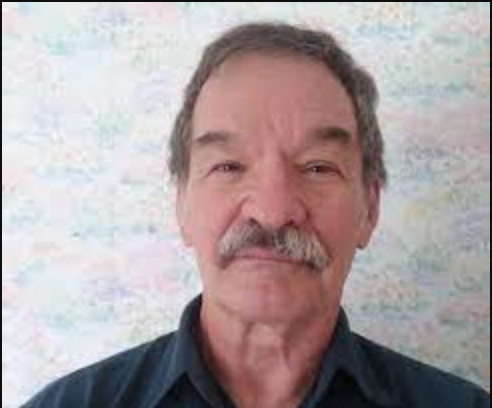
Ted Glick has devoted his life to the progressive social change movement. After a year of student activism as a sophomore at Grinnell College in Iowa, he left college in 1969 to work full time against the Vietnam War. As a Selective Service draft resister, he spent 11 months in prison. In 1973, he co-founded the National Committee to Impeach Nixon and worked as a national coordinator on grassroots street actions around the country, keeping the heat on Nixon until his August 1974 resignation. Since late 2003, Ted has played a national leadership role in the effort to stabilize our climate and for a renewable energy revolution. He was a co-founder in 2004 of the Climate Crisis Coalition and in 2005 coordinated the USA Join the World effort leading up to December actions during the United Nations Climate Change conference in Montreal. In May 2006, he began working with the Chesapeake Climate Action Network and was CCAN National Campaign Coordinator until his retirement in October 2015. He is a co-founder (2014) and one of the leaders of the group Beyond Extreme Energy. He is President of the group 350NJ/Rockland, on the steering committee of the DivestNJ Coalition and on the leadership group of the Climate Reality Check network.




