


In an editorial entitled ‘The Next Step for World Trade’ (Aug 2, 2008), the New York Times wrote: "The battle lines for the new world order were exposed at the World Trade Organization this week. The breakdown of the Doha round of trade negotiations over a clash between the United States and China and India about farm protection underscores how these new economic giants are changing the balance of power."
In another Reuters dispatch (Aug 2), President George Bush reportedly discussed the collapse of the world trade talks over phone with the Brazilian President Luiz Inacio Lula da Silva expressing disappointment over the failure and reaffirming his commitment to reaching an agreement.
International media meanwhile has shifted the blame squarely onto India and China for the failure of talks. India is accused of stalling the negotiations in order to protect its agriculture. India’s trade minister Kamal Nath on the other hand is lapping it all up, and has used this to tirelessly project himself as a savior of the farming community, by time and again reiterating "I am willing to negotiate commerce, but not livelihood security of 650 million subsistence Indian farmers."
But did the talks actually fail when India refused to compromise over a proposal – special safeguard mechanism – that is supposed to protect poor farmers from a flood of imports? Or were it because of something more sinister, cleverer, and a crafty masterstroke that in reality protected American agriculture? Does it mean that two emerging economic giants – India and China – who many believe are likely to tilt the geopolitical balance, walked straight into a well-laid out trap?
You guessed it right. The talks did not fail on the protective shield (SSM) that India and China wanted so as to save their farmers from an import deluge. The WTO talks actually collapsed because the US did not want to make any commitment to cut its massive federal subsidies to cotton growers. Any promise to cut cotton subsidies would have been politically suicidal.
It is as simple as that.
Before you wonder how and why, let me take you through the maze of events that led to the failure. I began to see through the political mischief (or should we call it political sagacity) when Kamal Nath told some journalists that he actually was surprised at the stern position the US Trade Representative Susan Schwab took when the SSM issue came up for negotiations in the finale session. "She went out of the room for sometime and when she returned she simply dug her heels."
Read this in conjunction with what the European Union Trade Commissioner Peter Mendelson has to say: "After that, a US official simply does not show up, when negotiations resume and Susan Schwab, heading into the finales of the negotiations, stopped off in the press room ‘to get her rebuttal in first.’"
The proposal on SSM that was out rightly rejected by the US was drawn by the EU in a ‘last-gasp bid to unlock an impasse’. The compromise proposal was in reality accepted by the G-7 countries, including the US, as a way to take the negotiations forward.
Both India and China had accepted the EU proposal (with some reservations that could have been ironed out). The new proposal on SSM talked of zero triggers (instead of 40 per cent proposed earlier in the Lamy draft) with a tough rider that expected developing countries to establish the ‘demonstrable harm’ to food security, livelihood concerns and rural development before the mechanism could be put to use.
Writing in the SUNS bulletin (July 31), the ever agile Martin Khor of the Third World Network says: "Despite the major negative elements, Kamal Nath told the media that he had accepted the proposals, but the US had rejected it". Accordingly, the next morning officials of the G-7 countries had labored for three hours to produce an alternative SSM model, which they presented to G-7 ministers. Quoting Kamal Nath, Martin Khor says that it was Schwab again who rejected the new draft.
Why did Susan Schwab reject the compromise proposals? What has it to do with the "missing US official" who was absent throughout the final round of negotiations? Well, this is where the missing link actually lies. Let us investigate a little more before we find out why the US refused to move ahead.
Reacting sharply to Peter Mendelson’s criticism of the US position, Gretchen Hamel, who is the spokesperson for Susan Schwab, replied: "the trade official who missed the resumption of negotiations was in consultation with Schwab at that time." And if you read this with what Kamal Nath had said earlier, Susan Schwab was in reality in touch with Washington DC through that ‘missing official".
Nothing wrong, you would say. I agree. But what is obvious is that he carried a directive from Washington DC for Susan Schwab, which she faithfully delivered after she returned to the negotiating table. More surprisingly, before she came into the negotiating room, she had already conveyed it to the media.
Why was Susan Schwab in such a tearing hurry?
Now that is where the crux lies. And Martin Khor provides the answer: "Many ministers, officials and diplomats have been speculating that the SSM was not the real issue that was irreconcilable. In the most widespread view, the US really did not want to face the cotton issue, which was the next item on the G-7 agenda once SSM was settled." What Susan Schwab had therefore succeeded in doing was to deflect attention from the cotton issue, which was the next (and the last) item on the agenda.
The US had to stop the negotiations reaching the cotton issue, and do it fast. The talks had therefore to be derailed. There was no other escape.
No wonder, the leader of the G-33 group and the Indonesian trade minister Mari Pangestu later was quoted as saying: "It is like accusing us of a crime that we did not commit."
Cotton subsidies are a politically volatile issue. The US has already lost the WTO dispute on cotton subsidies. Ever since the cotton issue erupted on the international scene just prior to the 2003 Cancun Ministerial, the US has received flak for protecting its 20,000 cotton growers as a result of which millions of cotton growers in the four African countries – Benin, Burkina Faso, Mali and Chad – continue to languish in poverty. The disastrous impact is also being borne by Indian cotton farmers who are priced out.
In 2005-06, the US provided an estimated US $ 4.7 billion as subsidy to its miniscule population of cotton growers for producing a crop worth $ 3.9 billion. This year, the cotton subsidies have come down because quite a significant proportion of the area under cotton has been diverted for bio-fuels. And regardless of the decision of the WTO Dispute panel, the US has made provision under the US Farm Bill 2008 to enhance cotton subsidies in the next five years.
What it means is that while cotton farmers in developing countries are pushed to penury, and many of them commit suicide unable to bear the burden of an unjust trading regime, US cotton can easily go on a Mediterranean cruise holiday.
Any promise to cut cotton subsidies, and that too with the elections around the corner, would have created a political storm back home. The WTO mini-Ministerial on the other hand would have impressed upon the US to cut down its cotton subsidies at least by 70 per cent (given that the US had agreed to reduce its trade distorting subsidies by 70 per cent, even if it was only on paper), something that George Bush’ government couldn’t afford.
And if the US chose not to cut down on cotton subsidies, it couldn’t have escaped all around criticism. The US would have been called the real villain of free trade, the fall guy, or the ‘rogue’ country. The political cost of treading on the cotton subsidy issue was therefore too heavy.
The WTO talks had to be torpedoed.
Devinder Sharma is a New Delhi-based food and trade policy analyst.

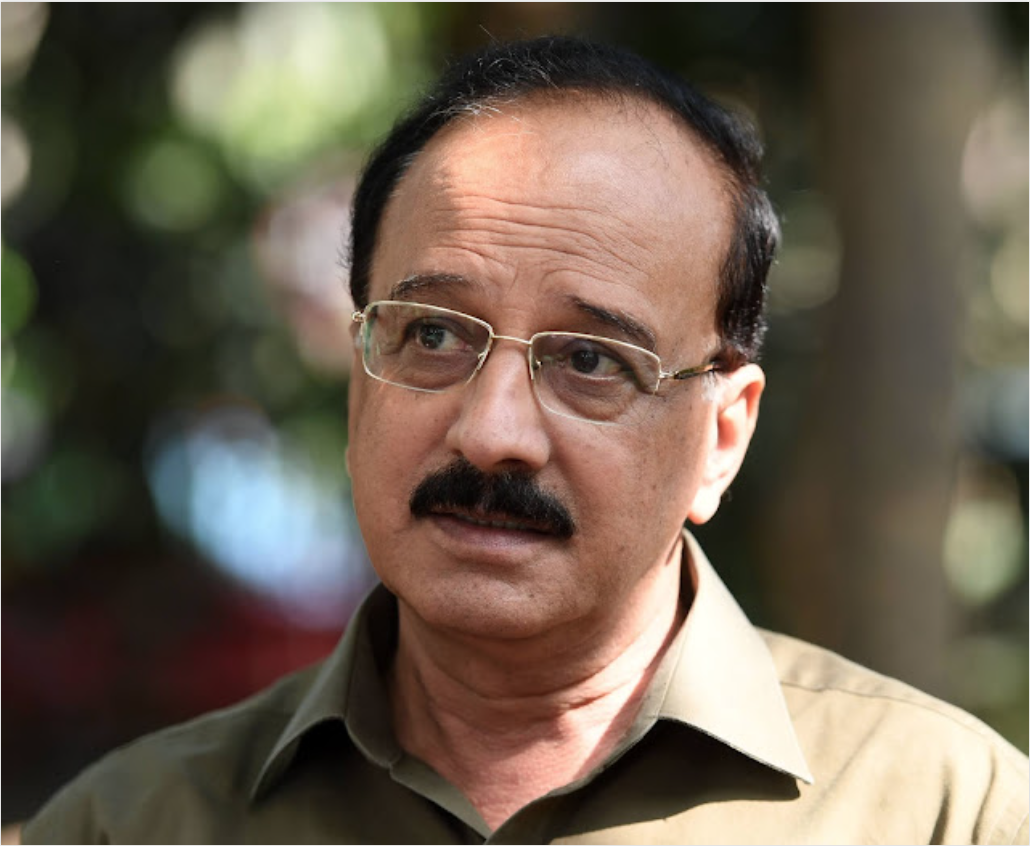
Devinder Sharma is an award-winning journalist, writer, thinker, and researcher known for his views on food and trade policy. Trained as an agricultural scientist (he holds a Master’s in Plant Breeding & Genetics), Sharma wrote for the Indian Express, and then quit active journalism to research on policy issues concerning sustainable agriculture, biodiversity and intellectual property rights, environment and development, food security and poverty, biotechnology and hunger, and the implications of the free trade paradigm for developing countries. He has been awarded with the honorary degree of Professor at Large by the CSK Himachal Pradesh Agricultural University, Palampur (India), and also has been a Visiting Fellow to the International Rice Research Institute, in the Philippines; Visiting Fellow at the School of Development Studies at the University of East Anglia, Norwich (UK); and a Visiting Fellow at the University of Cambridge (UK). Sharma is associated with numerous national and international organizations, civil society groups and farmers organisations. He also on the board of half a dozen national and international organizations, and is also a member of the CGIAR’s Central Advisory Service on Intellectual Property Rights.




