


Just about one year ago, Barack Obama was inaugurated as President. Hopes were high among progressive-minded people, including climate activists. Finally, we had a President who got it on the need for action to address the deepening climate crisis.
But here we are a year later and things look very different. The United States, including Obama, played a generally problematic role up to and at the Copenhagen climate conference, dismissing the widespread call by a big majority of the world’s countries for emissions reductions consistent with the climate science. The Obama administration played this role despite the bad-weather impacts and sea level rise already being seen and felt in Africa, small island nations and elsewhere.
As far as the U.S. Congress, Obama has certainly not made it a priority so far to advance efforts to enact climate legislation in this session. It’s looking very possible, even likely, that no comprehensive climate legislation will be passed in 2010.
Of course, what’s needed is not just any piece of comprehensive legislation. A bad or weak bill will be worse than nothing, given that it’s critical that we make the turn away from fossil fuels in the next several years. A bad bill described as an answer by politicians eager to point to a Congressional victory will be difficult to correct until it is given time to play itself out, time we don’t have.
What are the key elements of a good bill? The Energy Action Coalition, at its huge, 12,000 person Power Shift conference last February, summarized it this way in their demands on Congresspeople:
-Rebuild the Economy with Green Jobs
-100% Clean Energy, Not Coal
-Cut Carbon 40% by 2020
-Real Carbon Reductions, Not Offsets
-No Giveaways to Polluters, 100% Auction
What should the climate movement be doing to advance these objectives?
What about a spring campaign of sit-ins on Capitol Hill and at the offices of Senators obstructing progress on climate legislation? We can take up the call by Al Gore and others that Congress pass legislation by the 40th anniversary of Earth Day and give that call some real substance, make it more than just words.
This would definitely be something new for the climate movement. Up to now, with a few exceptions, polite lobbying has been not just the tactic but the basic strategy of the vast majority of mainstream environmental and climate groups working for federal climate legislation. And where has the use of this tactic, alone, gotten us? Essentially nowhere, nowhere close to what we urgently need.
It’s time, it’s past time, to try something different.
But, some will say, isn’t it too late? Given all of the political energy expended on the health care battle, with the elections happening later this year, and with other important legislative priorities like unemployment and financial industry reform, what are the chances that a sit-in campaign can be effective?
Here’s how I’d answer that.
First, what climate and enviro groups have been doing up to now isn’t working. Not only is it uncertain if climate legislation will be up next after healthcare, but the currently-dominant Senate legislative alternative, centered around efforts taking place between Joe Lieberman, Lindsey Graham and John Kerry, will be even worse than the problematic Waxman-Markey bill passed by the House in late June of last year.*
Secondly, given the urgency of the climate crisis, strategic and focused nonviolent direct action (nvda) is very much called for, as widely and massively as possible, at a whole range of targets, not just Congress. A well-organized nvda campaign this spring focused on the Senate could well attract media attention and play a positive role as far as movement-building.
Third, given the emphasis that so many groups have correctly put on trying to get climate legislation passed in this legislative session (really, in 2009), it would not be good for our movement’s morale for us to, in essence, give up prematurely on that objective. In the trite but true slogan, "quitters never win, winners never quit."
Finally, whatever happens as far as climate legislation this spring, a strong and broad campaign that includes organized sit-ins on Capitol Hill and in Senate offices will generate energy and momentum to keep bringing political pressure on candidates running for federal office to speak out on where they stand on climate issues. It will let both Republicans and Democrats know that they can expect to feel the heat if they take the wrong positions or waffle.
Martin Luther King, Jr. understood that political movements, to be ultimately successful, need to stay active, need to keep pushing the envelope, need to up the ante. On this weekend when we remember his life and his death, we would do well to reflect on his personal willingness to do so and the impact that this life-decision, made by him and many others within the civil rights movement, had on human history.
————————–
*Fortunately, there is a much better bill, the CLEAR Act, introduced by Maria Cantwell and Susan Collins a month ago, although it does need strengthening. The 2020 targets are too weak, and it mandates emissions reductions starting only in 2015, definitely too late.
Ted Glick is a co-founder of the Climate Crisis Coalition and Policy Director of the Chesapeake Climate Action Network. He recently completed a book, "Love Refuses to Quit: Climate Change and Social Change in the 21st Century," available on-line at http://www.tedglick.com.

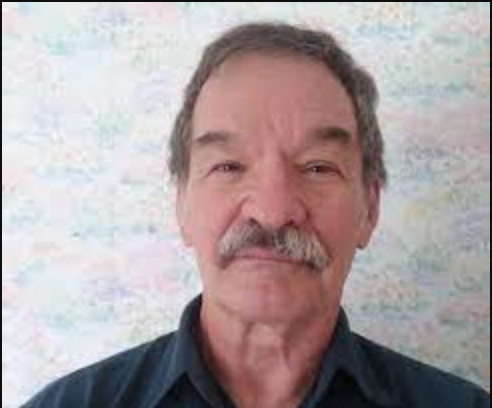
Ted Glick has devoted his life to the progressive social change movement. After a year of student activism as a sophomore at Grinnell College in Iowa, he left college in 1969 to work full time against the Vietnam War. As a Selective Service draft resister, he spent 11 months in prison. In 1973, he co-founded the National Committee to Impeach Nixon and worked as a national coordinator on grassroots street actions around the country, keeping the heat on Nixon until his August 1974 resignation. Since late 2003, Ted has played a national leadership role in the effort to stabilize our climate and for a renewable energy revolution. He was a co-founder in 2004 of the Climate Crisis Coalition and in 2005 coordinated the USA Join the World effort leading up to December actions during the United Nations Climate Change conference in Montreal. In May 2006, he began working with the Chesapeake Climate Action Network and was CCAN National Campaign Coordinator until his retirement in October 2015. He is a co-founder (2014) and one of the leaders of the group Beyond Extreme Energy. He is President of the group 350NJ/Rockland, on the steering committee of the DivestNJ Coalition and on the leadership group of the Climate Reality Check network.




