


Tom Hayden is a veteran of peace. A pioneer of the anti-war movement in the 1960s (including as one of the Chicago 7), Hayden is now, after a hiatus in California politics in the 1990s, a central figure in the current anti-war movement. His range of experience, both in terms of time spent in the struggle and institutions struggled with and against, make his counsel important. This is why his new book, Ending the War in Iraq (Akashic Books, 2007) should be compulsory reading not only for anti-war activists, but for all Americans who are interested in making something of the country.
Hayden’s horizon for this book is that the U. S. needs to withdraw from Iraq. That is a necessary first-step for any progressive agenda. But to engineer the withdrawal, the American public needs to grasp at least three things: (1) that the war and occupation are a fiasco for the interests of the American and Iraqi people, and that they have only exacerbated the insecurity of both; (2) that the Iraqi resistance has a popular base among the majority of the Iraqi people, and therefore it cannot be defeated by a conventional or counter-insurgency military operation without an immense loss of life; (3) the anti-war movement in the U. S. does not march to the tune of a single drummer but it is nonetheless powerful and effective, and has had an honorable lifespan since 2002. Having established these three points in the first three chapters, Hayden then takes us into the fourth, the one which is of great importance: how we, as progressives, as people, can end this war.
Hayden starts his analysis by pointing to the eight pillars of the Bush strategy in Iraq: Iraqi support; American public opinion; American media; Political support; U. S. military capacity; U. S. financial capacity; Moral reputation; U. S. global alliances. He spends a few hundred words showing how each of these works to shore up the Bush strategy, and then offers a few hundred words to show what U. S.-based activists can do to undermine that pillar. Each of these pillars is significant, and he offers very useful methods to deal with them. Two of them, for instance, are already important places where our movement intervenes: at the pillar of U. S. military capacity, the counter-recruitment movement and the anti-contractor campaigns have made and continue to make a significant dent; at the pillar of U. S. financial capacity, the work of the National Priorities Project to unravel the costs of war is central as is the use of this data in localities to point out how, for instance, schools are being under funded to pay for the war.
But there is one pillar that does not get much notice or take much of our effort: the pillar of Iraqi support. It is related to another important pillar, the American media. The American, or to give it its correct name, capitalist media (cap media as it was once called) has effectively blocked off from the U. S. public the erosion of Iraqi public support for the war and occupation. Whereas right after the actual invasion ended in 2003, a substantial number of Iraqis, for whatever reason, claimed to support the new dispensation. Now, 61% of Iraqis support the resistance and two-thirds of the population wants an immediate withdrawal of U. S. troops, regardless of the consequences. These facts are not discussed in the capitalist media, and therefore don’t often make it to the tablogoids or the water coolers.
Apart from the facts, there is no sense of the people behind them. The capitalist media does not meet average Iraqis who are part of the 61% and ask them why they support the resistance, what this means for them, and what they would like the Americans to do? Without such stories, the resistance, and so the majority of the Iraqi people, is demonized by the capitalist media, who then feed us a story that the resistance is comprised of ex-Ba’athists, fundamentalists and others who are historical anachronisms.
The activist media needs to refute this picture, and reveal to our public and to our elected representatives that true extent of Iraqi public opinion in depth as much as in these statistics. We need to gather the stories of suffering that constitute the basis for the Iraqi people’s opinions.
We must show our public that the U. S. occupation is playing a very dangerous game, of supporting a sectarian government while paying lip service to being against sectarianism. What we have is not a Civil War (which assumes that there are two relatively co-equal parties in conflict within a nation); we have an Occupation taking the side of one political force that wants to inflict damage on other (Sunni, but also secular and secular-nationalist) political forces. The venomous Bernard Lewis approvingly predicted this state of affairs in 1992, “If the central power is sufficiently weakened, there is no real civil society to hold the polity together. The state then disintegrates into a chaos of squabbling, feuding, fighting sects, tribes, regions and parties.”
Much of the groundwork for the destruction of Iraqi civil society happened during Saddam Hussein regime (1978 on), but the appalling destruction of the Gulf War (1990-1991), the brutal sanctions regime (1990-2003) and the early years of the Occupation (2003-2005) certainly devastated civil capacity. This internecine conflict in Iraq is buttressed by the U. S. military presence, whose support of the Shi’a-alliance contributes to the problem without posing any solution to it. As Hayden points out, if the U. S. public was taken to war through fabrications, it is being stopped from withdrawal by an equal dose of fabrications (that chaos will ensue with the withdrawal, as if chaos is not already Iraq’s reality). One of our tasks should be to take the measure of Iraqi public opinion and bring that to the living rooms and streets of the U.S.
The Democratic Congress, despite a spirited move by the Out of Iraq Caucus, could not cut off funding for this unpopular and criminal Occupation. Hayden gives those within Congress who are yet in the fight a very useful way to shift U. S. public opinion. We could, in our localities, “hold hearings on taxpayer funding for Iraqi ministries filled by militias and death squads.
Cutting off all congressional funding will be more palatable when people and politicians fully grasp the dysfunctional, repressive, and sectarian nature of the Iraqi government, and realize that American troops are supporting the Shi’a-Kurdish side in a civil war.” This is a very valuable way to bring Iraqi public opinion to the U. S., and thereby to sharpen U. S. public discontent with the Occupation.
Tom Hayden’s book is a very useful primer. It needs to be read and to be drawn from. Our movement is powerful, and now it needs to be pointed in the right direction. There are some good signposts in this book.

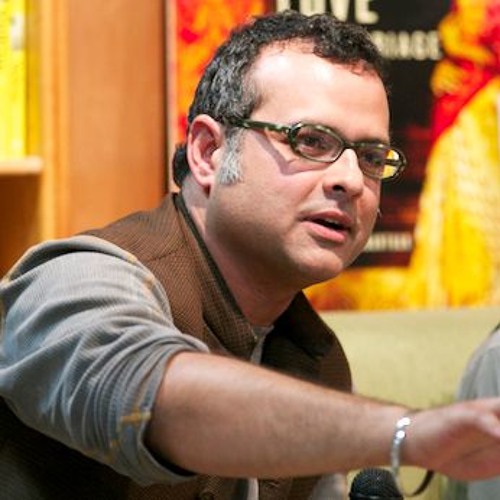
Vijay Prashad is an Indian historian, editor, and journalist. He is a writing fellow and chief correspondent at Globetrotter. He is an editor of LeftWord Books and the director of Tricontinental: Institute for Social Research. He is a senior non-resident fellow at Chongyang Institute for Financial Studies, Renmin University of China. He has written more than 20 books, including The Darker Nations and The Poorer Nations. His latest books are Struggle Makes Us Human: Learning from Movements for Socialism and (with Noam Chomsky) The Withdrawal: Iraq, Libya, Afghanistan, and the Fragility of U.S. Power. Tings Chak is the art director and a researcher at Tricontinental: Institute for Social Research and lead author of the study “Serve the People: The Eradication of Extreme Poverty in China.” She is also a member of Dongsheng, an international collective of researchers interested in Chinese politics and society.




