


The US State Department has descended into caricature. Ambassador David Wilkins had a meltdown in Canada in the lead-up to the elections. He warned the candidates, particularly Paul Martin of the Liberal Party, to tone down on the “anti-American rhetoric.” Any criticism of the US, he warned, “is a slippery slope, and all of us should hope that it doesn¹t have a long-term impact on the relationship.” No sooner had Ambassador Alexander Vershbow arrived in Seoul than he alienated the entire political spectrum (below and above the DMZ). He called North Korea a “criminal regime,” which the South Koreans rightly identified as a deterrent to their peace talks. In the 1958 bestseller The Ugly American, a Burmese journalist carps, “For some reason, the [American] people I meet in my country are not the same as the ones I knew in the United States. A mysterious change seems to come over Americans when they go to a foreign land. They isolate themselves socially.
They live pretentiously. They’re loud and ostentatious. Perhaps they’re frightened and defensive, or maybe they’re not properly trained and make mistakes out of ignorance.” Little of this fits the lead character, Homer Atkins, who is a diligent engineer who wants to put his expertise to use for the people of South-East Asia. He is the Good American. The US government is the embodiment of the Bad American. If this fit 1958 (and the 1963 movie that starred Marlon Brando), it certainly works for 2006. The neo-conservative State Department in Washington DC is arrogantly dismissive of the world (a posture made manifest by the anointment of John Bolton as Ambassador to the UN). Washington’s conceit spills over into its embassies. This is the context for Ambassador David Mulford’s string of intemperate statements that disrespect Indian sovereignty. He warns India not to vote a certain way in the International Atomic Energy Agency (IAEA) and threatens to scuttle the Indo-US nuclear deal if they do. He dismisses concerns over Foreign Direct Investment (FDI) in the retail sector with a scoff. The views of the elected representatives to the Indian Parliament are mocked. This attitude has won him no friends in Indian civil society. The Indian Left has called for his recall. Mulford’s arrogance is not personal. It is inherent in the neo-conservative commitment to US primacy. To follow the details of the IAEA imbroglio, I recommend a close reading of the reportage by The Hindu’s Siddharth Varadarajan (his pieces are available at his blog: svaradarajan.blogspot.com/). I will return to the issue of the nuclear deal, and of Bush’s visit to India in March in a later commentary. The point here is Mulford, and his claims on FDI. Mulford defended the opening up of the retail sector to FDI by recourse to two arguments. First, that the action will benefit “the regular working people of India.” From Argentina comes a warning. Mulford used to head Credit Suisse in London. When the Argentinean people overthrew one government after another (2001-2002), Mulford worked to shore up the position of international banks. As journalist Paul Blustein put it, “the deal Mulford was proposing would increase Argentina’s debt costs rather than decrease them; that would be the price to postpone its debt payments.”
Mulford played it well for the bankers against the people of Argentina. So much for his concern for the “regular working people.” Mulford’s second argument is that despite the big box stores in the US, little merchants continue to flourish. “Indians are making a good living at it, too. And [these small stores] are nice places and they make sales by virtue of the giant number of consumers that are pulled in to that area but who don¹t want to go into a big department store to buy one item. So, they stop at a 7/11 and buy a 6-pack of beer, toothbrush.” Mulford needs to talk to Upendra Patel, the president of Georgia’s Asian American Convenience Stores Association (who will, in March, found the Federation of Convenience Stores). Patel will tell Mulford about the US State’s racist assault on Indian American small merchants, many of who have been arrested on ludicrous narcotics grounds (they sell legal cough medicine, which can also be used to create methamphetamine). “We have come to the United States and built our businesses out of nothing,” says Patel. “These laws are too vague, and let the larger chain stores off the hook. They are the ones selling large quantities of these products, and the police don’t even look twice at them.
Putting some innocent people in bars is not going to solve the problem.” For more on this onslaught, see my article in Frontline (www.frontlineonnet.com/stories/20060224000906300.htm ), and to reach the campaign check out, www.stopoperationmethmerchant.org. Mulford might also want to consider that while the aggregate income of Indian Americans is high, the numbers are overwhelmed by a small percentage of super-rich entrepreneurs (when Prime Minister Manmohan Singh addressed the US Congress in July 2005 he too only mentioned the Indian Americans in the high tech sector all others were subsumed under them). A quarter of Indian Americans in New York live below the poverty line. The small stores survive because they rely upon family (often immigrant) labor, which is often under-paid and unregulated: hardly a model to be praised. Indian civil society exploded in opprobrium at Mulford’s comments. The press, across the spectrum, excoriated his remarks. Mulford’s arrogance comes a month before Bush plans to visit India and recruit it as an ally for his floundering agenda. It will perhaps help seal popular resistance to the Bush plans, although the current government is so eager for a US-India entente that it might entirely ignore its population and abase itself to the Master. Blair, Fox, Berlusconi are the model; Manmohan Singh might be the latest recruit to poodledom. Even if the Indian government welcomes an entente, it will not hold back the anti-Americanism harnessed by people like David Mulford and the policies of his boss.

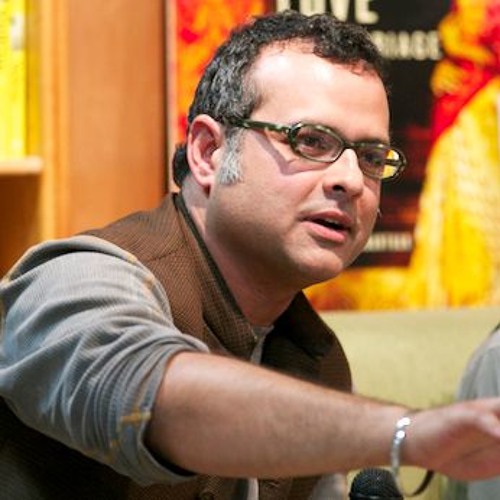
Vijay Prashad is an Indian historian, editor, and journalist. He is a writing fellow and chief correspondent at Globetrotter. He is an editor of LeftWord Books and the director of Tricontinental: Institute for Social Research. He is a senior non-resident fellow at Chongyang Institute for Financial Studies, Renmin University of China. He has written more than 20 books, including The Darker Nations and The Poorer Nations. His latest books are Struggle Makes Us Human: Learning from Movements for Socialism and (with Noam Chomsky) The Withdrawal: Iraq, Libya, Afghanistan, and the Fragility of U.S. Power. Tings Chak is the art director and a researcher at Tricontinental: Institute for Social Research and lead author of the study “Serve the People: The Eradication of Extreme Poverty in China.” She is also a member of Dongsheng, an international collective of researchers interested in Chinese politics and society.




