


In times of war, U.S. presidents have often talked about yearning for peace. But the last decade has brought a gradual shift in the rhetorical zeitgeist while a tacit assumption has taken hold — war must go on, one way or another. “I am continuing and I am increasing the search for every possible path to peace,” Lyndon Johnson said while escalating the Vietnam War. In early 1991, the first President Bush offered the public this convolution: “Even as planes of the multinational forces attack Iraq, I prefer to think of peace, not war.” More than a decade later, George W. Bush told a joint session of Congress: “We seek peace. We strive for peace.”
While absurdly hypocritical, such claims mouthed the idea that the USA need not be at war 24/7/365.
But these days, peace gets less oratorical juice. In this era, after all, the amorphous foe known as “terror” will never surrender.
There’s an intractable enemy for you; beatable but never quite defeatable. Terrorists are bound to keep popping up somewhere.
A permanent war psychology has dug a groove alongside the permanent war economy. And so, we hear appreciably less about Washington’s ostensible quest for peace.
Right now, we’re told, President Obama is wrestling with the question of how much to reduce U.S. troop levels in Afghanistan. It’s a fateful decision, and we should pressure members of Congress and the White House, pushing for military withdrawal and an end to the air war.
But, just as the reduction of U.S. troop strength in Iraq allowed for escalation in Afghanistan, a search for enemies is apt to be inexhaustible. When Uncle Sam’s proclaimed global mission is to prevent other countries from being used as a base for a terrorist attack on the United States, the Pentagon’s combat tasks are bottomless.
Whether or not the “war on terror” buzz phrase gets official use, the tacit assumption of war without end is now the old normal, again renewed in the wake of Osama bin Laden’s death. Every day, the warfare wallpaper inside the mass-media echo chamber is a bit more familiar, blurring the public vision into more drowsy acceptance of perpetual war.
Years ago, U.S. military spending climbed above $2 billion per day. Some of the consequences can be understood in the context of words that President Dwight Eisenhower uttered in April 1953, during a speech that began by addressing “the chance for a just peace for all peoples” and ended with the word “peace.”
In the speech, Eisenhower declared: “Every gun that is made, every warship launched, every rocket fired signifies, in the final sense, a theft from those who hunger and are not fed, those who are cold and are not clothed. This world in arms is not spending money alone. It is spending the sweat of its laborers, the genius of its scientists, the hopes of its children. … This is not a way of life at all, in any true sense. Under the cloud of threatening war, it is humanity hanging from a cross of iron.”
Maybe, as a former commanding general, Ike felt some freedom to talk like that. But in the current era, trapped within the “war on terror” matrix, Washington’s political framework leaves very little space for serious talk of peace.
When war (“on terror”) is touted as the embodiment of eternal vigilance, war must be eternal — and in that case, why bother to talk much about striving for peace?
So, peace might be a good goal to recommend to some others — but if the United States is terrorism’s biggest target and most powerful foe, then this country is the last place that should expect, or seek, peace.
In the process, the warfare state pins a multitude of hopes on war — with a perverse acculturated faith that it will right wrongs, avenge cruelty, straighten the crooked, cleanse the fetid, prevent violence. Countless times, those delusional hopes have boosted the spirals of suffering. But who’s counting?
In one of Kabul’s poorest neighborhoods, when I spoke with a group of about twenty very poor women in the late summer of 2009, I asked what they needed most of all. Their unanimous response translated as one word: “peace.”
But at the top of Washington’s hierarchy, the yearning is very different. The nation’s decade-long war effort in Afghanistan, where it costs $1 million to deploy one U.S. soldier for one year, is a grisly symptom of chronic war fever. More enemies are easy to find, and even easier to make.
A country that’s committed to being at war will treat the real potential for peace as an abstraction.
Norman Solomon is the author of a dozen books including “War Made Easy: How Presidents and Pundits Keep Spinning Us to Death.” He lives in Northern California, where he is a candidate for the U.S. House of Representatives (www.SolomonForCongress.com).

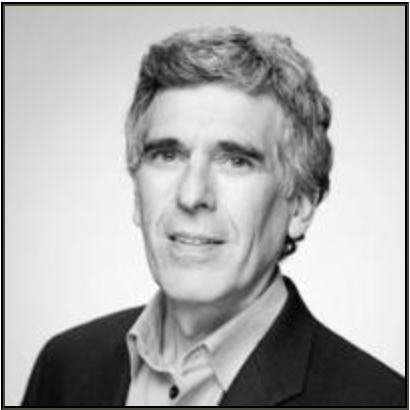
Norman Solomon is the national director of RootsAction.org and executive director of the Institute for Public Accuracy. The paperback edition of his latest book, War Made Invisible: How America Hides the Human Toll of Its Military Machine, includes an afterword about the Gaza war.




