


The 350.org International Day of Climate Action a week ago was unprecedented, historic, stirring and inspiring. Watching the pictures scroll across the computer screen at www.350.org from literally all over the world, seeing the very concrete evidence of a worldwide grassroots movement for climate justice, was truly unforgettable. It was impossible not to feel that, yes, despite the very long odds, we actually may be able to win the race to prevent looming, catastrophic climate change and to enact climate and social justice.
What is the one thing most needed right now if we are to win this race? October 24th showed us: a visible, growing, mass movement in the streets.
There are some who believed, and still do, that the key to the needed clean energy revolution was the election of Barack Obama. Although it is important to have a President who understands that climate change is happening and that action is needed to address it, it has become very clear over the last nine months of his time in office that this is not enough.
We can see that when we look at what has been happening in Congress and in the international negotiations leading up to the December 7-18 United Nations Climate Conference in Copenhagen,Denmark. In both cases, the results so far have been very problematic.
In Congress, despite Democratic Party control of the White House and the House and Senate, a very weak piece of climate legislation was passed by the House in late June that doesn’t come close to being what is needed, and it is very possible, if not likely, that when a bill eventually reaches the floor of the U.S. Senate it will be even worse. The target for greenhouse gas (ghg) emissions reductions over the next 10 years, an absolutely critical period of time if we are to have any hope of avoiding world-wide catastrophe, is way too weak, and it is questionable if even this weak target would be met. It contains a huge percentage of problematic "offsets" that will likely allow U.S. corporate polluters to avoid or minimize actual reductions of emissions from their dirty coal plants or oil refineries for 15-20 years or more. Only 15% of the permits to emit ghg’s are auctioned, half of them being given directly to the fossil fuel industry, despite Obama’s call for a 100% auction of permits while campaigning for President. It strips the Environmental Protection Agency of its power to regulate coal plants and other stationary sources of ghg’s. Its cap-and-trade framework allows Wall Street speculators to get into the huge new "carbon market" being created. It is nuclear power-friendly, and it projects giving the U.S. coal industry tens of billions of dollars for carbon capture and sequestration, an unsafe boondoggle that only dangerously postpones the critically-needed, dramatic shift to renewables, conservation and energy efficiency.
As far as the international negotiations, this is what Alden Meyer, director of strategy and policy at the Union of Concerned Scientists, had to say about the most recent meetings in Bangkok,Thailand in early October: "Just two months before Copenhagen, the Bangkok climate negotiations did little to move the ball forward. Bold steps are clearly needed from the world’s leaders to break the deadlock in the negotiations, and time is running short. One key to a meaningful deal in Copenhagen is science-based emissions reduction commitments by industrialized countries. . . but the slow pace of climate and energy legislation in the Senate has left the United States unwilling to even get on the playing field. And the U.S. reluctance to accept legally binding emissions reduction commitments, together with a meaningful compliance regime, is threatening the entire negotiating process. . . The other key issue in these negotiations is greatly increasing funding for developing countries to deploy clean technologies, reduce deforestation, and adapt to the impacts of global warming. Here in Bangkok, the United States, European Union, Japan, and other industrialized countries once again failed to put forward a credible finance package. Most of the key developing countries have expressed willingness to take significant action to limit their emissions if such assistance is forthcoming, but they are not getting a serious response from the other side. If industrialized countries don’t start putting their climate finance cards on the table soon, there’s not going to be a card game in Copenhagen."
Since 2002 I’ve been speaking, taking action and organizing in support of a clean energy revolution. During those seven years I’ve also been active with the peace movement in opposition to theIraq war. I’ve been struck during that time by one major difference between these two movements when it comes to tactics.
The peace movement, up until the election of Obama, was repeatedly organizing mass demonstrations of tens or hundreds of thousands of people, in Washington, D.C. and many other places. In 2008, for example, 30,000 or so people demonstrated against the war in St. Paul, Minnesota on the day before the opening of the Republican Convention.
The vast majority of climate and environmental groups, on the other hand, have little experience with mass actions in the streets. This is especially true for the groups based in Washington, D.C.Instead, their work is all about lobbying members of Congress, trying to convince them of the correctness of their positions, developing position papers, getting their members around the country to send emails and make calls to Congressional offices, etc.
I do some of this myself. It’s not that these are bad things, when done in combination with a range of other tactics and activities. But when done in a way which deemphasizes grassroots organizing and "street heat," it’s of very limited value. Indeed, it’s a waste of resources, because it’s just not going to get the job done.
Fortunately, there’s a new climate movement emerging that gets it when it comes to this issue of tactics. The 350.org network is a major component of it, as is the mushrooming anti-coal movement. In 2007 there were only eight anti-coal demonstrations and 33 people arrested in acts of civil disobedience, according to Source Watch, compared to 49 actions and 266 people arrested so far in 2009. There are the continuing, dramatic actions of Greenpeace and the actions organized by groups like Mountain Justice, Rising Tide, the Rainforest Action Network and the Chesapeake Climate Action Network. There are the plans for another big international day of action on December 12th right in the middle of the Copenhagen conference, and some of the groups which mainly do lobbying are part of the coalitions calling for those actions.
Last Saturday, as I marched in the pouring rain with many hundreds of others down 16th St. to the White House, young people leading the march at one point began a chant I’ve heard at many other actions on other issues; "Ain’t no power like the power of the people, and the power of the people don’t stop!" Yes, and we can’t stop until we’ve forced, or changed, the governments of the world so that they act as is necessary if we’re to have a fighting chance for a future we can look forward to.
Ted Glick is the Policy Director of the Chesapeake Climate Action Network. Past Future Hope columns and other information can be found at http://www.tedglick.com.

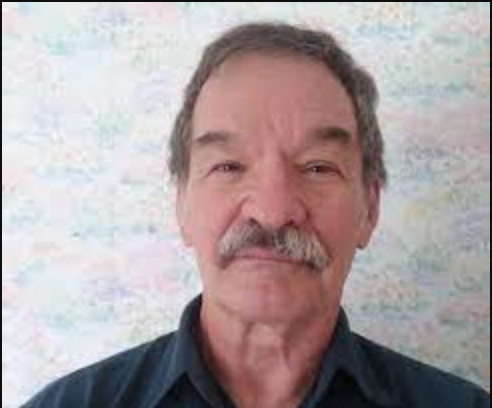
Ted Glick has devoted his life to the progressive social change movement. After a year of student activism as a sophomore at Grinnell College in Iowa, he left college in 1969 to work full time against the Vietnam War. As a Selective Service draft resister, he spent 11 months in prison. In 1973, he co-founded the National Committee to Impeach Nixon and worked as a national coordinator on grassroots street actions around the country, keeping the heat on Nixon until his August 1974 resignation. Since late 2003, Ted has played a national leadership role in the effort to stabilize our climate and for a renewable energy revolution. He was a co-founder in 2004 of the Climate Crisis Coalition and in 2005 coordinated the USA Join the World effort leading up to December actions during the United Nations Climate Change conference in Montreal. In May 2006, he began working with the Chesapeake Climate Action Network and was CCAN National Campaign Coordinator until his retirement in October 2015. He is a co-founder (2014) and one of the leaders of the group Beyond Extreme Energy. He is President of the group 350NJ/Rockland, on the steering committee of the DivestNJ Coalition and on the leadership group of the Climate Reality Check network.




