


“No revolutionary movement is complete without its poetical expression. If such a movement has caught hold of the imagination of the masses, they will seek a vent in song for the aspirations, the fears and hopes, the loves and hatreds engendered by the struggle. Until the movement is marked by the joyous, defiant singing of revolutionary songs, it lacks one of the most distinct marks of a popular revolutionary movement; it is a dogma of the few, and not the faith of the multitude.â€
-James Connolly, Introduction to “Songs of Freedom,†1907
I was at a coalition meeting a couple of weeks ago where, in connection with a projected protest action against government officials, I put forward the idea that, in addition to our acts of protest, we should organize something like a celebration or a festival of resistance. It seemed to me, and to the group whose proposal I was representing, that this would be complementary to the anti-government protest, a way to put forward a positive, affirmative vision.
I was taken aback at the reaction of some of those present at the meeting. “What is there to celebrate,?†several said. Others spoke as if such a position was insensitive and racist, disrespecting of those around the world and in this country who struggle for survival. For others it was as if the use of music, poetry, spoken word, theater, art or other forms of creative political expression was somehow not truly political, not serious.
I thought a lot about this afterwards, trying to understand why some of my sister and brother progressive activists would see things this way. And the more I thought about it, the more I came to believe that this view of culture is rooted in a short-sighted and ultimately self-defeating view of the prospects and possibilities for social change.
This approach emphasizes “fighting the power†to the exclusion of just about anything else. It seriously misses out on the importance of positive personal relationships and a culture of support to keep us as healthy and balanced as is possible over the long haul of our struggle for justice. It fails to appreciate that it is, indeed, forms of cultural expression that have been absolutely essential for oppressed people to sustain themselves, to keep hope alive, to enjoy and appreciate others, during periods of time when the odds for change seem very long.
And it completely misses the importance, as Irish revolutionary James Connolly understood, of forms of cultural expression if what we want is not “a dogma of the few†but, instead, “the faith [and direct action] of the multitude.â€
It was the civil rights movement of the 1950s which broke the back of McCarthyism and initiated a sustained period of mass political ferment in this country that continued for close to two decades. Where did that movement grow out of? The Black church, an institution in which gospel music and song are absolutely integral and basic. And a hallmark of that movement was that it was a singing movement.
Would there have been an American Indian Movement arising out of the bleak conditions of urban and reservation Indian poverty in the early 70s if there had not been cultural traditions of music, dance and other forms, traditions often forced underground, over the many decades of European-American dominance?
And was it just an accident that out of the mass women’s movement of the late 60’s and 70’s emerged a wide range of women musicians and poets who expressed the rage and hope of that movement and helped to broaden and sustain it and make it more effective?
The progressive movement following the war on Iraq is sorting out how we build upon the powerful peace sentiment which manifested itself so massively prior to that war. A key task of the peace forces is to develop positive connections to the movements for social, economic and racial justice here in the USA. Those connections will only be strengthened to the extent that, in our activities and events, forms of cultural expression inspire us all and deepen our understanding that in unity there is strength.
Ted Glick is the National Coordinator of the Independent Progressive Politics Network (www.ippn.org). He can be reached at futurehopeTG@aol.com or P.O. Box 1132, Bloomfield, N.J. 07003.

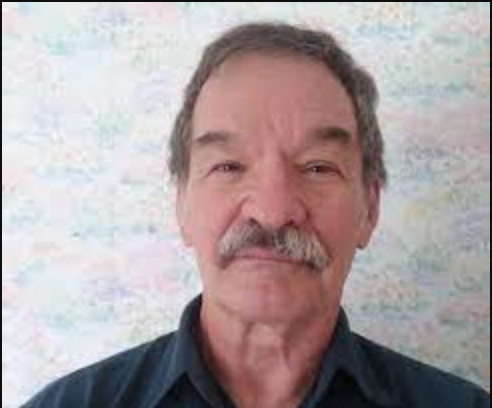
Ted Glick has devoted his life to the progressive social change movement. After a year of student activism as a sophomore at Grinnell College in Iowa, he left college in 1969 to work full time against the Vietnam War. As a Selective Service draft resister, he spent 11 months in prison. In 1973, he co-founded the National Committee to Impeach Nixon and worked as a national coordinator on grassroots street actions around the country, keeping the heat on Nixon until his August 1974 resignation. Since late 2003, Ted has played a national leadership role in the effort to stabilize our climate and for a renewable energy revolution. He was a co-founder in 2004 of the Climate Crisis Coalition and in 2005 coordinated the USA Join the World effort leading up to December actions during the United Nations Climate Change conference in Montreal. In May 2006, he began working with the Chesapeake Climate Action Network and was CCAN National Campaign Coordinator until his retirement in October 2015. He is a co-founder (2014) and one of the leaders of the group Beyond Extreme Energy. He is President of the group 350NJ/Rockland, on the steering committee of the DivestNJ Coalition and on the leadership group of the Climate Reality Check network.




