


Ted Glick
There
is no question, absolutely none, that of the four "name recognition"
Presidential candidates–Bush, Gore, Nader and Buchanan–Ralph Nader is far and
away the most progressive. He will be on the ballot in almost all of the states.
As distinct from 1996 he is campaigning hard and seriously. His polling numbers
are up to 7% with the likelihood that they will be increasing. His campaign has
raised close to $1 million and is confident of reaching its goal of $5 million
and possibly going beyond that. He is building upon his Green Party base and
attracting an impressive cross-section of supporters from a wide variety of
backgrounds. In short, Ralph Nader and Winona LaDuke are something we have not
seen on the Left for over 50 years–a serious independent Presidential campaign.
Yet
there are still a number of progressives who continue to support Al Gore. Why is
this?
Much
of this support is a result of the winner-take-all political system which has
been a graveyard for third party efforts for almost a century and a half. Unlike
a parliamentary system, where voters can vote for those closest to their beliefs
and know that it will have some impact, under our so-called
"democratic" system large numbers of people feel the need to vote for
"lesser evils" to avoid greater evils. This is because votes for third
(or fourth or fifth) party candidates, unless the candidates win outright, are
not factored into the results. This reality continues to have a major influence.
Some
progressives are concerned about Supreme Court appointments. Others are
concerned about a particular issue, or set of issues, around which they expect
to obtain better results from Gore. And still others are critical of Nader
because over his many years of activism he has been focused on certain major
issues–consumer, environmental and labor issues in particular–and silent, or
relatively quiet, on others, such as police brutality, affirmative action,
women’s rights, gay/lesbian rights and peace issues.
There
are answers in all of these areas.
As
far as the "lesser evil" question, there are a number of responses.
One is very pragmatic. Since Presidents are determined on the basis of state
popular vote results which lead to electoral college votes, and since it is
certain that there will be many states where either Bush or Gore is so far ahead
that there is little or no chance for the other to win, it would be completely
useless, a "wasted vote" if there ever was one, for progressives to
vote for Gore.
Another
reason to vote for Nader/LaDuke is the 5% factor. If the Greens get at least 5%
of the national popular vote, that will translate into at least $12 million in
federal matching funds to use in the 2004 Presidential elections. Think what
kind of an impact the progressive movement could have with this amount of money!
And our success in reaching that goal this year will mean more visibility in
2001, 2002 and 2003 as we continue to run independent candidacies and work on
issues. It will announce to the country that there is a progressive alternative
that commands the support of millions, which can only help bring new people and
fresh energy to all of our progressive causes.
Should
we be concerned about Supreme Court appointments? Sure, but let’s think this
through for a minute. First, it is not a given that those appointed by a
conservative President because of their conservative politics will always and on
every issue vote conservatively. There are examples of this on the present
Supreme Court, as indicated by recent votes in support of the Miranda decision
and overturning the Nebraska "partial-birth" abortion legislation.
More
importantly, we need to ask ourselves, where does change, substantive,
long-lasting, political/economic/social change, come from? Does it come from the
Supreme Court? Of course not. It comes from grassroots political movements made
up of common people and not-so-common people, unified around a coherent and
understandable program, with leaders who are principled, dedicated,
organizationally skillful and open to growing and learning.
As
was demonstrated at the late June Green Party nominating convention in Denver,
Colorado, this is precisely what the Nader/LaDuke campaign shows every
indication that it is all about. Which is why those who are critical,
justifiably critical, of Nader for his past unwillingness to speak to a number
of important progressive issues should give this campaign a closer look.
Nader
has already spoken out in this campaign on the right side of many of the issues
he refused to address during his 1996 non-campaign. On a national Meet the Press
interview in May he was critical of the Clinton Justice Department for its
record concerning police brutality, supported women’s right to choose on
abortion, spoke positively of the Vermont legislation allowing civil unions
between lesbians and gay men and called for a $100 billion cut in the military
budget. He has made it clear that he supports the Green Party platform which, by
and large, is a comprehensive, positive platform. But it is not just Ralph Nader
who is on this Green Party ticket.
Winona
LaDuke gave a powerful speech Friday night at the first major event of the Green
Party’s Denver convention. Before hundreds of Green Party delegates, observers
and members of the press, she spoke about the realities of life for indigenous
people in this country and called for government policies oriented not toward
the richest but toward the poorest. She laid out a program for justice for her
people and for other people that was clear, well-reasoned and strong. If such a
program were implemented the effects could only be described as revolutionary,
in the best sense of the term.
The
Nader/LaDuke campaign is not without its weaknesses, but it is of great
political significance. It is a movement which growing numbers of people are
joining and supporting. Those progressives who haven’t yet done so need to take
a closer look.
Ted
Glick is the National Coordinator of the Independent Progressive Politics
Network (www.ippn.org). His first book, Future Hope: A Winning Strategy for a
Just Society, has just been published. He can be contacted at P.O. Box 1132,
Bloomfield, N.J. 07003 or futurehopeTG@aol.

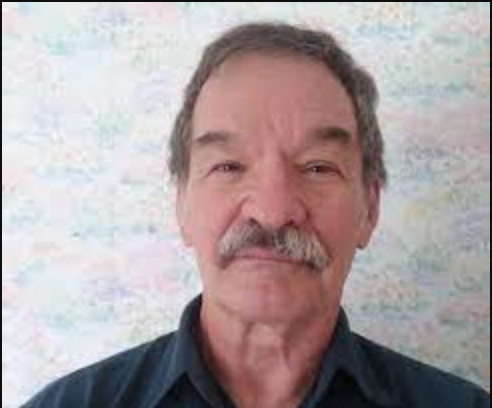
Ted Glick has devoted his life to the progressive social change movement. After a year of student activism as a sophomore at Grinnell College in Iowa, he left college in 1969 to work full time against the Vietnam War. As a Selective Service draft resister, he spent 11 months in prison. In 1973, he co-founded the National Committee to Impeach Nixon and worked as a national coordinator on grassroots street actions around the country, keeping the heat on Nixon until his August 1974 resignation. Since late 2003, Ted has played a national leadership role in the effort to stabilize our climate and for a renewable energy revolution. He was a co-founder in 2004 of the Climate Crisis Coalition and in 2005 coordinated the USA Join the World effort leading up to December actions during the United Nations Climate Change conference in Montreal. In May 2006, he began working with the Chesapeake Climate Action Network and was CCAN National Campaign Coordinator until his retirement in October 2015. He is a co-founder (2014) and one of the leaders of the group Beyond Extreme Energy. He is President of the group 350NJ/Rockland, on the steering committee of the DivestNJ Coalition and on the leadership group of the Climate Reality Check network.




