


If Shylock was alive today, I am sure he would have floated a public stock offering and would have been amongst the richest in the world. Forbes magazine would have certainly included his name in the list of the top 50 billionaires, and The Economist would have included his name among the 15 most powerful people in the world.
Probably Shylock was born in wrong times. Profit was not as respected a word as it is today. Also, Shakespeare was no Adam Smith. He wrote to reach people, and in a way entertain them. What he wrote reflected the times that he was living in. Adam Smith was no creative writer, and so it is not fair to compare him with Shakespeare's greatness. But Adam Smith certainly sowed the seeds of greed with a lot of caveat (which unfortunately is never talked about by the modern day Shylocks), and future generations not only realized the power of markets that he so vociferously advocated but went a step ahead by virtually making a killing out of it.
In a world where you are known by how much money you make, and it doesn't matter whether you made it by hook or by crook, the race to join the new emerging class of the bold and beautiful — these are the new brahmins of the evolving global caste system — has crossed all barriers. It doesn't matter which race you belong to or which religion you practice or which country you come from, the only qualification you need is the tag that says you are rich enough.
You can ruthlessly exploit the natural resources, and still the economists will applaud claiming the positive difference you made to economic growth. You can slowly poison people through food and medicine, and yet the economists will provide you the justification to do so by ringing loudly the percentage you contributed to the GDP. You can rip the society by providing services in the name of health, education and insurance and still you will be counted among the bold and the beautiful, the people who have the Midas touch.
Gone are the days when air, water and trees were respected, with religion often providing the protective shield. Nature was valuable, and no one tried to measure it in terms of GDP. As long as nature remained outside the GDP calculations, it remained safe. In our quest to join the brahmins of the neocaste system, we have almost brought the planet to a tripping point. Yet, the economists express jubilation over the growing economy across continents.
Look around, and I am sure you will realise how difficult it is becoming to live in a world where everything is for sale. There was a time, and that was generations ago, when the society would despise a Shylock. The bad guys were always on the radar screen, and the good guys would eventually prevail over the evil force. There was no need to celebrate Dussehra festival, to mark the victory of Lord Rama over the demon King Ravana in the battlefields of Lanka. Every day was like a Dussehra.
As society progressed, it changed. Even before Christ, Mark Antony tells us that the good that man does is interred with his bones.
At a time when the world witnesses the emergence of a very powerful neocaste structures and system as you may deem fit, it is being increasingly divided into three classes — the billionaires, the business class and finally the economy class (some call it the cattle class). Manu Samriti, which defined and analysed the Indian caste structures, often hated in intellectual discourses, has been replaced by an equally more powerful script. This time it is not coming in one volume, but is a continuous exercise that is helping to carve out the contours of the neocaste structures.
When I fly economy class or travel in the 2nd class train compartments, I realise the new caste that I belong to. It doesn't take me long to accept the stark realities, to acknowledge my legitimate place in the cattle class. My class consciousness only dawns on me when I get to travel in the business class. That is when I realise where I belong to. It doesn't matter whether I am born a Hindu, Muslim or Sikh. No one cares whether you are a brahmin, thakur or harijan. What matters is how you measure on the new caste index — in the scale of prosperity.
This brings me back to where I started. I was talking about the modern day Shylocks. Shakespeare told us how Shylock demanded his pound of flesh. When I read a New York Times feature (Oct 7, 2010) under the shoulder headline — Benign Capitalism — Silicon Valley's Midas Vinod Khosla helps poor in native land (reproduced in Hindustan Times today, the only paper where I can read the NYT stories since I belong to the cattle class), I am reminded of the likes of Shylock. But then, if Shylock could demand his pound of flesh what is wrong if the modern day billionaires aim to fight poverty with profit.
Let me quote a paragraph. "He has already been investing in companies that he says fit his model of profitable poverty alleviation. One is Moksha Yug Access, which sets up milk collection and chilling plants to help dairy farmers. The company says it helps farmers reduce transportation costs and get higher prices for their milk than they can with local distribution." I am sure many of you would find this to be a wonderful initiative. Many of you would not even know what harm such private initiatives/companies have done the magnificent dairy cooperative system that turned India into world's largest producer of milk.
Billionaire venture capitalist and co-founder of Sun Microsystems Vinod Khosla has been quoted as saying: "There needs to be more experiments in building sustainable businesses going after the market for the poor." I am sure The Economist and the Forbes magazine would highlight this statement because it suits the interests of those it serves. But what happens to the poor and hungry who pay three times more interest to get a paltry micro-finance, is not your concern. You too have invested in the SKS Microfinance IPO, and are looking forward to suck the last drop of blood from the frail structure of the poorest of the poor.
I want to know at what interest rate has Vinod Khosla been getting his finances. I want to know at what rate of interest does the BASIX chairman get his loans for. If they cannot pay 24 per cent rate of interest (it effectively comes to 35 per cent at weekly repayment plans under coercion) I wonder how do they expect the micro-finance to be re payed back, and still expect the poor to benefit. Well, the brahmins of the neocaste system too need their pound of flesh. Shylock was not alone.
Yes, it sure is benign capitalism. Perhaps Shylock was more crude and certainly outdated. The modern-day Shylock finds ingenious, and the more benign forms where small investors too can make a killing. And it does not matter whether in the process you kill a river, a forest, a hill or even fellow human beings.

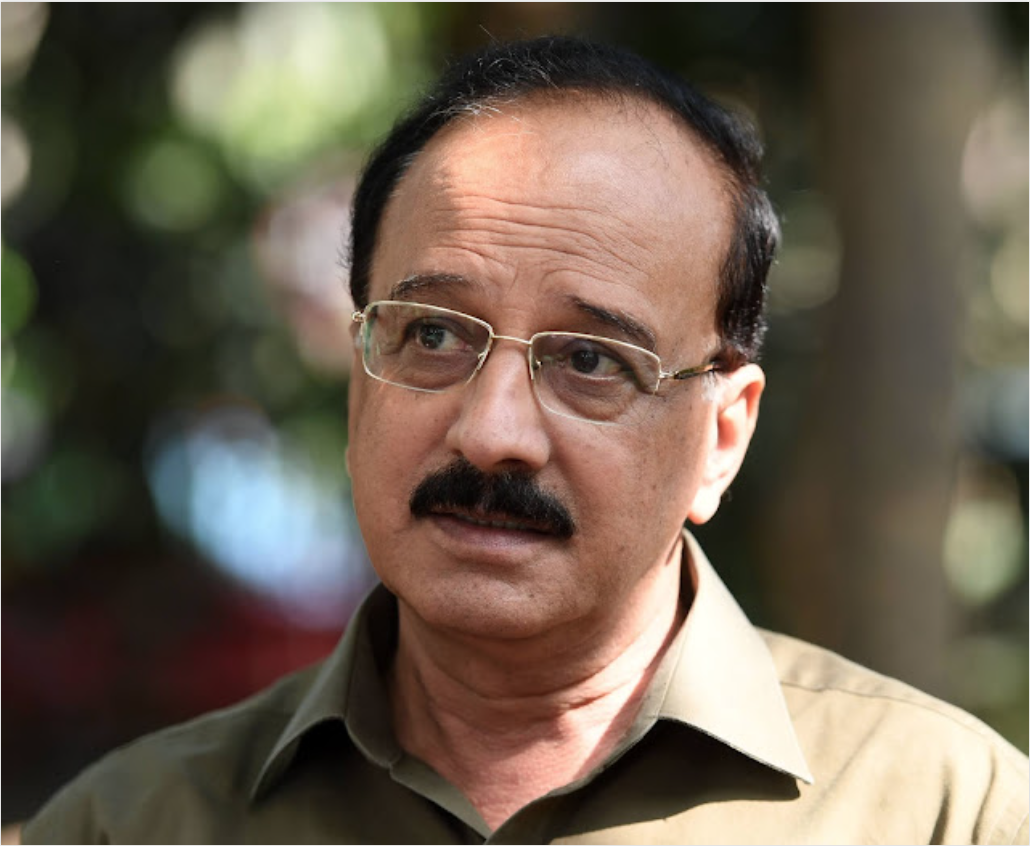
Devinder Sharma is an award-winning journalist, writer, thinker, and researcher known for his views on food and trade policy. Trained as an agricultural scientist (he holds a Master’s in Plant Breeding & Genetics), Sharma wrote for the Indian Express, and then quit active journalism to research on policy issues concerning sustainable agriculture, biodiversity and intellectual property rights, environment and development, food security and poverty, biotechnology and hunger, and the implications of the free trade paradigm for developing countries. He has been awarded with the honorary degree of Professor at Large by the CSK Himachal Pradesh Agricultural University, Palampur (India), and also has been a Visiting Fellow to the International Rice Research Institute, in the Philippines; Visiting Fellow at the School of Development Studies at the University of East Anglia, Norwich (UK); and a Visiting Fellow at the University of Cambridge (UK). Sharma is associated with numerous national and international organizations, civil society groups and farmers organisations. He also on the board of half a dozen national and international organizations, and is also a member of the CGIAR’s Central Advisory Service on Intellectual Property Rights.




