


The late agronomist Norman Borlaug, regarded as the father of the "Green Revolution", is credited with saving millions from starvation. Despite the criticisms of environmentalists, Borlaug had a strong appreciation for the centrality of farmers’ livelihoods in maintaining food security, writes Devinder Sharma.
It was the discovery of a stocky Japanese wheat variety Norin-10 that the US military advisor, Dr D. C. Salmon, sent back home in the early 1960’s that changed the face of global agriculture. This was the variety, the only known semi-dwarf traditional wheat strain, that the late Dr Norman Borlaug was keenly looking for. Crossed with the rust-resistant varieties that Borlaug had developed at the International Centre for Wheat and Maize Research (CIMMYT) in Mexico, the world got the miracle improved varieties that made history.
These semi-dwarf plants developed by Dr Borlaug responded to the application of chemical fertilisers and produced a bountiful grain harvest. The yields multiplied under favourable conditions, and Borlaug knew that the best place to apply the new technology was obviously India, with the largest population of hungry in the world. "I tried my best to convince the Indian politicians about the utility of these semi-dwarf varieties in fighting hunger, but they were not interested," he once told me. Although the agricultural scientists, by and large, were convinced about the yield potential of these varieties, the politicians were not.
"When I didn’t see much headway being made, I played the political card knowing the political rivalry between India and Pakistan," he went on to explain. "I told India that if you don’t want these varieties, I will give them instead to Pakistan." I am not sure whether it was because of the political astuteness of Dr Borlaug or the domestic necessity, but India imported 18,000 tonnes of wheat seed of the semi-dwarf varieties in 1966. Within a few weeks of the import, the seed was made available in 5 kg packs and distributed widely in the areas where irrigation was abundant.
The rest is history. India emerged out of its ‘ship-to-mouth’ existence. Although hunger still prevails, famine certainly has become history.
For several years after the Green Revolution was launched, I had the pleasure of accompanying Dr Borlaugh on his annual visits to the Punjab Agricultural University in Ludhiana. As a young journalist I was always in awe of Dr Borlaug, and found him to be a simple and dedicated scientist. He would spend hours under the scorching sun in wheat research fields and was always keen to visit farmers. On one such evening at a farmer’s house, I remember the host saying; "The three major inputs for raising wheat yields are: farmers, improved seed and Borlaug."
Walking along the sprawling wheat fields in Ludhiana, I once asked him once: "What is your biggest achievement. I mean what you would like to be remembered for." I thought he would say that he wanted to be recalled for his contribution to plant sciences and fighting global hunger. But in all humility, Dr Borlaug replied: "I want to be remembered as someone who introduced baseball in Mexico." And when I burst out laughing, Dr Borlaug gave me a detailed account of how he actually spent hours playing and promoting baseball.
The Green Revolution subsequently spread to parts of Asia and Latin America. It did enable a number of developing countries to emerge out of the hunger trap. Agricultural scientists promoted the technology worldwide – cultivating the water guzzling high-yielding varieties of wheat (the same technology was subsequently applied to rice), applying chemical fertilisers and pesticides – and they were never able to understand why the environmentalists were opposed to the technology.
Such was the blind faith in the new technology that Borlaug developed and promoted that agricultural scientists refused to see the flip side which was clearly evident through the deterioration of the plant ecology and the destruction to the environment. Several years after Rachel Carson published her historic work The Silent Spring, I asked Borlaug whether he had read the book: "She is an evil force," he reacted angrily, adding: "These are the people who do not want to eradicate hunger." I didn’t agree with him, and asked him why agricultural scientists can’t accept that chemical pesticides simply kill. "You too, Sharma," he quipped, and then replied: "Remember, pesticides are like medicines. They have to be applied carefully and safely."
Dr Borlaug remained committed to his belief in the indispensable role of chemical fertiliser and pesticides. He was so adamant that when the Third World Academy in Italy presented a paper on how Brazil had achieved remarkable crop yields in soybean and sugarcane without applying chemical nitrogen, he didn’t agree. It was only after he travelled to Brazil and saw for himself these crop yield results that he at least acknowledged the reality. But even then, he wouldn’t accept a vision of agriculture without chemical fertilisers and pesticides. Such was his blind faith in plant breeding that initially he even rejected biotechnology, saying it was a "waste of time."
He would often tell me that if India had not followed the Green Revolution technology, the country would have needed to bring an additional 58 million hectares under cultivation to produce the same quantity of food that was being produced after the high-yielding varieties of wheat were introduced. My counter argument to this was that although the country saved 58 million hectares only 40 years after Green Revolution, more than double — close to 120 million hectares — are faced with varying degrees of degradation. Borlaug never pardoned me for espousing the cause of long-term sustainability in agriculture. He never accepted that the world could produce enough food with Low-external Input Sustainable Agriculture (LEISA) techniques. In fact, knowingly or unknowingly he did espouse the trend of increasing corporate control of agriculture.
Although the Green Revolution did bypass small farmers, Borlaug knew and appreciated the role farmers played in producing food. The world may not know that it was for the sake of farmers that he once decried a Nobel prize for Poland’s popular leader, Lech Walesa. At a time when Lech Walesa had emerged as the leader of the Solidarity Movement in Poland, the Nobel Prize committee constituted a small team to go and find out whether Walesa deserved a prize.
The team was headed by Dr Borlaug.
Upon return, he told me how appalled he was to learn that Walesa was only talking about cheaper food for the industrial workers. Walesa was not bothered by nor did he care to know what would happen to the livelihoods of millions of farmers who were producing food for the industrial workers. "My report therefore categorically ruled out a Nobel for Walesa," said Borlaugh. It is another matter, however, that Walesa did in fact receive a Nobel Peace prize.
"Be warned, Sharma," Borlaugh told me during one of his visits to Pantnagar University, situated at the foot of the Himalayas in Uttarakhand, North India. "When people stop talking about farmers, when people fail to recognise their role in feeding the country, you can be sure there is something terribly wrong happening in agriculture." These prophetic words hold true today. In India, farmers have long disappeared from the economic radar screen of the country, and it causes little dismay when farmers commit suicide or abandon their livelihoods. It is a clear pointer to the terrible agrarian crisis that continues to prevail.
________________________________________
Devinder Sharma is a New Delhi-based food and trade policy analyst. He is a regular contributor to STWR and can be reached at hunger55(at)gmail.com
Norman Ernest Borlaug, agriculture scientist, born March 25 1914; died 12 September 2009
Source: Share The World’s Resources (STWR)

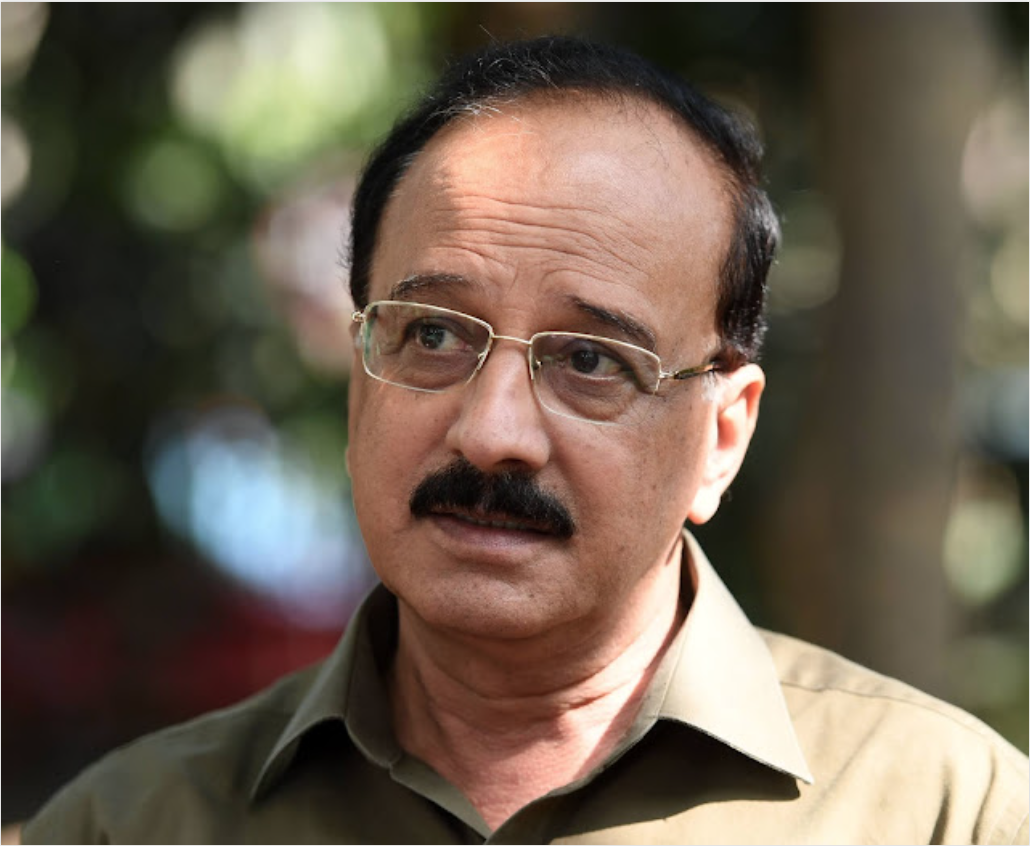
Devinder Sharma is an award-winning journalist, writer, thinker, and researcher known for his views on food and trade policy. Trained as an agricultural scientist (he holds a Master’s in Plant Breeding & Genetics), Sharma wrote for the Indian Express, and then quit active journalism to research on policy issues concerning sustainable agriculture, biodiversity and intellectual property rights, environment and development, food security and poverty, biotechnology and hunger, and the implications of the free trade paradigm for developing countries. He has been awarded with the honorary degree of Professor at Large by the CSK Himachal Pradesh Agricultural University, Palampur (India), and also has been a Visiting Fellow to the International Rice Research Institute, in the Philippines; Visiting Fellow at the School of Development Studies at the University of East Anglia, Norwich (UK); and a Visiting Fellow at the University of Cambridge (UK). Sharma is associated with numerous national and international organizations, civil society groups and farmers organisations. He also on the board of half a dozen national and international organizations, and is also a member of the CGIAR’s Central Advisory Service on Intellectual Property Rights.




