


About a month ago the Center for Democracy and Election Management at American University in D.C. announced that on April 18th at A.U. a “private commission,” the Commission on Federal Election Reform, co-chaired by Jimmy Carter and James Baker III, would be holding the first of two “public hearings.”
This announcement created an immediate buzz within the national network of election reform groups around the country, and we began working to find out more. We were uniformly skeptical. The involvement of James Baker, key architect of Bush/Cheney’s selection by five Supreme Court justices in 2000, was the first red flag. Further digging by members of Velvet Revolution revealed that two other members of this “private commission” have ties to Baker’s law firm and that another is chair of a voter verification machine company that profits from the use of electronic voting machines with no voter-verified paper ballot.
And then there’s the absence of Rep. John Conyers or anyone with a similar background. Conyers played a central role in the investigation and publicizing of the massive voting irregularities in Ohio last year. Virtually all of the irregularities uncovered by the Conyers investigation benefited Bush/Cheney.
Prior to the April 18th hearing Conyers’ office put out a press release which said, in part, “I have written to President Carter expressing my concerns about his co-chair, James Baker III. To many, the deck seems to be stacked against traditional civil rights concerns and voter verified paper ballots, and in favor of wealthy corporate voting machines companies and right wing operatives who have advocated Jim Crow-style tactics, such as partisan challengers at the polls and new and needless voter ID requirements. . .”
Conyers was very prescient. When the “public hearings” convened on the 18th, observed by a tightly screened “public” in a small room at American U., a major focus of testimony by several of the 12 people given time to speak was the issue of “voter fraud.”
Was “voter fraud” a major problem in 2004? Were there widespread reports of individual voters scamming the system and voting more than once? Or voters deliberately registering to vote in several localities so they could vote several times? Or voters using phony identification to get themselves onto voter rolls they’d otherwise not be on?
The answer is no, to all these and similar questions. But James Baker was quick to use the testimony on this “issue” by Wall Street Journal man John Fund and Arnold Schwarzenegger-connected lawyer Colleen McAndrews to push the idea of a national voter i.d. card.
It’s like the non-existent Weapons of Mass Destruction leading to war and occupation in Iraq. Not as brutal and violent, but the same idea: virtually non-existent voter fraud leading to more big brother control and a restriction of democratic participation.
All was not negative on this day in D.C. A number of the people who testified supported a number of the proposals of the voting rights and electoral reform groups, including: voter-verified paper ballots (Carter himself made positive statements in this regard), open source code for electronic voting machines, unified national standards, election day registration, non-partisan administration of electoral systems, equal protection for voting rights, strengthening and reauthorization of the Voting Rights Act and making election day a federal holiday.
Then there was the revealing statement of Jimmy Carter, as paraphrased by journalist David Swanson, that, “the United States fails the standards that the Carter Center requires of other countries, not just because the United States lacks national election standards, but also because this country does not provide candidates with free access to the news media.”
And the pro-democracy movement made its presence felt with a small but visible protest that was clearly noticed by the commissioners and which led to media coverage from a number of press outlets.
The commission will be holding another hearing on James Baker’s home turf, Houston, Texas, on June 30th. They plan to issue a set of recommendations to Congress by September.
Pro-democracy organizers plan to be present at the June 30th event. More importantly, they will continue to communicate and coordinate to keep the pressure on for a wide range of needed reforms, including reforms that were not mentioned in D.C. like Instant Runoff Voting, public financing, a constitutional right to vote, fair ballot access laws and access to debates for all candidates. A shadow Citizen’s Commission on Federal Election Reform is being actively considered. Plans are underway for a national organizers conference possibly in August in connection with a Rainbow/PUSH celebration of the 40th anniversary of the signing of the Voting Rights Act. And around the country local and state groups continue to educate and organize on these issues.
James Baker III may end up strengthening democracy in this country but not through his role on this private commission. It will be because the outrage of his being appointed as commission co-chair, the way he and his cronies acted during the commission hearings, and the blatancy of his tactics to thwart true electoral reform have energized the new voting rights movement that coalesced after the electoral tragedy last November 2nd. The Bush/Cheney/Baker phalanx may have gotten over once around WMD’s, but there is a determined national movement which will fight them every way we can when it comes to their efforts to undercut what many people have died for in this country, the right to vote.
Ted Glick is active with the Independent Progressive Politics Network (www.ippn.org) and the Climate Crisis Coalition (www.climatecrisiscoalition.org). He can be reached at indpol@igc.org or P.O. Box 1132, Bloomfield, N.J. 07003.

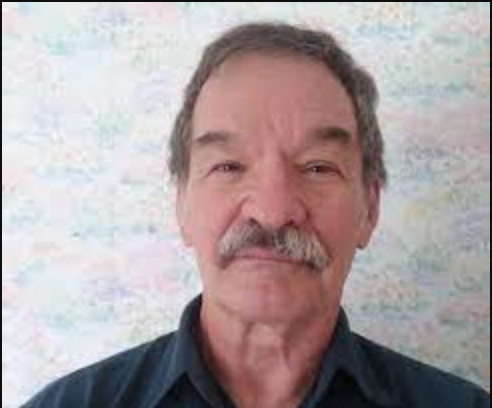
Ted Glick has devoted his life to the progressive social change movement. After a year of student activism as a sophomore at Grinnell College in Iowa, he left college in 1969 to work full time against the Vietnam War. As a Selective Service draft resister, he spent 11 months in prison. In 1973, he co-founded the National Committee to Impeach Nixon and worked as a national coordinator on grassroots street actions around the country, keeping the heat on Nixon until his August 1974 resignation. Since late 2003, Ted has played a national leadership role in the effort to stabilize our climate and for a renewable energy revolution. He was a co-founder in 2004 of the Climate Crisis Coalition and in 2005 coordinated the USA Join the World effort leading up to December actions during the United Nations Climate Change conference in Montreal. In May 2006, he began working with the Chesapeake Climate Action Network and was CCAN National Campaign Coordinator until his retirement in October 2015. He is a co-founder (2014) and one of the leaders of the group Beyond Extreme Energy. He is President of the group 350NJ/Rockland, on the steering committee of the DivestNJ Coalition and on the leadership group of the Climate Reality Check network.




