


Political aphorisms don’t get any more cogent: “Who controls the past controls the future; who controls the present controls the past.â€
George Orwell’s famous observation goes a long way toward explaining why — a full year after the invasion of Iraq — the media battles over prewar lies are so ferocious in the United States. Top administration officials are going all out to airbrush yesterday’s deceptions on behalf of today’s. And tomorrow’s.
The future they want most to control starts on Election Day. And with scarcely seven months to go in the presidential campaign, the past that Bush officials are most eager to obscure is their own record. In late 2002 and early last year, whenever the drive to war hit a bump, they maneuvered carefully to keep the war caravan moving steadily forward.
There was no doubt, they were a hard-driving bunch. The most powerful squad of the Bush foreign-policy team ran on the fuel of certitude at such a prodigious rate that even their momentum had momentum — maybe, in part, because their lives’ trajectories seemed to demand it. War had been declared first within themselves.
Perhaps such steeliness has been almost boilerplate in history; excuses for aggressive war have never been hard to come by. In this case, no amount of geopolitical analysis — from media pundits, academics and other commentators — could really do more to shed light than the lightbulb comprehension that these people in charge had from the outset made the determination that war it would be.
So, every attempt at civic engagement and demonstrations against the war scenario was, in effect, trying to impede “leaders†who had already gone around the bend. A very big bend. One of the American mass media taboos was to seriously suggest the possibility that the lot of them — Bush, Cheney, Rumsfeld, Rice and, yes, Powell — were, in their pursuit of war on Iraq, significantly deranged.
Working back from their conclusion of war’s necessity, top Bush administration officials — with assistance from many reporters and pundits — were reading the calendar backwards, hellbent on getting the invasion underway well before the extreme heat of summer.
There was also political weather to be navigated. Though much more susceptible to manipulation than the four seasons, the electoral storms would be starting for the 2004 presidential contest, and a secured victory over Iraq well in advance seemed advisable.
The peace-seeking pretense was dripping with charade in the months before the invasion. Journalists kept writing and talking about the chances of war as though President Bush hadn’t already made up his mind to order it. Yet what Bush said in public was exactly opposite to reality — a “one-eighty.†When he talked about preferring to find an acceptable alternative to war, he was determined to bypass and destroy every alternative to war.
Rational arguments would not work to forestall the presidential order to unleash the Pentagon. Despite the obstacles, which included vital activism and protests for peace, the chief executive easily got to have his war — the best kind, to be fought and endured only by others.
Eighteen months ago, looking out at Baghdad from an upper story of a hotel, I thought of something Albert Camus once wrote. “And henceforth, the only honorable course will be to stake everything on a formidable gamble: that words are more powerful than munitions.†Later, any and all words were to be vastly outmatched by the big guns trained on Iraq.
One afternoon, 14 months ago, inside a little shop in Baghdad’s crowded souk, a young boy sat behind an old desk, brown eyes wide, quietly watching his father unfurl carpets for potential customers, and I wondered: “Will my country’s missiles kill you?â€
Key questions of the past are also crucial for the future. For instance, can the United States credibly wage a “war on terrorism†by engaging in warfare that terrorizes civilians?
Close to 10,000 Iraqi civilians have died because of the war during the past year.
Does the mix of mendacity and deadly violence from the Oval Office really strike against terrorism, or does it fuel terrorist cycles?
And, in the realm of news media, how many journalists are willing and able to go beyond reliance on official sources enough to bring us truth about lies that result in death?
__________________________________
Norman Solomon is co-author, with Reese Erlich, of “Target Iraq: What the News Media Didn’t Tell You.â€
__________________________________
Background link: http://www.accuracy.org/war-releases.htm

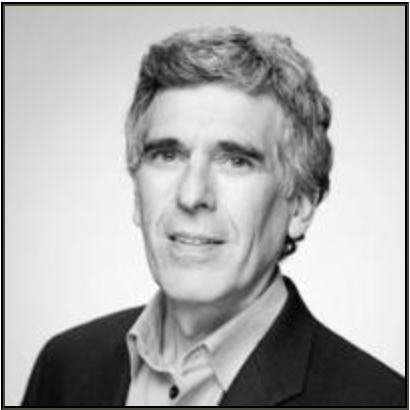
Norman Solomon is the national director of RootsAction.org and executive director of the Institute for Public Accuracy. The paperback edition of his latest book, War Made Invisible: How America Hides the Human Toll of Its Military Machine, includes an afterword about the Gaza war.




