


Cameras have recorded countless defining moments. And many months after Sept. 11, some nightmarish televised glimpses of that day’s horrors still resonate deeply. Visual images are powerful. Yet there’s no substitute for words that sum up what might otherwise seem too ambiguous, upsetting or baffling. Words attach meaning to events.
Since last fall, the biggest media buzz-phrase has been “the war on terrorism.” By now, journalists are in the habit of shortening it to “the war on terror” — perhaps the most demagogic term in recent memory.
Present-day reporting is locked into a zone that excludes unauthorized ironies. It simply accepts that the U.S. government can keep making war on “terror” by using high-tech weapons that inevitably terrorize large numbers of people. According to routine news accounts, just about any measures deemed appropriate by top officials in Washington fit snugly under the rubric of an ongoing war that may never end.
Irony, while hardly dead, is mainly confined to solitary reflection. If insights run counter to the prevailing dogma, then access to mainstream media is fleeting or nonexistent. The need for independent thought has never been greater.
At this point, facile phrases about war on “terrorism” or “terror” are written in invisible ink on a blank check for militarism. They can be roughly translated as “pay to the order of the president” — to be cashed with a lot of human blood.
The grand media outlets are so entangled in the current newspeak that they rarely seem capable of presenting any fundamental challenge to the White House. At the same time, a smattering of news outlets — far from the centers of journalistic power — refuse to dodge the task of raising key questions.
A daily paper in Florida made a profound statement on March 2. “The nation’s loyalty is turning into groupthink,” the Daytona Beach News-Journal editorialized.
“How else explain a president who, playing on the war’s most visceral slogan, gets away with justifying an obscene corporate tax cut as ‘economic security,’ a build-up of defense industry stock as ‘homeland security,’ and an exploitative assault on the nation’s most pristine lands as ‘energy security’? How else explain his contempt for Congress, his Nixonian fixation on secrecy, his administration’s junta-like demeanor in Washington since September?”
The notably forthright editorial pointed out that “without robust dissent, democracy might as well pack up and head for the hills.” And it accurately described the status quo of March 2002 in the USA: “This is not unity. It’s not patriotism. It’s stupor.”
At once foggy and focused, the media lexicon of self-justification rolls on. By implicit definition, Washington’s actions against “terrorism” can only be righteous — and a penumbra of virtue extends to Uncle Sam’s allies. That helps to explain why, in the daily drumbeat of reporting from the Middle East, the Israelis who shoot are engaged in “security” operations while the Palestinians who shoot are “gunmen.”
Almost without exception, in U.S. news reports about the back-and-forth violence, exculpatory words like “retaliation” are reserved for deadly Israeli actions, not deadly Palestinian actions. It’s a typical element of style for American journalism: Israelis “retaliate.” Palestinians don’t.
The media spin is exceedingly kind to the occupiers. When Israeli onslaughts take civilian lives, that’s not “terrorism.” When Israel sends tanks and aircraft to attack Palestinian neighborhoods or refugee camps in the West Bank or Gaza, that’s merely an “incursion.”
Meanwhile, American taxpayers are financing massive new Pentagon ventures, with troops and weaponry deploying overseas from Afghanistan to Georgia to the Philippines. To boast about waging war against “terror” by terrorizing is a no-brainer only in the sense that our brains must be on automatic pilot in order to nod approval.
A little more than a year ago, at the first World Social Forum in Porto Alegre, Brazil, the Latin American writer Eduardo Galeano commented that our societies suffer from “fear of solitude … fear of dying, fear of living.” The dominant trends encourage passivity. “Quietism is based on fear.” And: “The system presents itself as eternal. The power system tells us that tomorrow is another word for today.”
Currently, that’s more true than ever. Promised a perpetual “war against terror,” we face a parallel media war without end. It’s a propaganda siege that must be resisted — because truly open debate is essential to democracy. As Galeano observed: “There is no greater truth than search for truth.”
That search, positively endless and necessarily difficult, stumbles over manipulative language. Words are pivotal for keeping us in this mess. And words may be crucial for getting us out.
_____
Norman Solomon’s latest book is “The Habits of Highly Deceptive Media.” His syndicated column focuses on media and politics.

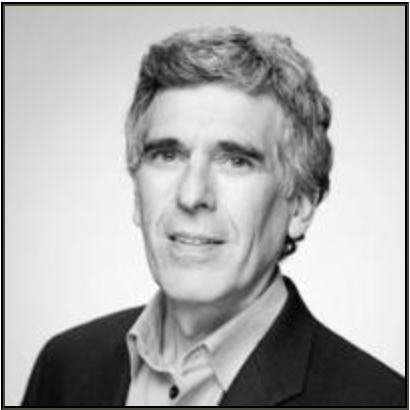
Norman Solomon is the national director of RootsAction.org and executive director of the Institute for Public Accuracy. The paperback edition of his latest book, War Made Invisible: How America Hides the Human Toll of Its Military Machine, includes an afterword about the Gaza war.




