


I got a sense of how large the April 29th March for Peace, Justice and Democracy was a little after 1 pm on Saturday. While helping to get things organized down at Foley Square for the end-of-march grassroots action festival, I overheard on a police walkie-talkie the news that the head of the march was at Bleecker St., 16 blocks down from where it started. Then, 5-10 minutes later, I got a call from someone who was at 21st and Broadway asking me what was happening, that they weren’t moving. I told him, “That’s good news, it means that this is very big, that’s why you haven’t moved yet.”
I heard afterwards that when people in the lead contingent got to Foley Square and called back to the beginning of the march that there were still people who hadn’t left. That’s about 30 blocks worth.
It was very big, certainly in the hundreds of thousands.
Then on Monday I went to the immigrant rights march at Union Square in NYC. It was astounding to experience the sight of many tens of thousands, possibly hundreds of thousands of people, a crowd overwhelmingly working class and Latino, marching down the same exact route, from Union Square to Foley Square, just two days later, demanding to be treated as human beings, with justice and respect.
Between the two marches, there had to be close to a half million or more people demonstrating in NYC on those two days, and on Monday there were millions more around the country.
No question about it: the spring of 2006 has announced to the world that the justice movement is alive, well and growing in the U.S.A.
There are differences, of course, between the massive, semi-spontaneous movement for immigrant rights that has erupted over the last two months, beginning in Chicago in the second week of March, and the multi-issue, multi-constituency coalition which organized the April 29 action. One is predominantly Latino, the other is predominantly white. One emerged in large part because of a strikingly repressive bill passed earlier this year in the House of Representatives that would criminalize those without legal documents and those who help them. The other was decided upon over a two month period between mid-November and mid-January through a series of meetings and conference calls and the working out of an approach which centralized a call to end the war but which also addressed a number of other major issues. This included immigrant rights, part of the April 29 coalition’s public call to action in February.
Given the reality of the legislative process taking place right now in Washington to try to decide on what new laws should be enacted to deal with immigration issues, it is to be expected that the immigrant rights movement is not fading away anytime soon. We can expect more massive immigrant rights actions in this spring month of May.
As far as the April 29 coalition, it has called for local actions on July 4th, on August 29th, the first anniversary of Hurricane Katrina, and in support of early September Labor Day marches. And it has called for an electoral focus, for “every candidate to address our agenda: end the war in Iraq, dismantle the bases, return the troops, no military action against Iran, rebuild communities in need, stand for immigrant rights and racial justice, protect our civil liberties, defend women’s right to control their own bodies, ensure rights for labor, veterans and lesbian-gay-bisexual and transgendered people, get serious about the climate crisis before it is too late.”
Exactly how this issue-oriented, electoral focus gets carried out remains to be seen. But here’s an idea:
What if, in cities, towns and rural areas around the country, local coalitions formed behind this program and made plans for how to bring it to every candidate in their area running for federal office, whether Republicans, Democrats, Greens or other independents?
What if there were a willingness to use not just the usual methods-public forums, leafleting, petitions, meetings with those running for office-but more creative and more confrontational tactics as necessary?
What if throughout the country this summer and fall there were a growing number of sit-ins in the offices of Congresspeople and Senators, Republicans and Democrats, who get a big fat “F,” or even a “D,” on a progressive scorecard on these issues?
What if many hundreds, thousands, of people got arrested sitting in, standing up, for our turn-the-country-around agenda?
What if 2006 saw the on-going growth of a new grassroots-based, consciously multi-cultural, independent, multi-issue movement willing to act in a coordinated way, one consistent with the urgency of the multiple crises we are facing?
It’s too bad that we have to suffer under an undemocratic, winner-take-all electoral system (instead of proportional representation) that is dominated by corporate money. Such a system has served historically to divide progressives who, on the issues, are generally in agreement but who, tactically, either run or support independents or, more pragmatically, run as or support progressive Democrats.
That’ll keep happening for a long time, at least until our progressive movement is strong enough to win public financing of elections and instant runoff voting as a step towards proportional representation. In the meantime, why don’t we try the time-tested, direct action approach to single out and put on the defensive those elected officials of both corporate parties most responsible for the mess we’re in? If done intelligently, this can only strengthen those candidates running for office who support our program, strengthen the overall movement for campaigns in 2007 to impeach Bush/Cheney, end the war, terminate all government subsidies to oil companies and put that money into urgently-needed renewable energy, and more.
It is time, long-overdue time, to unite for change so that we really can turn our country around. It is happening; let’s deepen and strengthen it!
As millions are publicly chanting all over the USA, si, se puede!
Ted Glick is a leader of the Climate Crisis Coalition (www.climatecrisis.us) and the Independent Progressive Politics Network (www.ippn.org). He represented the CCC on the steering committee for the April 29th march. He can be reached at indpol@igc.org or P.O. Box 1132, Bloomfield, N.J. 07003

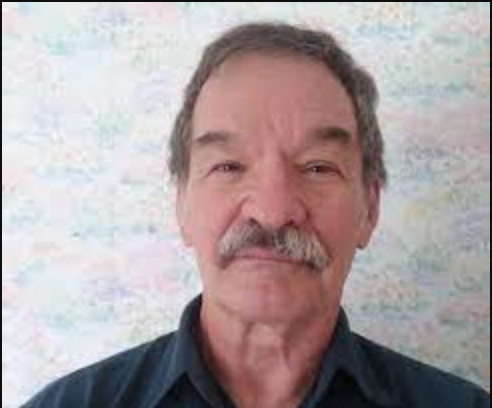
Ted Glick has devoted his life to the progressive social change movement. After a year of student activism as a sophomore at Grinnell College in Iowa, he left college in 1969 to work full time against the Vietnam War. As a Selective Service draft resister, he spent 11 months in prison. In 1973, he co-founded the National Committee to Impeach Nixon and worked as a national coordinator on grassroots street actions around the country, keeping the heat on Nixon until his August 1974 resignation. Since late 2003, Ted has played a national leadership role in the effort to stabilize our climate and for a renewable energy revolution. He was a co-founder in 2004 of the Climate Crisis Coalition and in 2005 coordinated the USA Join the World effort leading up to December actions during the United Nations Climate Change conference in Montreal. In May 2006, he began working with the Chesapeake Climate Action Network and was CCAN National Campaign Coordinator until his retirement in October 2015. He is a co-founder (2014) and one of the leaders of the group Beyond Extreme Energy. He is President of the group 350NJ/Rockland, on the steering committee of the DivestNJ Coalition and on the leadership group of the Climate Reality Check network.




